








Waste kills: four people die buried in a landslide near Jakarta
The tragedy occurred at the Bantargebang site, where the capital's waste is sent. This is due to the country’s failure to address the problem, while the number of dangerous situations is growing. Only 11 per cent of plastic is recycled in Indonesia.
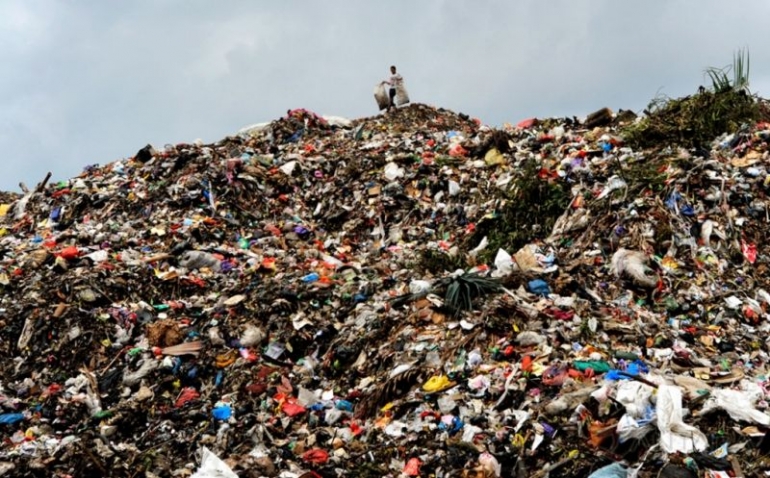
Jakarta (AsiaNews) – A new tragedy linked to a landfill collapse has brought Indonesia's unresolved problem of inadequate waste management to the forefront.
The disaster occurred yesterday, at the Bantargebang Integrated Waste Processing Site (TPST Bantargebang) in Bekasi, West Java province, when a huge garbage mound collapsed, killing at least four people.
The victims have been identified as Enda Widayanti, Sumine, Dedi Sutrisno, and Irwan Supriatain. The accident occurred after heavy rains began overnight Saturday.
The head of the Jakarta Regional Disaster Management Agency, Isnawa Adji, said the incident occurred around 2:30 pm when several garbage trucks were queuing to unload waste.
"Suddenly, a landslide of garbage occurred, hitting five trucks and a small stall located near the site," he said.
As rescue teams continue to search the area, more people are feared buried under the garbage mound.
The Bantargebang landfill is the main disposal site for waste arriving daily from Jakarta, receiving thousands of tonnes of garbage from the capital.
The collapse of the garbage mound in Bantargebang once again highlights the real dangers posed by this problem.
Indonesia produces an average of 0.85 kilos of waste per person per day, approximately 17 per cent of which is plastic, a material that is extremely difficult to decompose and only about 11 per cent of which is recycled.
The volume of waste in large cities like Jakarta continues to rise rapidly each year, exceeding the capacity of existing landfills. As a result, many disposal sites have become huge “mountains of garbage” that pose serious environmental risks.
In addition to the risk of landslides, large accumulations of waste have direct impacts on public health and the environment, contributing to groundwater contamination, reduced access to drinking water, the spread of disease, and increased flood risk.
Poor and unsustainable waste management practices have turned this problem into a major environmental threat.
The devastating floods that hit Bali on 10 September 2025, leaving 17 dead and five missing, are also linked to the waste crisis.
Although extreme rainfall of 245.75 millimetres was recorded in a single day, the severity of the floods was exacerbated by mounds of garbage that blocked river channels, preventing rainwater from draining properly. As a result, densely populated areas were submerged, causing serious social and environmental damage.
Indonesia's Environment Minister and head of the Environmental Monitoring Agency, Hanif Faisol Nurofiq, emphasised that the waste problem must be addressed at its source.
“Waste problems must be handled at their source. We can no longer simply move garbage from one place to another, because it ultimately worsens disasters and leads to loss of life,” he said.
Another tragic episode occurred in 2005, when a giant landfill at the Leuwigajah landfill in Cimahi, West Java, collapsed, killing dozens of people buried under the waste.
This is a reminder that this problem is not only an environmental challenge, but also a serious threat to human safety.

.png)
16/12/2017 12:55
01/04/2022 14:02










