








When Pope Francis called migrants ‘smugglers of the faith’
On the first anniversary of Pops Francis’s passing, two accounts from the Philippines and the war-torn Gulf region today recall his attentive gaze towards those who, as they travel the world in search of a future, also carry with them a Christian witness. Cardinal David: “They bring light to the world not out of strategy, but out of fidelity, wherever life may lead them.” Bishop Martinelli: “May his encouragement be a sign of peace even amidst today’s difficulties.”
Milan (AsiaNews) – “It was during a Mass in Rome that the late Pope Francis, with his familial warmth and his instinct for poetic truth, affectionately referred to Filipino migrant Catholics as contrabandistas de la fe – ‘smugglers of the faith’.” Not smugglers of goods, but bearers of something far more precious: faith, carried silently across borders, hidden within the daily struggles of life and shared in places where no missionary programme had ever planned to reach.”
Among the many memories of Pope Francis circulating online at this very moment, exactly one year after his passing, we feel it is significant to highlight this thought shared by Cardinal Pablo Virgilio David, Bishop of Kalookan in the Philippines. It is a statement that sums up very well Bergoglio’s view of migrants, who, from his first apostolic journey to Lampedusa right up to his final Urbi et Orbi message at Easter 2025, defended not only their dignity as people, but also the value of their witness in today’s world.
It is no coincidence that the Philippines, a Catholic country with between 10 and 11 million migrant workers now scattered across the globe, associates this very image with the teaching of Pope Francis. “Wherever Filipinos go, they are entrusted with what societies consider most fragile,” comments Cardinal David. “It is to Filipino carers and nurses that families entrust their children, the elderly and the sick. It is often Filipino hands that accompany the dying in hospitals far from home. It is Filipino workers who support families across Europe and Asia. It is Filipino seafarers who keep global trade moving across the oceans. In a very real sense, the world entrusts its fragility to Filipinos. And it is precisely in this space of vulnerability that something unexpected emerges: faith.”
“The Filipino migrant,” writes the Bishop of Kalookan, “usually does not set out with the intention of evangelising. Yet, in his silent fidelity – in hospitals, in homes, on ships, in kitchens and in parishes – he becomes just that. They leave as workers. They live as servants. But many return – or remain abroad – as witnesses. And so perhaps we can now say it more fully: they are smugglers of faith, bearers of grace and ‘involuntary’ missionaries of the Gospel – they bring light into the world not through strategy, but through the simple courage to remain faithful wherever life takes them”.
And it is particularly important to remember all this precisely in these weeks when the Gulf War has directly affected so many of these migrants.
Some of them have even paid for this simple form of witness with their very lives in recent weeks: this was the case, for example, with Mary Ann de Vera, the 32-year-old Filipino carer who was killed in Israel on 28 February, the first day of the war, for remaining by the side of the elderly woman she was caring for without taking shelter during an Iranian missile attack.
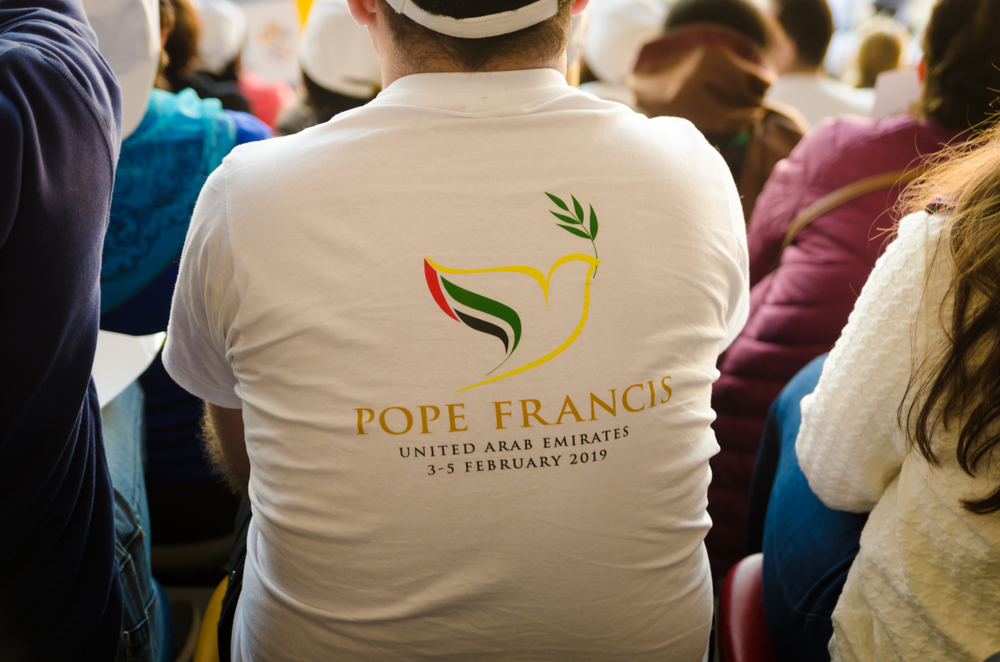
In 2019, Pope Francis himself became the first pope to visit the Christian communities of the Gulf, which had been revitalised thanks to the presence of migrants in that very region of the world, now at the centre of everyone’s attention due to the war.
“We remember him with immense affection for his example and his teaching,” writes the Apostolic Vicar of Southern Arabia, Bishop Paolo Martinelli, from Abu Dhabi in a message sent to the faithful of the diocese. "His visit to Abu Dhabi in February 2019 remains unforgettable, as is his visit here to the cathedral of Saint Joseph, the signing of the document on Human Fraternity, together with the Grand Imam of Al Azhar, which opened a new chapter in the history of relationship between religions.Above all, we remember him for the Holy Mass he presided over here at the packed Zayed Stadium, where he described our Church as a “joyful polyphony of faith”. Indeed, we are this miracle: faithful from over 100 different nations, with different languages, traditions, cultures, and rites, forming one body because we profess the same faith having received the same baptism.”
“We, the Church of migrants,” writes the Apostolic Vicar of Southern Arabia, “have felt so close to Pope Francis because of his passionate love for migrants and refugees. The messages he sent to our young people and our faithful through a short video that he kindly shared with me during the Synod is unforgettable: he urged us to remain united, anchored to our Christian faith and to our families; he exhorted young people to look to the future with confidence, rooted in hope.”
“Pope Francis,” concludes Bishop Martinelli, addressing his community, “has been a witness to this irrevocable love, a love that does not forget, a steadfast love that endures forever.
May the Mother of God, whom Pope Francis loved so much and to whom he always entrusted himself, help us to live his legacy and to be witnesses to the joy of the Gospel and peacemakers in this dramatic moment in history of humanity, so that his kingdom may come into all hearts.”

.png)
07/02/2019 17:28
11/08/2017 20:05










