








The School Bell and the Call to Arms in Russia
Graduations taking place in recent weeks in Russia have been marked not only by officials and members of Putin’s party, as has been the case for years, but also by “SVO veterans,” participants in the war in Ukraine. Authorities are increasingly recruiting young people from technical institutes to train them as drone operators.
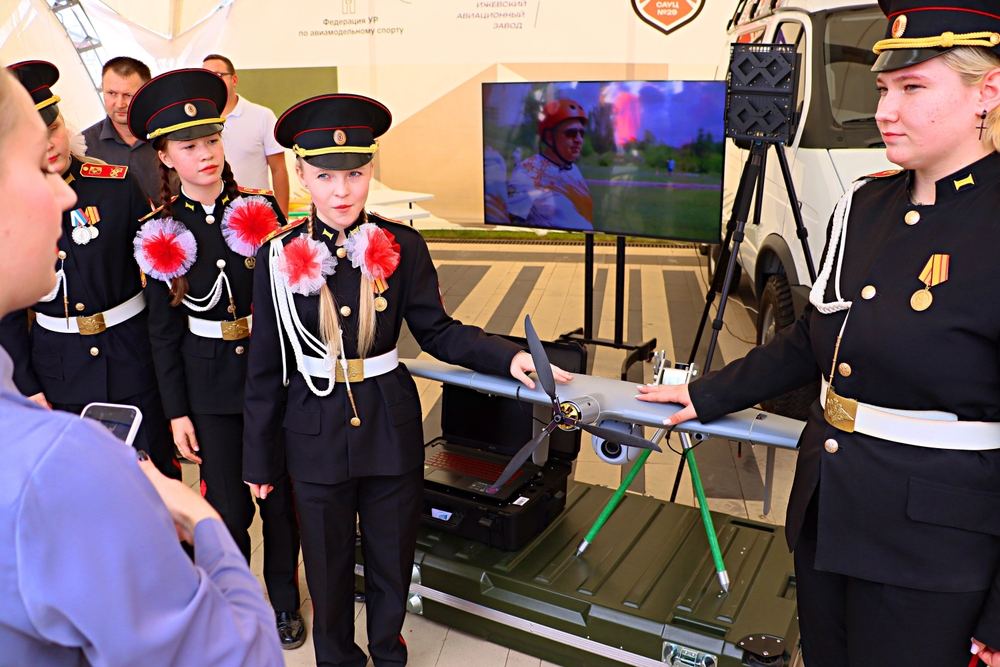
Moscow (AsiaNews) – At the end of May, in almost all of Russia and in Ukrainian territories occupied by Moscow, ceremonies for the Posledny Zvonok (“Last Bell”), marking the end of the school year, were held. Graduates were greeted not only by officials and members of the United Russia party, as in previous years, but also by “SVO veterans,” those who took part in the war in Ukraine.
In Russia’s northern Murmansk region, during the ceremony, the Voin (“War”) Patriotic Education Center set up a whole area at the Ice Palace where graduates were invited to try piloting a drone and encouraged to join the armed forces. A video of the event was published by the Murmansk regional government’s task force with the title: “They picked up drone joysticks instead of video game controllers: how the Voin Center surprised the graduates.”
Russian authorities are indeed increasingly recruiting young people to train as drone operators. They are “guaranteed” that they will serve for only one year, in the rear, operating drones, but in reality, the contract with the Russian Ministry of Defense does not include such restrictions. Thus, in the autumn of 2026, it emerged that college and technical institute students were being recruited into drone units. Unlike universities, these institutions also enroll minors, as many students enter after lower secondary school. Journalists from the BBC’s Russian service reported the first death of a college student recruited during this campaign in May 2026: 23-year-old Valerij Averin died near Luhansk three months after signing his contract.
Russian authorities are trying to encourage not only university students but also high school students to learn drone piloting by awarding extra points on the Unified State Exam (USE): in 2027, drone piloting will be included in the GTO standards (Ready for Labor and Defense), which grant between 2 and 5 points for university admission. In other regions of Russia, SVO veterans also took part in graduation ceremonies. In Mordovia alone, organizers reported eight such appearances.
In Samara, Mikhail Tambovtsev—awarded the title of “Hero of Russia” by Vladimir Putin in December 2025 for his participation in the war in Ukraine and listed on the Ukrainian website Peacemaker—visited a school together with the governor. Vladislav Gusev, head of the Moscow association of “Veterans of the People’s Liberation Army” and actively involved in promoting the presence of war veterans in politics and schools, visited a school in Moscow. He told graduates that he had already decided to “serve the Motherland” at the time of his own last bell, marking the end of his school years.
The monitoring project Not Normal, which denounces the militarization of schools and kindergartens in Russia and the spread of war propaganda among children, reports that veterans of the war in Ukraine have become “guests” at end-of-year ceremonies in Tomsk, Buryatia, Bashkortostan, and the Krasnodar region. In some schools, the war has become the theme of the celebrations, or part of them: children laid flowers at monuments and memorial plaques dedicated to soldiers who died in Ukraine; children of fallen soldiers were given the right to ring the bell during the ceremony; and students were praised for their contributions to the front.
In Shakhty, in the Rostov region, parents and teachers organized the campaign “Help instead of flower bouquets for soldiers of the Soviet army”: they gave up buying flowers and donated the money to purchase equipment for an assault unit. The 2026 end-of-school ceremony was not the first time veterans had been present in schools; since the beginning of Russia’s invasion of Ukraine, war veterans have been invited to address students, give “Lessons of Courage,” inaugurate “desks of heroes” and memorial plaques, and in some schools congratulate graduates.
There are parents in schools who disagree with this type of program for celebrations, but they are no longer willing to speak out openly. If parents or children refuse to participate in these end-of-year ceremonies, they justify it with ordinary excuses: feeling unwell, being busy, and trying to avoid drawing attention to themselves.

.png)










