








War and the Afghan Taliban fuel opium boom in Iran
Once a hidden and clandestine practice, poppy cultivation has become a means of subsistence. The heart of production lies in the Zagros Mountains in the west. The estimated value of opium is up to 72 times higher than that of wheat. In Tehran, the price of bread has risen by 100 per cent. As poverty increases, so does the exploitation of child labour.
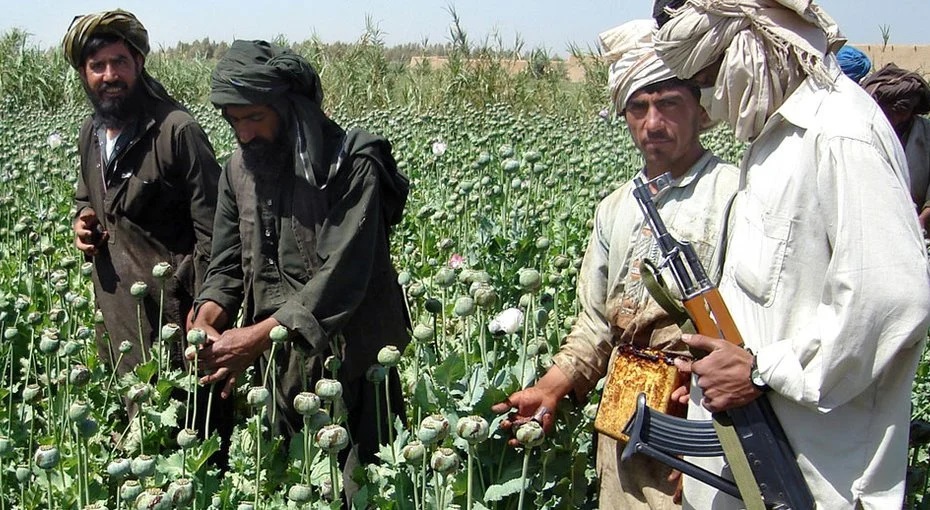
Tehran (AsiaNews) - From a hidden practice confined to specific areas to an essential resource for subsistence – and survival – for the rural populations of the region, whose economy is stagnating due to the Israeli-US conflict and Western sanctions.
Opium poppy cultivation has, in fact, become a defining feature of the mountain villages of the Zagros range in western Iran. A report by Iran International shows how, on the rugged slopes, amongst rocky plots and felled oak trees, the plant is no longer merely an illegal crop; on the contrary, it has become a hallmark of the economic crisis and stagnation in areas where wheat, chickpeas and lentils no longer cover the costs of farming and daily life.
A few kilometres from the road, deep in the Zagros Mountains, a small plot of land emerges amongst the felled oak trees. Access, sources say, is ‘difficult’ and ‘barely visible’ from the village. The owner prefers to keep watch from a distance, partly because – as he explains – if the authorities find the crop, it remains difficult to prove who owns the land. In this way, the poppy plants have grown over time, hidden from prying eyes, to the point where they now cover vast tracts of land and have become one of the region’s primary resources.
Record-breaking cultivation
Cultivation has been expanding for 10 years, but in recent times of war and international crises, the growth has been even more pronounced, fuelled – as academics and agronomists point out – by drought, falling agricultural incomes and a lack of alternatives to poppies. Even experts from the United Nations (UNDP) stress that combating poppy cultivation will be difficult without creating sustainable economic alternatives, given that its value has been rising: in April, according to Iranian media reports, the retail price per gramme was around 250,000 tomans, approximately .60.
According to UN data on drugs and crime, poppy fields in climates similar to Iran’s typically yield between 20 and 30 kilograms of pure opium per hectare. In some regions, the figure exceeds 50 kilograms. A comparison between the income from poppies and that from wheat – one of the main agricultural crops in western Iran – helps to explain farmers’ choices: the value of a one-hectare wheat field is just over ,000, whilst poppies can generate between ,000 and ,000 based on the reported retail price. And in high-yield areas, where production can exceed 50 kilograms per hectare, the value could rise to around 12.5 billion tomans, equivalent to 78,000 dollars. This means that the estimated value of opium from one hectare could be between 29 and 72 times higher than that of wheat grown on the same area.
According to Mohammad Jamalian, a member of the Parliament’s (Majles) Health and Medicine Committee, the area under opium poppy cultivation in Iran has reached around 32,000 hectares, a figure more than three times higher than in previous years. It is difficult to estimate the total area accurately, as many fields are set up in remote areas and out of public view. However, a review of reports published in recent years shows that the names of the Zagros provinces appear more frequently than others, and these are areas increasingly grappling with drought, unemployment and a crisis in livelihoods.
The story of the poppy does not end in the fields of the Zagros: hundreds of kilometres away, in Afghanistan, an unprecedented decline in cultivation following the Taliban’s return to power has altered market dynamics across the region. Iran’s Drug Control Headquarters has stated that the sharp drop in cultivation in Afghanistan has led to a significant decline in opium imports and seizures in Iran and has even caused problems with the supply of raw materials for certain medicines. Furthermore, the war with the United States and Israel has increased the pressure, exacerbating the medicines supply crisis in the Islamic Republic, with healthcare workers reporting shortages of nearly 1,000 types of medicines across the country.
Finally, western Iran is also situated close to one of the region’s key routes for the trafficking of opiates, which passes through Iraq and Kurdistan before continuing on to Turkey and Europe. Although there is no evidence that the opium produced by poppy farmers in the Zagros Mountains is exported, the existence of a consumer market and the region’s sensitive geography are among the factors that could create fertile ground for the phenomenon to expand.
Bread: a 100% increase
Among the consequences of the war – which currently appears to be at a standstill pending a broader agreement between Washington and Tehran – is a staggering rise in the price of bread across the capital’s province, which has recently reached 100%. One of the staple foods in the Iranian diet has therefore seen one of the most significant price rises in terms of raw materials, raising fresh concerns about the government’s plans to overhaul the country’s subsidy system.
In recent days, residents of the Tehran metropolitan area have, much to their dismay, been confronted with the new official prices in force following an order issued by the provincial authorities and announced in advance by the Iranian Chamber of Trades’ working group on flour and bread. Under the new prices, lavash flatbread now costs 27,000 rials (two cents), barbari 100,000 rials (six cents) and sangak 155,000 rials (10 cents). The average monthly wage in Iran is estimated at around 0, and a family relying solely on bread for their food intake would spend between and a month, depending on the type of bread purchased.
The price rise came just two days after the Minister of Agriculture, Gholamreza Nouri Ghezeljeh, had ruled out any possible increases in bread prices and stated that the government was continuing with its plan to provide subsidies to families through an enhanced electronic voucher system. The price surge had already begun during Ebrahim Raisi’s presidency and has accelerated under Masoud Pezeshkian, partly due to the war. Compared with less than a year ago, official records show that the price of sangak has risen by 104 per cent, barbari by 85 per cent and lavash by 93 per cent. This trend follows similar price rises in other parts of the country, such as West Azerbaijan, where price increases of between 70% and 100% were recorded last month, whilst prices in Mashhad rose by an average of 49% in mid-June.
Child labour
Finally, among the consequences of the conflict is the rise in child labour, which goes hand in hand with increasingly widespread poverty, coupled with sexual exploitation, violence and malnutrition. The alarm has been raised by Hassan Mousavi Chalak, head of the Iranian Association of Social Workers, who argues that worsening economic conditions are forcing more and more families to rely on their children’s income to meet basic needs. “We must accept the fact that poverty in Iran has worsened,” said Mousavi. “The more difficult economic conditions become,” he added, “the more the labour of children is used to cover household expenses.”
Criticising what he described as political efforts to downplay the issue, Mousavi said that child labour has spread far beyond the children visible on city streets. He went on to highlight the use of children in slaughterhouses, livestock farms, underground workshops, orchards, farms and industrial settings, warning that many remain hidden from public view whilst facing “dangerous and harmful” working conditions. To date, “there are no reliable statistics” on the number of child labourers in Iran, but it is clear that “the phenomenon is more widespread in major cities and in pilgrimage and tourist destinations”.

.png)










