








100 Years of the Khudžand Museum
The Sogdiana Historical Museum has survived relocations, reconstructions and political upheavals, and has literally saved thousands of artefacts from Tajik history and culture from being scattered amongst private homes or sold in bazaars. Today, it is no longer just an exhibition space but also an educational centre.
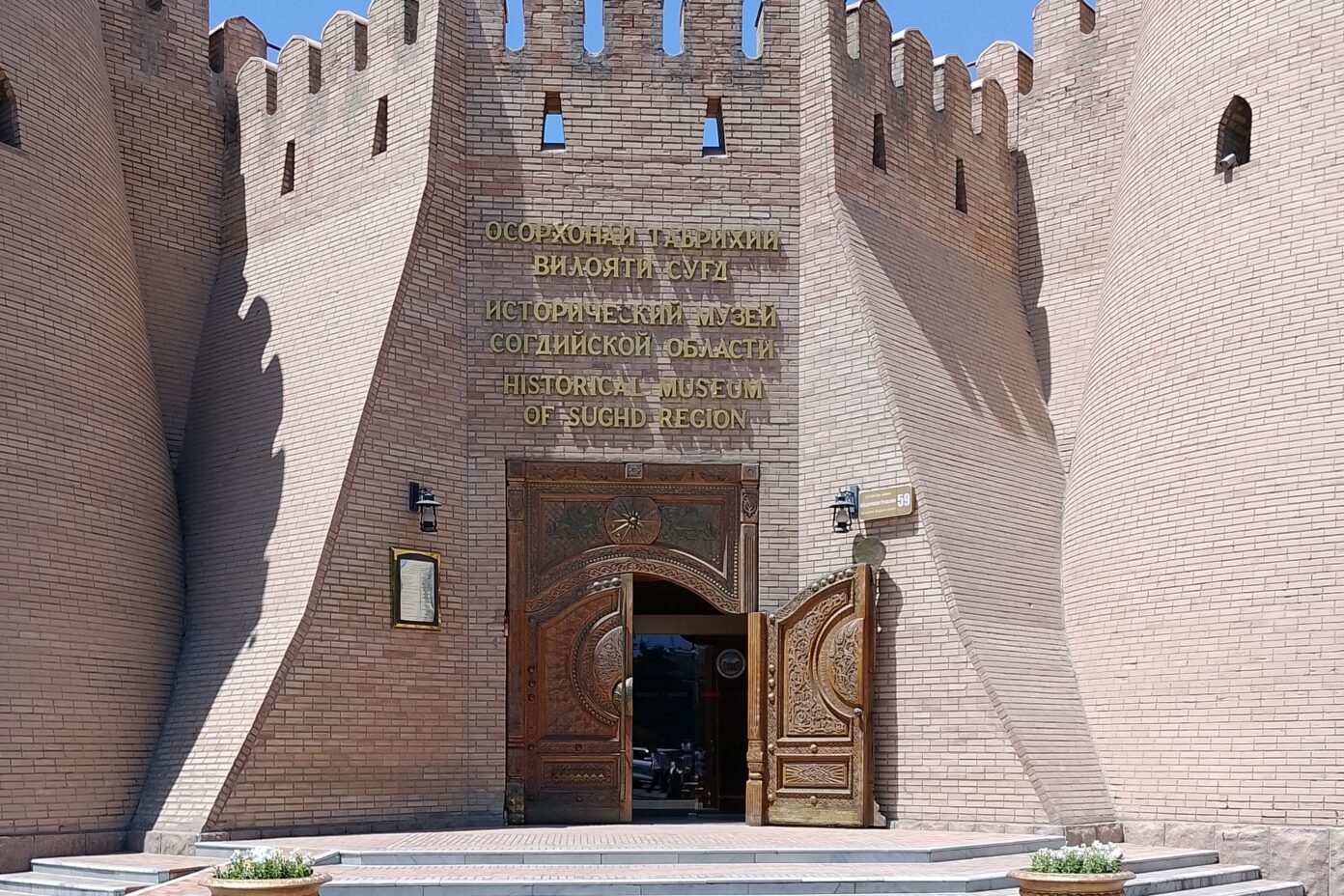
Dushanbe (AsiaNews) - A hundred years ago, a renowned collector from the ancient city of Khujand in Tajikistan decided that antiquities should not end up in private homes and bazaars. Today, thanks to him, the Sogdiana Historical Museum preserves thousands of artefacts, and over the course of its century-long history, the museum has survived relocations, reconstructions and political upheavals, and has literally saved its artefacts from being scattered.
The museum’s history begins with a man known in Khujand as Khodžaj Antik. His real name was Khodžaj Mirzokhodža ibn Sobirkhodža, a local historian, collector and renowned traveller, who travelled to Baku, Tbilisi, Kazan, Samarkand, Bukhara, Kokand and other cities, collecting antiques, manuscripts and rarities. By the early 20th century, this was a virtually unique phenomenon: without the support of the state, scientific institutions or grants, he effectively created the future museum single-handedly.
In 1909, he exhibited his collection publicly for the first time. Later, Khodžaj Antik bequeathed all the objects he had collected to the state, aware that if they remained in private hands, many historical artefacts would be lost over time. This decision laid the foundations for the future establishment of the museum, which was officially founded on 18 May 1926. For a long time, it was housed in the Sheikh Muslukhuddin Mosque, a 12th-century architectural monument and one of the symbols of old Khudžand, which was closed to worshippers during the Soviet era of atheism.
Over the years, the museum has housed departments of natural history, pre-revolutionary and Soviet history, as well as educational collections and departments. The museum began to grow rapidly as early as the 1930s, and by 1932 its collection numbered around five thousand items. Specialists from the Hermitage, archaeologists and museum staff from other cities in the Soviet Union were invited to Khujand to work at the museum, and later Tajik scientists and students also joined the research. From the 1960s, museum staff collaborated with archaeologists to conduct excavations and ethnographic research.
In the 1970s, the need to modernise the museum became apparent. Requirements for museum exhibitions changed, new approaches to the presentation of materials emerged, and the museum began to renovate its exhibition halls. One of the most significant refurbishments was the reconstruction of the natural history department; together with specialists from Tashkent, the museum staff created new dioramas depicting the region’s natural landscapes: mountains, deserts, tugaj forests and the underwater world. A new exhibition concept was developed for the Soviet department, focusing on the region’s development in the 20th century: industry, culture, education and the economy. By the 1980s, the museum had become one of the most important scientific and cultural centres in northern Tajikistan.
The 1990s were one of the most difficult periods for the museum. Following the adoption of the law on religious freedom, some worshippers demanded the return of the Sheikh Muslukhuddin Mosque to the religious community, and the museum was forced to vacate its premises urgently; during the move, some artefacts were damaged. Years of constant relocations followed: initially, the museum was housed near a fortress that had previously been home to a military unit, then in the former Pančšanbe restaurant, and subsequently in a building that had once housed a shoe factory. In 1996, the museum resumed its activities in a new location, but the problem was only definitively resolved after construction work began on its own building right next to the Khudžand fortress.
Construction began in 2003, and the new building was inaugurated in August 2006 in the presence of Tajik President Emomali Rakhmon. Its architecture is reminiscent of an ancient fortress: thick walls, towers and underground chambers. In this way, the museum itself seems to have become an integral part of Khujand’s historical setting. Today, the museum is not only an exhibition space but also an educational centre; guided tours are held for school groups, research continues and the museum’s collection is constantly being expanded.

.png)










