








A major trade area for Central Asia
The Chamber of Commerce, which brings together local businesses, is pushing for an integration programme for the region through logistics hubs, industrial parks, processing facilities, export platforms and joint investment projects. It is looking at a wider area than just the former Soviet republics, also including Afghanistan, Pakistan, Iran and Mongolia.
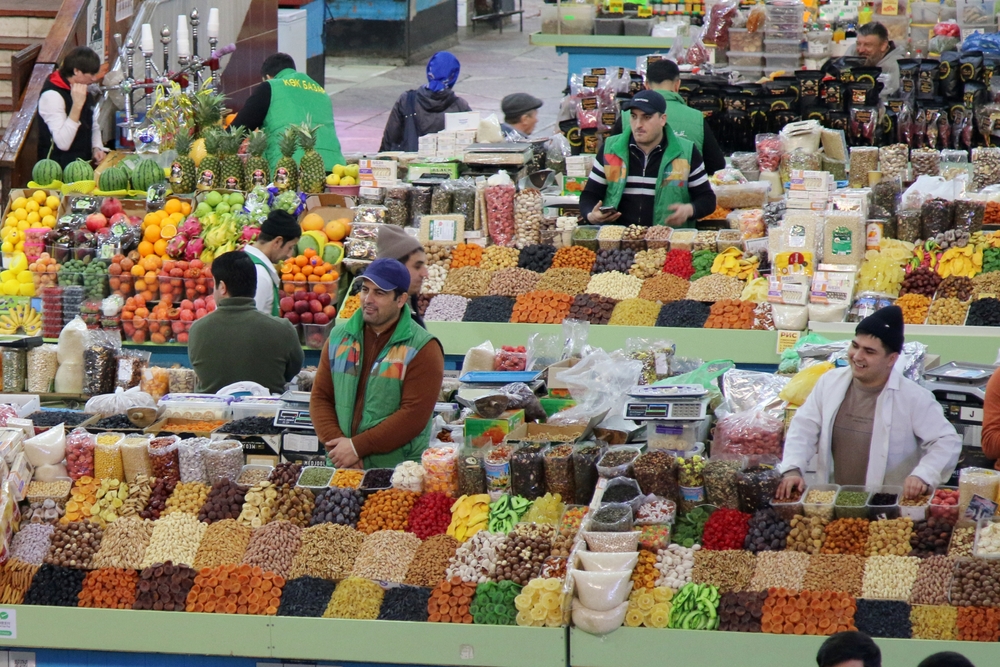
Bishkek (AsiaNews) - The Central Asian International Chamber of Commerce (CAIC) has announced the launch of the international ‘Big Central Asia’ programme, aimed at creating a unified trade area across the wider Central Asian region. The initiative involves the development of trade corridors, investment platforms, logistics and projects in the water, climate and food security sectors.
According to the Chamber, the programme proposes viewing Central Asia not only as comprising the five countries of the region, but as a broader Eurasian space encompassing Afghanistan, Pakistan, Iran and Mongolia, as well as related destinations in China, Russia, the Caucasus, Turkey and India. According to Maksat Chaki, president of the CAIC, the aim of the initiative is “to create a permanent mechanism for trade integration, capitalisation and sustainable development in Greater Central Asia”.
The classic definition of the Central Asian region effectively covers an area including Pakistan, Iran, Turkey, Xinjiang in China and Afghanistan, whilst a broader definition excludes Turkey but includes Mongolia and parts of India and Russia. Historically, the region has always been interconnected on religious, economic and other levels, playing an important role in the Silk Road trade network until the 15th century; competition between Soviet, British and Chinese spheres of influence divided the region in the 20th century, whilst in the 21st century it has been contested by various major powers, such as the United States, China and Russia. The region is largely defined by its numerous tribal and clan alliances and the complex events of its history.
“The main challenge for the region is that the countries of Central Asia and the surrounding area are not yet sufficiently perceived by global businesses as a unified commercial space,” note the programme’s promoters. Individual markets have limited scope, and individual trade routes do not always generate sufficient bargaining power. Individual investment projects often fail to attract global attention, but Big Central Asia enables the region to be integrated into a broader economic framework.
The organisation believes the region has the potential to become not only a transit corridor, but also a space for creating added value through logistics hubs, industrial parks, processing facilities, export platforms and joint investment projects. Another objective of the programme is sustainable development: the ‘Climate, Water and Food Security’ platform aims to attract investment and technology in the sectors of water efficiency, agro-industry, climate adaptation, renewable energy and sustainable infrastructure.
The implementation of the initiative is supported by the Big Central Asia 2030 road map, which includes the creation of a business council, national committees, investment mechanisms and a network of international partners. The Chamber emphasises that the initiative does not constitute a political or supranational association, and does not intend to interfere in the internal politics of states. The project is designed as an open business platform for companies, investors, international organisations and the expert community.
The organisation’s website states that the International Chamber of Commerce of Central Asia is “an institution for trade diplomacy, economic integration and the promotion of Central Asia as a single regional space”. The Chamber, as stated, connects businesses, investors, logistics, industry, tourism, cities, chambers of commerce and international markets within a “unified trade architecture for Central Asia”. Headquartered in Bishkek, the organisation has representative offices in Kraków, Poland, and Guangzhou, China.

.png)
28/02/2020 11:05










