








ASEAN Summit warns no progress on Myanmar as humanitarian crisis worsens
ASEAN continues to keep its distance from Myanmar’s military junta: at the summit in Cebu, Philippines, regional leaders demanded access to Aung San Suu Kyi and refused to officially recognise the elections that brought Min Aung Hlaing to power. Meanwhile, however, the humanitarian crisis in the country is worsening: millions of displaced people, widespread hunger and new army offensives against civilians in the Mandalay region.
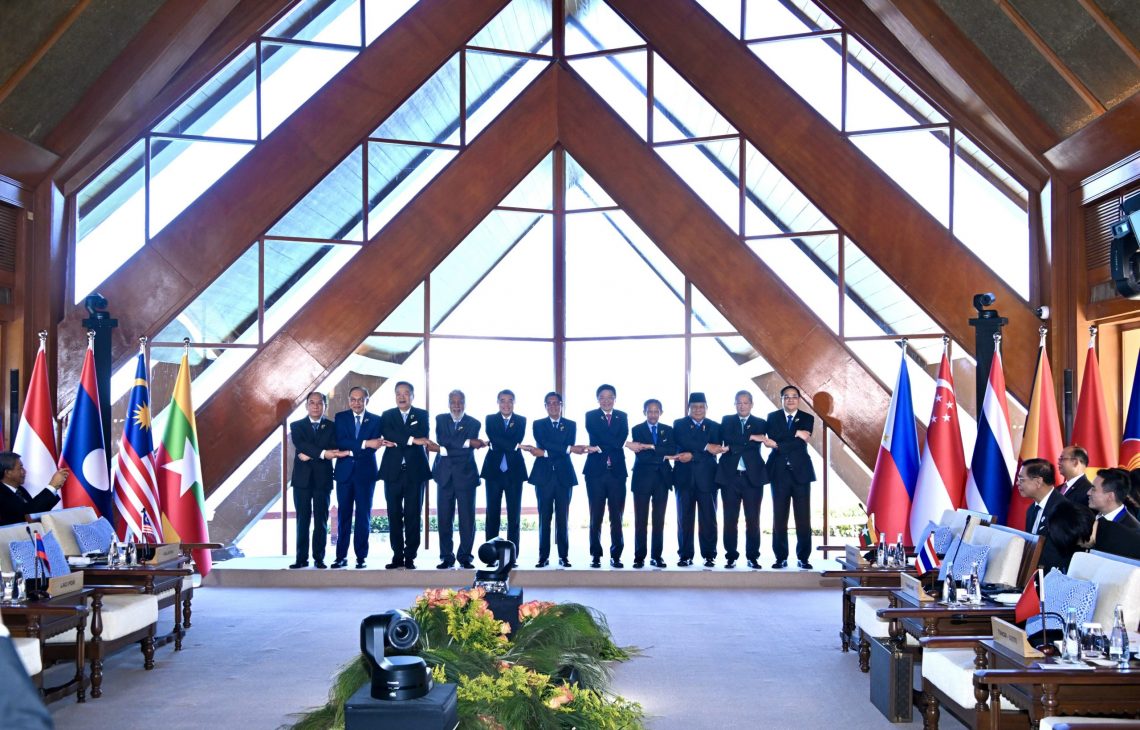
Manila (AsiaNews) – The Association of Southeast Asian Nations (ASEAN) continues to maintain a cautious and distant stance towards Myanmar’s military junta. During the organisation’s 48th summit, hosted by the Philippines, the current chair, regional leaders in fact requested a meeting with Aung San Suu Kyi, who, although in a new residence, remains in isolation, and, whilst approving the release of thousands of prisoners, they refrained from officially recognising the latest elections that brought General Min Aung Hlaing to the presidency of Myanmar.
The summit, held in Cebu City, excluded part of the Burmese military leadership from the high-level meetings. Naypyidaw was represented only by the Permanent Secretary of the Ministry of Foreign Affairs, in line with the decision taken by the organisation following the February 2021 coup to limit the military’s presence at regional summits.
The Philippine Foreign Minister, Theresa Lazaro, who also serves as ASEAN Special Envoy for Myanmar, requested a meeting with Aung San Suu Kyi following reports of her transfer from prison to house arrest. Manila described the transfer as a possible ‘positive development’, arguing that allowing contact with the democratic leader could foster an inclusive dialogue among all parties involved in the Burmese crisis.
The Philippine authorities have also called on the junta to allow the Nobel Peace Prize laureate to communicate with her family, emphasising that greater transparency regarding her conditions of detention would represent a concrete sign of commitment to national reconciliation. The appeal has so far been ignored by the junta.
Manila has also welcomed the recent amnesty granted to over 1,500 political prisoners for the Buddhist holidays. ASEAN, however, has made it clear that it has not reached any consensus on recognising the elections organised by the junta for the end of 2025, explained Dominic Xavier Imperial, the organisation’s spokesperson and an official at the Philippine Department of Foreign Affairs.
The regional bloc continues to refer to the so-called ‘Five-Point Consensus’, the peace plan approved in April 2021 following the military coup. The document calls for an immediate cessation of violence, dialogue between all parties, humanitarian access and mediation by a regional special envoy. So far, however, the plan has yielded no concrete results, to the extent that some former diplomats and officials have called on ASEAN to abandon it.
Meanwhile, the humanitarian situation in Myanmar continues to deteriorate. According to the United Nations, there are approximately 3.6 million internally displaced persons, a figure that could exceed 4 million by 2026, whilst nearly 16 million people are in need of humanitarian assistance.
In the Mandalay region, a military offensive in recent days has forced tens of thousands of civilians to flee their homes. Junta troops have set fire to villages in Myingyan township, destroying homes and forcing the inhabitants of at least 14 villages to abandon the area. According to accounts gathered by local media, many civilians attempted to cross the Irrawaddy River to seek refuge in the nearby township of Myaung, but soldiers reportedly opened fire even on those fleeing.
The United Nations World Food Programme (WFP) has warned that hunger levels in the country have reached ‘unacceptable’ levels. Over 400,000 children and mothers are surviving on extremely meagre diets, often limited to rice or watery soups. Around 8.5 million people now suffer from moderate or severe food insecurity. The World Bank also forecasts a 2% contraction in Myanmar’s real GDP for the 2025–2026 financial year, with inflation exceeding 20%. More than 80% of the population now lives in chronic poverty.
The junta continues to destroy villages, using arson and forced displacement as a weapon to weaken areas considered close to the armed resistance, which comprises various ethnic groups. The Catholic Bishops’ Conference of Myanmar has also recently denounced the “catastrophic deterioration” of the humanitarian situation, calling for an end to attacks on civilians and unhindered access to humanitarian aid.

.png)
21/02/2023 11:21
17/11/2022 11:50
07/12/2022 12:57










