








After the elections, more civilians hit with 'precision' bombs
In the past weeks, Myanmar’s junta continued its campaign against villages, markets, and monasteries, through digital surveillance as well. While the military claims that it is using “precision” weapons, medical staff and eyewitnesses report an increase in lethality. General Min Aung Hlaing visited the conflict zones in Sagaing, a sign that things might escalate soon.
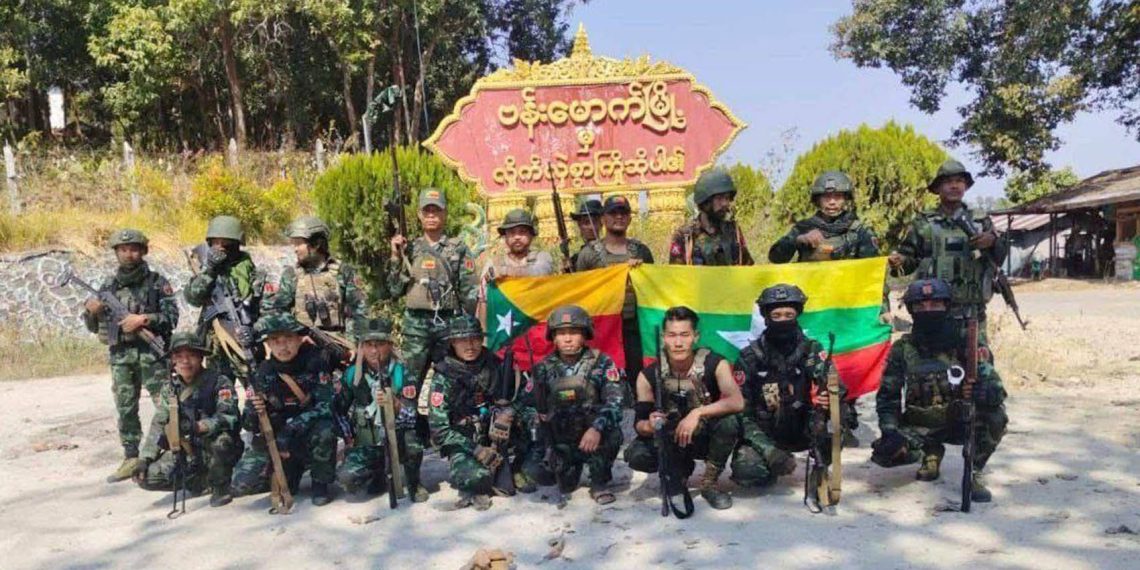
Yangon (AsiaNews) – Any expectations that the recent elections organised by the military junta would reduce violence in Myanmar have quickly evaporated.
Instead, 2026 has been marked so far by the intensification of the junta’s aerial bombing campaign, resulting in further civilian deaths, a pattern that continued during the election campaign.
According to data released by the United Nations at the end of January, more than 400 airstrikes were carried out during the two months of voting, killing at least 170 civilians.
After the polls closed, the attacks continued.
On 13 February, junta planes struck targets in the districts of Mrauk-U and Kyauktaw, in Myanmar's western Rakhine State, causing at least seven civilian deaths.
In Kyauktaw, a bomb destroyed several homes, killing two children as their families prepared meals. The military claimed to have hit a "terrorist hideout" with precision munitions.
On 14 February, a drone strike near Thabeikkyin killed four, including a 14-year-old girl who was working in her family's fields. An official statement only referred to “insurgent infrastructure”.
On 9 February, in the Sagaing Region, the military destroyed a building claiming it was a “command centre” for the People's Defence Forces (PDF), the armed group that has been fighting Myanmar’s regular army since the February 2021 coup.
According to local witnesses, the target was a village administrative office housing displaced families. Civilian casualties were also reported in this case, including a 34-year-old mother and her two daughters.
According to leaders of the ethnic armed organisations that make up the resistance, the country’s air force bombed more than a thousand civilian sites in the past 15 months.
In January, an airstrike in Bhamo District killed 28 civilians, including eight children.
Survivors reported that a funeral ceremony was underway, while the military claimed that opposition fighters were present.
Markets and monasteries also continue to be hit. On 7 February, a drone struck a morning market in the Sagaing Region, killing six shoppers, while on 11 February, a monastic school housing displaced people was hit in Kayah State, killing two teachers and wounding 12 children.
New "precision" weaponry has been used in the latest attacks. According to local medical staff, the new munitions do indeed have a smaller blast radius, but are still more lethal.
“If you’re in that space, you don’t survive,” said one mobile clinic doctor in Shan State. “The technology narrows the destruction. It doesn’t spare civilians inside it.”
According to residents, the use of surveillance systems is also worsening the situation.
According to some, the phones of arrested activists and political opponents are analysed to extract data and map contact networks, before bombing homes and villages connected to the arrested person.
A 6 February report by the organisation CIVICUS documented how Election Protection Laws have been used to arrest more than 330 people on charges of sharing online criticism or engaging in anti-election activities.
“They call it precision warfare,” said a displaced monk coordinating aid. “We call it precise cruelty.”
The resistance has also increased its use of small first-person view (FPV) drones against military targets.
On 12 February, a series of coordinated attacks hit Myitkyina airport. In response, the military bombed nearby villages for two days, killing 11 civilians in three communities.
Now, people living near strategic infrastructures become an indirect target in the junta's bombings.
“We had nothing to do with the airport,” said one survivor who lost multiple family members. “But we lived nearby. That was enough.”
The junta's drones are also targeting resistance bases, further blurring the frontlines and increasing the risk for surrounding villages.
In displace people’s camps along the border areas, refugees complain that technological progress has increased both the resistance's capabilities and the military’s lethality. But precision, they say, is not justice.
A bomb that destroys a single house instead of an entire neighbourhood continues to kill the family living there.
After claiming victory in the elections, junta strongman General Min Aung Hlaing seems determined to pursue a military solution regardless of the human cost.
Skipping the Lunar New Year celebrations in Yangon, he arrived on Sunday in Homalin, in the northern areas of Shan State that remain besieged by armed resistance groups.
Here he met with district officials and residents before addressing troops from the Northwestern Command, telling them they must be able to fully utilise "modern weapons and technologies" provided by the army.
Last week, junta forces recaptured the town of Banmauk, which lies on the border with Kachin State.
Some local analysts believe General Min Aung Hlaing's visit is a signal that the military is still holding positions in parts of Sagaing and that a violent escalation in fighting in these areas could unfold in the coming days.

.png)
04/05/2021 16:15
31/05/2021 11:25










