








The persecution of environmentalists in Siberia
The story of the Sibir.Realii website on the battles of Aleksandr Sosnov and Albina Fateeva against the unbridled exploitation of natural resources and the business dealings of the oligarchs. Initiatives for which they had to endure visits from the FSB special services and other threats. Until they decided to emigrate to Armenia to protect their 15-year-old son.
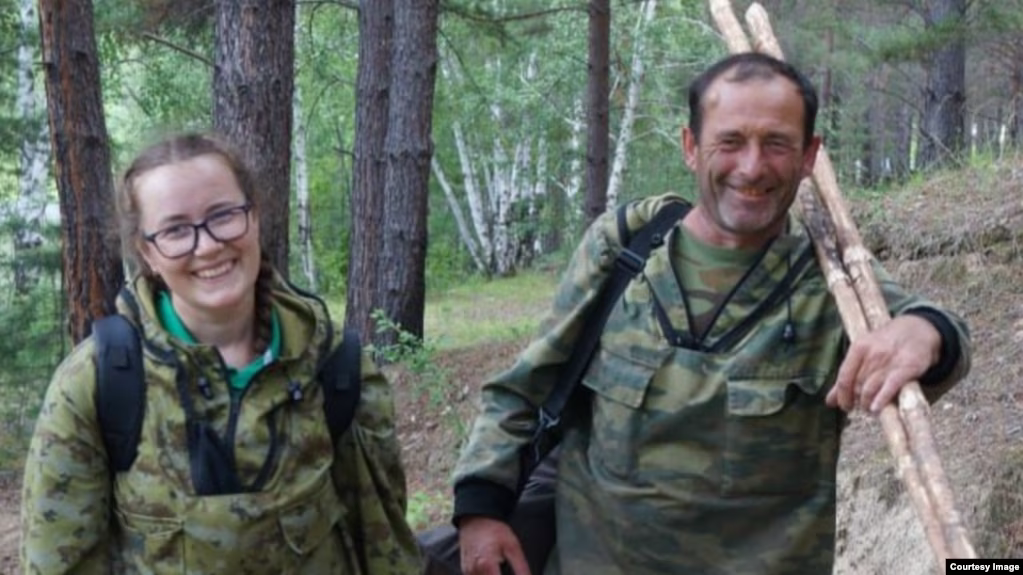
Moscow (AsiaNews) - It is not easy to defend the rights of nature in Russia, as the story of two environmental activists, Aleksandr Sosnov and his wife Albina Fateeva from the village of Krasnyj Čikoj in the Siberian region of Zabajkal, told by a report on Sibir.Realii, teaches us.
For years, the couple fought against a construction project in the nature reserve on the Zašulan-Geršelun road, where the company Razrezugol intends to store raw materials for export to China, and against gold mining activities that pollute and destroy the rivers in the area, receiving threats and even physical violence in response.
In the spring of 2025, Albina had once again written a document denouncing the ecological problems in the region, and received a visit at her home from members of the FSB special services, who questioned her about the appeals she and her husband had sent regarding waste dumps and the indifference of the local authorities. It was then that Albina and Aleksandr decided to leave Russia.
Albina is 38 years old and has a first degree in history, after which she specialised in ornithology. Aleksandr is 55 years old and has had many jobs, always seeking to independently explore many topics that interested him.
He met his future wife on an archaeological expedition to Ust-Menza, where the Menza River flows into the Chika and where the remains of a prehistoric man were found in the 1980s. For many millennia, humans have inhabited this area of eastern Siberia, in the Chika plain. The couple are in love with their native land and could not remain indifferent to the destruction caused by industrial and mining operations, taking action to defend the environment.
In 2028, Sosnov became a municipal deputy for the province of Krasnyj Čikoj, participating in the ecology and agriculture commission that carried out investigations in the area, and since 2024 he has focused on monitoring waste discharges from gold mines along the Čika River.
He had also managed to obtain satellite images of the illegal discharges, but the public prosecutor's office ignored the complaints filed by the commission against the gold mining company Vertikal, which holds licences for the extraction of precious minerals in the Zabajkal region but also employs teams of undeclared workers, mostly Chinese, as the gold is mainly destined for China.
Even during inspections accompanied by police officers, the workers of these companies threatened Aleksandr with “hanging him from a birch tree” or with phrases such as “people like you should be thrown in jail, you are preventing the country from developing and people from working and earning a living”.
Very wealthy men came to him and ordered him to stop and ‘shut up and not stick his nose where it doesn't belong’, because ‘you don't know how much money is involved in these activities, you could come to a bad end’.
Vertikal executives accused him of ‘working for Westerners’, where he had obviously been instructed to disrupt these activities, ‘otherwise how do you know all these things?’, threatening to send him to the front line of the special operation in Ukraine, where many Zabaykal residents had enlisted and many had died.
Razrezugol, the other large company that Albina and Aleksandr tried to fight, is owned by one of Russia's leading oligarchs, Oleg Deripaska, who is involved in major projects with the Chinese. The lawsuit they filed in this case also led to threats and risks of violence, especially after the provincial court partially ruled in their favour in February 2025, overturning the conclusions of the official investigation into the ecological conditions of the area concerned, provided by the state agency Rosprirodnadzor.
Their request concerned the diversion of the road under construction away from populated areas, but “they needed it precisely in the places most at risk of serious environmental consequences”, and in the end the two activists were forced to take another route, going to Armenia with their 15-year-old son Anton, who was also being targeted, leaving the country and the nature they had tried so hard to defend.

.png)










