








Amman focusing on rail to revive transport halted in Hormuz
The Aqaba Port Rail Project is a cornerstone of the economic and logistical transformation of the transportation corridor between the Gulf and Europe. The project is set to begin in 2027 with a five-year construction timeframe. Concerns remain over regional instability, financial sustainability, and coordination among the various stakeholders involved. The construction of a dry port in Jordan’s southern region of Ma'an is also under consideration.
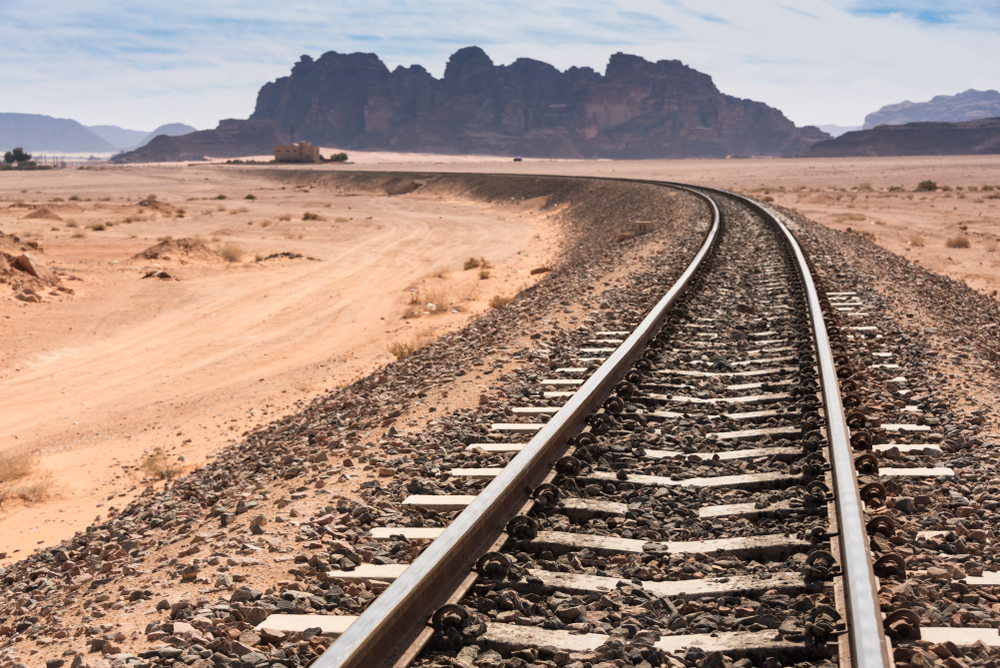
Milan (AsiaNews) – In an era of large container ships and cargo planes, dedicating resources to rail transport would seem anachronistic. Yet, in some contexts, rail is once again proving to be a necessary and potentially winning strategy.
This is the case in Jordan, where the Aqaba Port Rail Project aims to become one of the pillars of the country's economic and logistical transformation. With an estimated investment of US$ 2.3 billion, the new railway line represents the largest rail project in the kingdom's history.
Structured as a joint venture between Jordanian capital and a United Arab Emirates (UAE) sovereign wealth fund, the initiative reflects a strategic convergence aimed at strengthening the country's competitiveness in the medium to long term.
The agreement was signed on 15 April in Abu Dhabi in the presence of Jordanian Prime Minister Jafar Hassan and UAE Vice President and Deputy Prime Minister Sheikh Mansour bin Zayed Al Nahyan (also known for his ownership of the English football club Manchester City).
An initial agreement for a joint investment in the rolling stock sector had already been reached in 2023 following discussions between King Abdullah II of Jordan and UAE President Sheikh Mohamed bin Zayed Al Nahyan.
The infrastructure, approximately 360 kilometres long and divided into two sections, will connect the main phosphate and potash mining centres of Shidiya and Ghawr As Safi to the industrial port of Aqaba.
The Shidiya phosphate mines are located in a desert area in Ma'an Governorate, in the southeastern part of the country, not far from the border with Saudi Arabia. Ghawr As Safi, a potash mining hub, is located in the Jordan Valley, near the southern shore of the Dead Sea in western Jordan.
The most significant number concerns the transport capacity of the future railway, expected to handle some 13 million tonnes of phosphate and 2.6 million tonnes of potash annually, for a total of around 16 million tonnes of minerals.
These volumes highlight the central role of the mining sector in Jordan’s economy, as well as the urgent need for adequate infrastructure. Currently, logistics is heavily dependent on road transport, which is more expensive and less efficient.
The Hashemite Kingdom intends for the railway project to go beyond simply improving freight transport. Part of a broader vision, it should represent the first step toward the creation of a modern national railway network, capable of connecting the country with regional markets.
The goal is ambitious, i.e. the integration of Jordan into the Middle Eastern logistics corridors, connecting Aqaba to neighbouring Arab countries and, potentially, to Mediterranean ports via Syria.
To understand the significance of this initiative, it is necessary to consider the starting point.
Jordan's railway network is currently extremely limited. The historic Hejaz Railway, built in the early 20th century to connect Damascus to Madinah when the country was part of the Ottoman Empire, survives in a reduced form.
That line remains of marginal use, primarily for tourism, and lacks a significant role in modern transportation.
The Aqaba Railway, built in 1979 for the transport of phosphates, was decommissioned in 2018, leaving the country without a truly operational railway infrastructure.
This situation is part of a broader story, affecting the entire Middle East.
After an initial phase of railway development under the Ottoman Empire, which invested significantly in the sector, considering it a strategic tool for political control, social integration, and the economic modernisation of a vast territory, the 20th century was marked by conflict and geopolitical fragmentation.
After the fall of the Ottoman Empire, many railway lines were abandoned or used intermittently, while road transport gradually assumed a dominant role.
The picture has been evolving in recent years. The Gulf countries are investing heavily in modern railway networks, while new logistics corridors are emerging aimed at connecting the Persian Gulf to Europe.
This includes projects such as the Etihad Rail in the UAE and the GCC Railway, a network of more than 2,000 kilometres connecting Saudi Arabia, the UAE, Kuwait, Qatar, Bahrain, and Oman.
In this context, Jordan is seeking to make up for lost ground by positioning itself as a transit hub between various economic areas.
The Aqaba project has direct implications for the mining sector, whose output represents one of the country's main exports. In fact, cutting transportation costs and increasing logistics efficiency could significantly improve the international competitiveness of Jordanian products, particularly phosphates and phosphate-derived fertilisers.
At the same time, it would boost the port of Aqaba as a regional logistics hub and attract further investments and lead to the development of related industrial activities.
Equally significant are the implications for the agricultural sector. Despite its limited natural resources, Jordan has experienced significant growth in domestic production in recent years, with exports reaching 1.68 billion dinars (US$ 2.35 billion) and a self-sufficiency rate of 61.8 per cent for key products.
In this context, more efficient logistics infrastructure can facilitate access to foreign markets, reduce losses along the supply chain, and support domestic price stability.
The new railway project also envisions the development of integrated logistics zones, including the possible construction of a dry port with a logistics terminal in the southern Ma'an region.
These initiatives could stimulate local economic activity and create new job opportunities, particularly in the country's less developed areas.
With the timeline set, and the financial and design phase expected to be completed by early 2027, construction should take approximately five years.
It remains to be seen whether the project will overcome the challenges typical of large-scale infrastructure projects, including (above all) regional stability, financial sustainability, and coordination among the various stakeholders involved.
In any case, the direction is clear. In a region where the railway has long been marginal, the return to rail is not simply a resurgence of the past, but a strategic choice for the future.
For Jordan, this is a concrete attempt to bridge a historical gap and enter a new geography of trade, where logistical efficiency and connectivity are key development factors.

.png)
07/07/2022 14:51










