








As truce between Israel and Hezbollah is negotiated in Washington, the Lebanese call for peace
While the parties work towards a ceasefire, the pro-Iranian party remains opposed to "direct negotiations" with the Jewish state. Lebanon’s capital is experiencing hours of relative calm, but tensions remain in the south. The Druze House hosts a summit of religious leaders. Among the population, a growing consensus calls for peace with the Israelis and normalisation of relations.

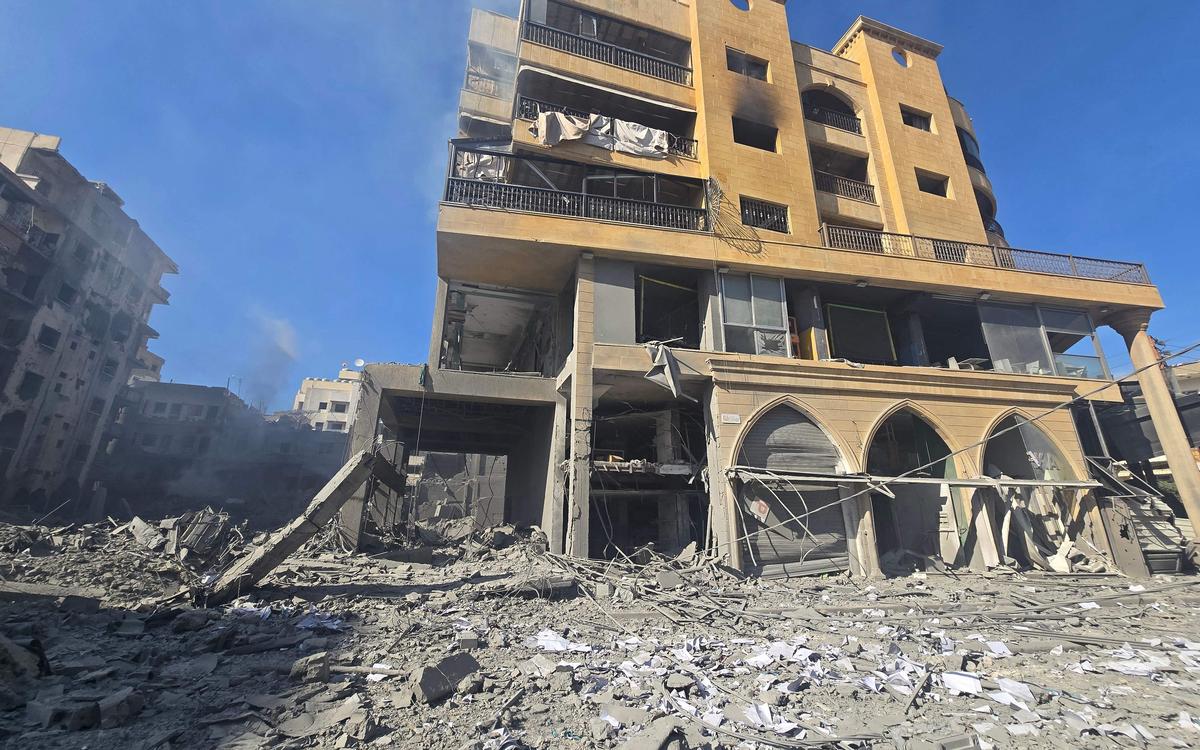
Beirut (AsiaNews) – An unexpected turn of events occurred Monday in the ongoing war between Israel and Hezbollah in Lebanon and northern Israel. The Lebanese embassy in the United States announced Monday evening that Hezbollah had accepted a US proposal for a “mutual cessation of attacks” with Israel, whereas Washington had previously demanded that Hezbollah be the first to stop its attacks.
Just hours earlier, Binyamin Netanyahu had issued a joint statement with his Defence Minister Israel Katz threatening to bomb Hezbollah targets in the southern suburbs of Beirut.
This announcement comes after Donald Trump declared on Monday that he had obtained a commitment from Netanyahu not to send troops into Beirut. “Israel will not attack them and they will not attack Israel,” Donald Trump wrote on Truth Social.
The Israeli prime minister later expressed reservations about the matter, especially since the Israeli army had just achieved a symbolic victory by occupying Beaufort Castle, a 12th-century fortress on a promontory overlooking the Litani River.
As if history were repeating itself, its capture is presented as the completion of the “advanced security zone” the Jewish state sought to create on 6 per cent of Lebanese territory, ostensibly to protect communities in northern Israel. It is believed, however, that despite Mr Netanyahu’s reservation, bombing in Beirut’s southern suburbs is not expected to resume.
Israeli threats to bomb Beirut were made on the eve of the start of the fourth round of Israeli-Lebanese talks at the State Department (2-3 June) in Washington, triggering a mass exodus from the densely populated region, a panic that always seems to erupt with sadistic collective anxiety with each evacuation order.
Nevertheless, the Lebanese embassy confirmed in a press release Hezbollah's acceptance of the US proposal for a mutual cessation of attacks, after it was issued by the office of the Lebanese president, following a telephone conversation between the President Joseph Aoun, US Secretary of State Marco Rubio, and the head of the Lebanese diplomatic delegation to the talks, Simon Karam.
Israeli-Lebanese negotiations scheduled for today and tomorrow in Washington will examine this progress. The objective of the talks between Lebanon and Israel, according to a State Department statement released after the 14-15 May talks, is “full recognition of each other’s sovereignty and territorial integrity, and establishing genuine security along their shared border.”
A "security aspect" of the talks, discussed on 29 May at the Pentagon, had not made any headway in this regard, as Lebanon remained steadfast in its demand for a real ceasefire, and was outraged that Israel, in the name of the “right of defence”, was invading Lebanon and razing some sixty of its villages to the ground.
Interreligious Summit in Beirut
The Lebanese delegation could refer today in Washington to the final communiqué from an interreligious summit held this morning at the Druze House in Beirut that brought together the religious leaders of all of Lebanon's communities. This communiqué reflected the general orientations of the Lebanese state, which has disowned Hezbollah's military actions.
However, at the request of the head of the Shia community, Ali el-Khatib, in the name of the unanimity required in such circumstances, the statement did not include the term "direct talks” to which Hezbollah remains opposed. The Lebanese delegation could also cite the final communiqué from the UN Security Council meeting on the clashes in Lebanon.
According to the Washington correspondents for the Arab television channels Al-Hadath and Al-Jazeera, the exchange between US President Donald Trump and Prime Minister Netanyahu on Monday got heated. The US president reportedly accused the Israeli prime minister of tarnishing Israel's image with his handling of the war in Lebanon, suggesting that he himself is becoming aware of the limitations of the use of force, and even reminded him that it was thanks to him that he "escaped prison”, a reference to Mr Netanyahu’s indictment for corruption in Israel.
Berri as "guarantor" for Hezbollah
The Speaker of the Lebanese Parliament, Nabih Berri, speaking on behalf of the "Shia tandem" (Amal-Hezbollah), stated on Sunday that Hezbollah was ready for a "total and immediate" ceasefire with Israel and has pledged to guarantee its implementation, according to Ali Hamdan, Berri's chief advisor, quoted by the US media outlet Axios. In an interview with The New York Times, Mr Berri asserted that "only Trump" is capable of obtaining and enforcing a ceasefire in Lebanon.
This statement aligns with the position of Lebanon’s president, who turned to direct diplomatic action as a last resort, as the only way to save Lebanon, whose internal unity and territorial integrity are threatened by Hezbollah's blind allegiance to the leaders of the Iranian Revolutionary Guard.
It is worth noting that Hezbollah made the decision to engage in hostilities with Israel unilaterally on 2 March, “in support of the Islamic Republic of Iran”, following the targeted assassination of its Supreme Leader, Ali Khamenei, in an airstrike (28 February 2026).
Lebanon caught in "a time loop"
For its part, Tehran raised the stakes on Monday, suggesting that it could open “new fronts” in response to Israel's offensive in Lebanon, according to Iranian state television on Monday, referring to Israeli operations in Lebanon and the Gaza Strip. The network stressed that, in the name of the principle of "unity" of the fronts, “the violation of the ceasefire on any one fronts constitutes a violation of it on all fronts.”
It is unclear how long a ceasefire, which only addresses a small part of the problem, could last, given that Israel demands the dismantling of Hezbollah's military wing and Lebanon insists that its weapons be placed under state control.
For Tilda Abou Rizk, a veteran analyst, the ceasefire evokes the science fiction film Edge of Tomorrow, in which the character of Tom Cruise, trapped in a time loop, relives the same day each time he dies, until he finally masters the data that will allow him to escape.
For Sybille Rizk, a correspondent for Le Figaro, the mere mention of a peace agreement with Israel breaks a taboo in a country conditioned to believe it will be “the last (Arab country) to sign a peace treaty”.
A poll conducted between 28 April and 5 May among 2,000 Lebanese by the Information International Institute reveals a significant increase in support for such a prospect. In less than a year, support went from 25 per cent to nearly 49 per cent, while support for full normalisation climbed from 13 per cent to over 30 per cent.
However, “These overall figures mask deep divisions,” the journalist notes. “The question of peace with Israel is extremely sensitive, given the intense polarisation surrounding this issue, which is fundamental to Lebanese society, touching on identities, political commitments, family histories, and the wounds of all involved.”
It is also necessary to take into account “the enormous military asymmetry and the fact that the Lebanese have not seen the end of Israeli violence: the human toll of the current cycle of violence has reached 3,213 dead and 9,737 wounded since 2 March; more than a million people are victims of forced displacement, while the occupation of nearly 10 per cent of the territory is accompanied by systematic destruction, raising fears of a deliberate attempt to make it impossible for residents to return to the south of the country."
In addition to these destructions, there is the vandalism of the air raids against the major cities of Tyre and Nabatiyeh, where civil society figures have dared to publish statements demanding that they be considered “open cities” protected by UNESCO.
GATEWAY TO THE EAST IS THE ASIANEWS NEWSLETTER DEDICATED TO THE MIDDLE EAST. WOULD YOU LIKE TO RECEIVE IT EVERY TUESDAY? TO SUBSCRIBE, CLICK HERE.

.png)
06/05/2026 13:48
28/05/2026 19:26










