








Catholic intellectuals: ‘moral statement’ on democracy and justice in Indonesia
In a document issued in Yogyakarta, the Association of Catholic Higher Education Institutions has called for collaboration during a period of change and new challenges for the country. “Political leaders must commit to promoting transparent and accountable governance.”
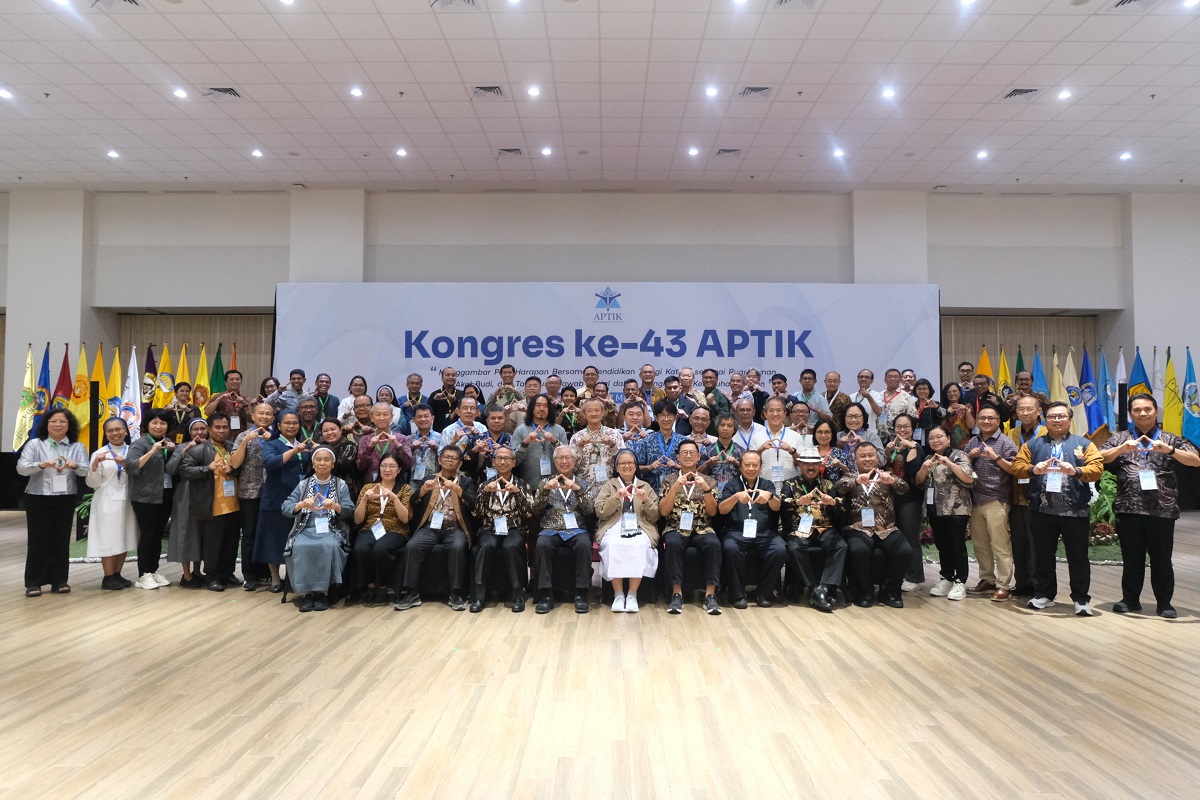
Jakarta (AsiaNews) – “Concern”, yet at the same time “hope” for the future, regarding the current state of democracy in Indonesia. This is the sentiment expressed by the Association of Catholic Higher Education Institutions (Aptik) in a moral declaration of intent with the emblematic title: “Nurturing democracy, pursuing justice, sustaining hope”. Published on 29 June in Yogyakarta, in the province of Central Java, the statement calls on all sectors of society to work together to safeguard democracy, strengthen justice and promote hope “for a more dignified future for the nation”.
Aptik points out that the nation is founded on solid principles thanks to the 1945 Constitution and the Pancasila, but that global economic uncertainty, geopolitical shifts, rapid digital transformation and complex political and social dynamics present new challenges. As part of the academic community, the association believes that higher education institutions are called upon not only to advance knowledge, but also to provide moral reflection. Universities, it states, have a responsibility “to nurture individuals, promote a culture of dialogue, and uphold truth and hope for an Indonesia that is increasingly democratic, just and respectful of human dignity”.
Challenges to democracy
The Catholic association identifies a number of “urgent challenges” relating to democratic life, including the protection of civil liberties: academic freedom, freedom of the press, freedom of association and the right to express opinions. Aptik has also emphasised that state governance must serve the public interest through transparent, accountable and merit-based administration. Furthermore, democracy requires strong and independent institutions operating within the framework set out by the Constitution. The balance between state institutions, judicial independence, a free press, civil society and the academic world is identified as an essential pillar for the country.
The Catholic movement also reaffirms the supremacy of the civil sphere, whilst the actions of the security forces (and the military) must remain within constitutional limits and be guided by the values of professionalism and responsibility. In addressing technological developments, it recognises that the digital world and artificial intelligence offer enormous opportunities, as well as significant ethical challenges, whilst also warning against disinformation, the manipulation of public opinion, the misuse of personal data and increasing polarisation. It also highlights the need for leadership rooted in integrity, honesty, humility, a willingness to listen, and a commitment to the nation’s interests, which must go hand in hand with social justice, the protection of vulnerable communities and greater opportunities for young people.
Universities and Morality
Aptik went on to reaffirm that higher education institutions have a strategic role as guardians of the nation’s moral conscience. Universities “are not merely centres for producing competent graduates, but also spaces for cultivating wisdom, shaping character and pursuing truth”. The association emphasised that academic freedom is an indispensable condition for the advancement of knowledge. As well as promoting critical thinking and constructive dialogue, universities are encouraged to strengthen digital literacy, democratic education, public ethics and character building so that future generations combine intellectual excellence with moral responsibility and a commitment to the common good. “We are responding,” explains Widyoputranto, the association’s executive secretary, to AsiaNews, “to broader developments we have observed regarding the state of democracy, freedom of expression and the growing role of the military in public life. We believe these are important issues that merit careful reflection and public concern.”
Through its moral statement, Aptik has called on government leaders to recommit to transparent, accountable and merit-based governance that prioritises people’s well-being whilst maintaining an open and constructive dialogue with society. Civil society organisations, the media, religious communities and the business sector are encouraged to promote a culture of dialogue, respect diversity and reject all forms of violence, hate speech and the dissemination of misleading information. The Catholic association has also called on universities across Indonesia to strengthen education in democracy, public ethics, digital literacy and character building.
Upholding hope
Aptik concluded its statement by affirming that “hope is the force that enables a nation to persevere in the face of adversity”. According to the association, Indonesia needs more trust rather than fear, more dialogue rather than polarisation, and greater wisdom rather than an unchecked accumulation of power. As a community of Catholic higher education institutions, it reaffirmed its commitment to providing an education that liberates, as well as promoting scholarships that uphold human dignity and serving society in ways that strengthen justice, fraternity and the common good.
Finally, the association expressed its confidence that Indonesia will remain a “strong and inclusive common home” if all elements of society continue to safeguard democracy with wisdom, uphold justice with courage, and sustain hope through a spirit of solidarity and fraternity. The statement was issued in Yogyakarta and signed by its president, Johannes Eka Priyatma, and by the leaders of Aptik’s 28 active members across the Indonesian archipelago.

.png)
04/02/2021 11:55
18/08/2017 17:57










