








Caught between the US and Iran, Iraq’s new cabinet fails to include key ministers
Fourteen of 23 ministers have been named, with Interior and Defence still without office holder amid tensions between political parties. Two secret Israeli bases in Iraq were used to attack Iran. Pope Leo XIV met with Kurdistan's President Barzani. The newly elected Chaldean Patriarch Nona arrived in Baghdad, with his official inauguration on 29 May.
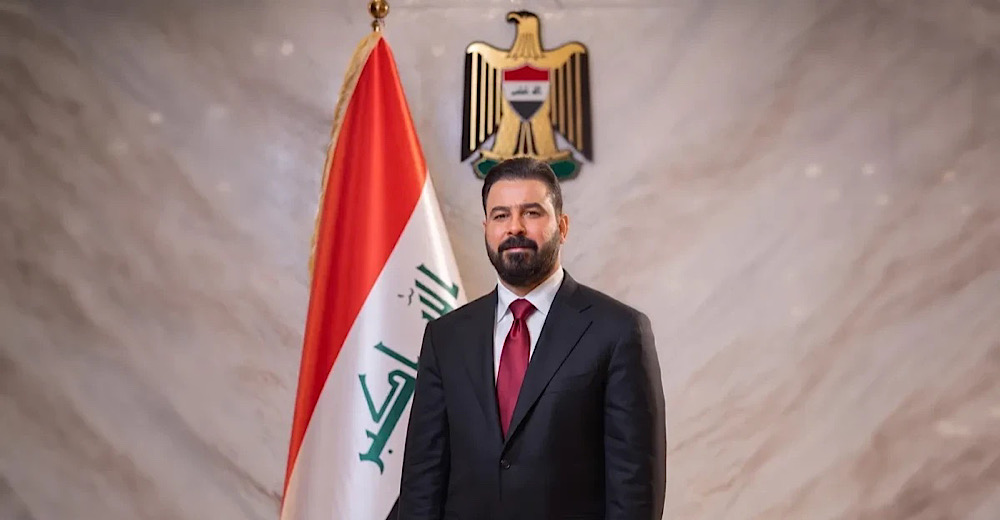
Baghdad (AsiaNews) – Iraq’s new prime minister, Ali al-Zaidi, was sworn in last week and the country’s new cabinet is nearing completion, with some key portfolios, such as Interior and Defence, yet to be filled, subject to further negotiations between parliament’s main political forces.
This comes as Iraq continues to struggle after months of political and institutional stalemate to define the new leadership that will lead the country amid the many challenges and critical issues, from the economy to the winds of war that are blowing across the Middle East.
This picture is further complicated by recent media revelations alleging that Israel set up two secret bases in the country, and used them to launch attacks against Iran in the latest Gulf War.
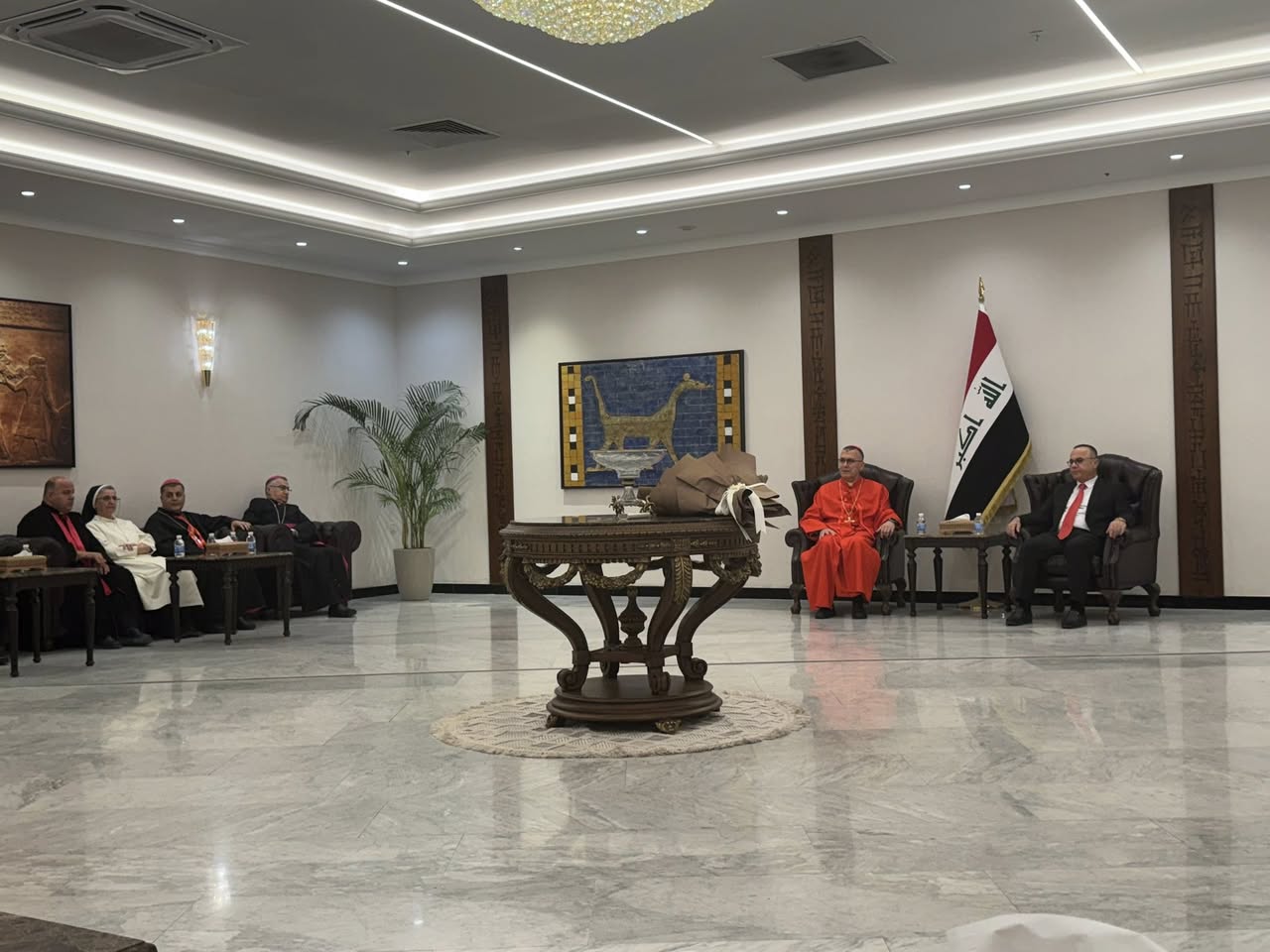
Confessional tensions and issues also remain unresolved, and Christians have not been spared, even though the community celebrated two major events today: Pope Leo XIV’s meeting in the Vatican with the president of Iraq’s autonomous Kurdish region, Nechirvan Barzani, and the arrival in Baghdad of the new Chaldean Patriarch Paul III Nona ahead of his official entry and the inauguration Mass scheduled for 29 May.
Last week, Ali al-Zaidi was sworn in as the country's new prime minister, taking up the difficult legacy of his predecessor, Mohammed Shia al-Sudani, at a time of deep internal and regional turbulence, starting with the external influence (or interference) by the United States and Iran.
Several ministers were sworn in along with the new head of government, although lawmakers failed to reach a consensus on some key ministries, such as the aforementioned Interior and Defence.
Basim Mohammed was appointed the new oil minister, a key position in one of the world's leading oil-producing nations amid a global energy crisis, while Fuad Hussein has been confirmed as Foreign Minister.
The Al Hadath pan-Arab TV channel reported that among the factors blocking the approval of several key ministers, 9 out of 23, was Washington's opposition to figures considered too close to the Islamic Republic.
Zaidi went before parliament to present his government programme, which was not broadcast live nor announced publicly.
Furthermore, the session was marked by heated discussions and clashes among MPs, after one faction blocked the appointment of the Interior Minister.
“Parliament approved 14 ministries, while nine ministries remain pending. Three of them failed to win parliament’s confidence today,” MP Muqdad al-Khafaji told Reuters.
Zaidi, who at 40 is Iraq's youngest prime minister, was picked to form the new government on 27 April.
His appointment followed months of stand-off after the United States, a key player in Iraqi politics, opposed the candidacy of former Prime Minister Nouri al-Maliki, who was the leading contender for the job because he is deemed too close to Tehran.
The new prime minister is backed by the Coordination Framework, a ruling alliance of powerful Shia groups, with close ties (also) to Iran. It should be noted that on 1 May, US President Donald Trump expressed strong support for Zaidi in a phone call right after his nomination.
The new prime minister is not a career politician, but a businessman and multimillionaire with interests in multiple sectors, including banking, media, and the Iraqi government's vast food programme serving millions of people.
Experts stress that he faces a challenging and critical task, starting with the disarmament of militias backed by Iran, viewed as terrorist groups by Washington, not to mention the widespread and entrenched corruption. He must also balance ties with the US and Iran.
On the domestic front, news recently reported by the New York Times, that Israel covertly used Iraqi territory where it set up two secret bases that it used to attack Iran, have sparked a heated debate.
Related to this, an army soldier and a civilian (an unsuspecting shepherd identified as Awad al-Shammari) were reportedly killed in targeted helicopter operations by the Jewish state because they accidentally discovered one outpost's existence, potentially compromising Israel’s operation.
Last week, the Wall Street Journal had also reported a hidden Israeli outpost in Iraq’s Western Desert, used during the conflict with Iran to support air operations and host special forces units.
According to the paper, the installations were built shortly before the start of the war in February and were used during an attack in March on Iraqi troops who were on the verge of discovering the site.
Israeli newspaper Maariv reported that the Israeli military deployed rescue teams and commando units to the forward position, tasked with extracting downed aircrews from inside Iran if necessary.
Officials spoke to the New York Times about a second Israeli base in the same desert, which preceded the current war between the United States, Israel, and Iran, used during the lightning campaign against in June 2025.
According to local witnesses, the discovery of the base by shepherd Awad al-Shammari, who stumbled upon it on his way to buy groceries, saw an Israeli helicopter open fire on his lorry. Shammari’s family searched for him for two days before learning of his fate.
The revelation has fuelled anger and resentment among ordinary Iraqis and the country’s leaders. Iraq has no diplomatic relations or ties with Israel.
It is also worth remembering that, in May 2022, Iraqi lawmakers achieved a remarkable unity of purpose by almost unanimously approving a law that makes it a criminal offence, and punishable by death, to support the normalisation of relations with Israel.
MP Raed al-Maliki accused the United States of handing over Iraqi airspace to Israel during the war, but the government has not so far made any official comment.
Finally, today, Iraqi Catholics celebrated the arrival from Australia of the new Patriarch Nona who landed in the capital Baghdad ahead of the inauguration Mass on 29 May.
For his part, Kurdistan President Barzani met with Pope Leo XIV in Rome for a productive discussion that took place in a cordial atmosphere.

.png)










