Chaldean synod to pick Sako's successor to begin in Rome on 9 April
The bishops will meet between 9 and 15 April to choose a new patriarch. The former head will not participate nor vote so as not to "influence" the decision. This ancient Eastern Church, rooted in Mesopotamia, is currently experiencing a period of difficulty due to the exodus and war. The challenges of the last decade include the Islamic State group and the revocation of the presidential decree.
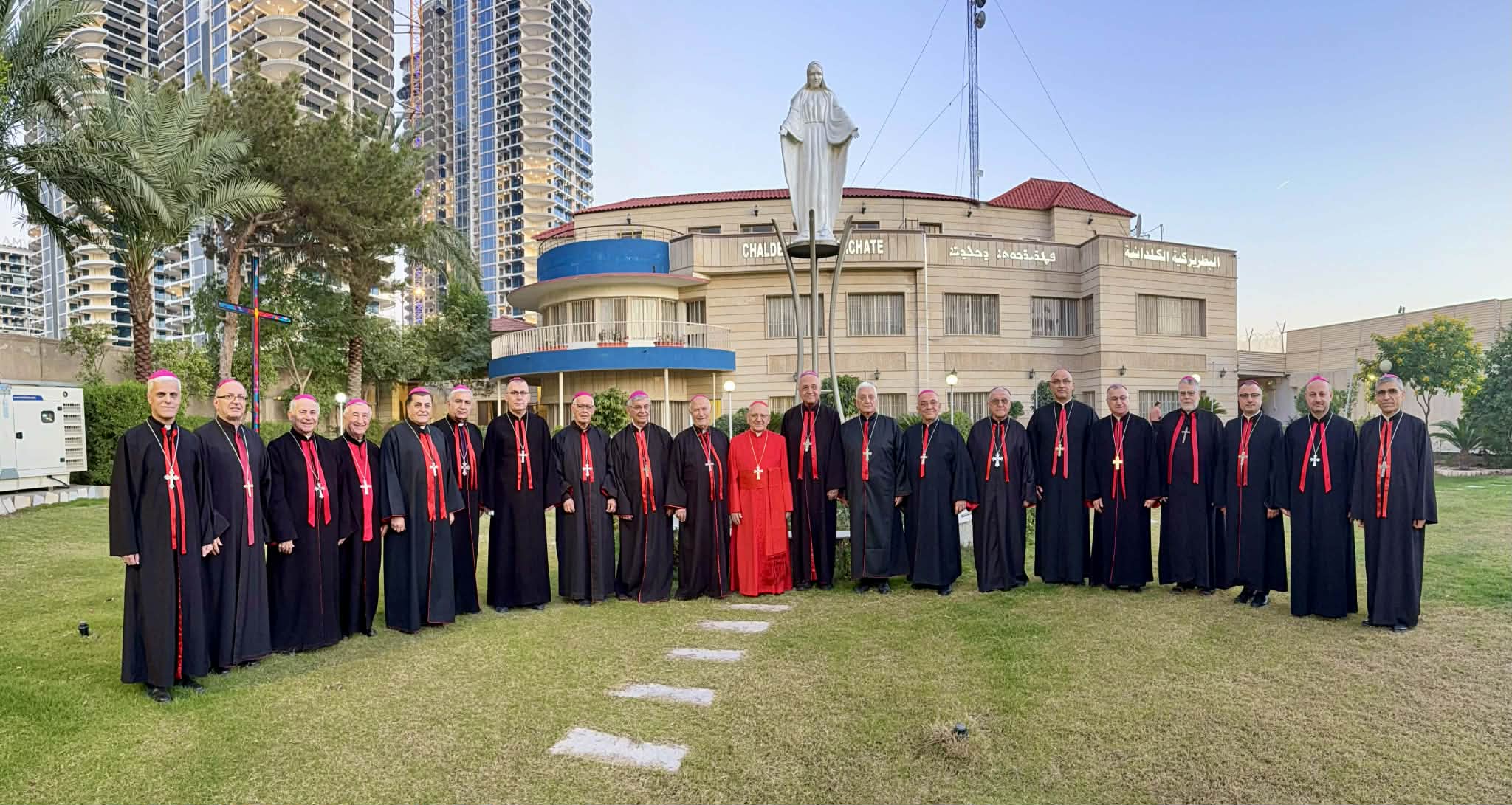
Baghdad (AsiaNews) – The next synod to elect the successor to Cardinal Louis Raphael Sako, who resigned on 10 March, as the new Chaldean primate will be held in Rome from 9 to 15 April, immediately after Easter celebrations.
The statement announcing the decision was posted yesterday on the patriarchate website. It notes that Chaldean bishops will meet to choose the new leader of their Church, one of the oldest and richest Eastern Churches in terms of faithful, history, and tradition, which is in full communion with the worldwide Catholic Church.
Soon after his official resignation, the former patriarch announced his intention not to participate in the synod to elect his successor so as to allow the bishops greater freedom to choose without external influence, pressure, or interference in a Church that has experienced more than one internal crisis in recent years.
In this transitional phase, pursuant to Canon 127 of the Code of Canon Law of the Eastern Churches, the day-to-day affairs of the Chaldean Patriarchate have been entrusted to the most senior member of the synod, Archbishop Habib Hrmuz Al-Naufali of Basra, southern Iraq, who will guide the other prelates in the process of picking a new patriarch.
Louis Raphaël I Sako became patriarch in January 2013 and was elevated to the rank of cardinal on 29 June 2018. He submitted his resignation to Pope Francis two years ago, upon his 75th birthday, but the late pontiff refused to accept it, renewing his trust in Sako to continue his work.
Faced with new and increasingly demanding challenges, Cardinal Sako decided to resign now and entrust the position to a new person. He also intends to leave the See of Baghdad and retire before long in Erbil, in Iraqi Kurdistan, to pray and "live in peace, serenity, and joy."
This is also why he chose not to participate in the synod's work, nor play any active role in the selection of his successor, because he won’t have anyone say, that "I intervened, influenced, or supported one candidate over another.”
In fact, nothing is certain about his move, partly because northern Iraq is among the areas hardest hit by Iranian rockets fired at Gulf and Middle Eastern countries, in response to the war launched by Israel and the United States against Iran.
Unlike his predecessors and despite Cardinal Sako’s age, 77, choosing the next primate of the Chaldean Church is not due to health reasons or advanced age. Before him, Patriarch Mar Raphael I Bedaweed and Cardinal Emmanuel III Delly presented a more complex picture, while Cardinal Sako, with his resignation, wants to signal a break in a Church marked by many complexities and problems.
It is also an opportunity to turn a new page and vet internal disagreements, which have pushed some bishops in the past to take a stand against the patriarchate itself by deserting synods and publicly and openly expressing opposition and criticism of the cardinal's agenda.
Among other things, just a few days before Cardinal Sako's resignation, allegations of corruption and malfeasance led to the arrest of the Bishop of Emmanuel H. Shaleta San Diego, while on the very day of the cardinal's farewell, Pope Leo XIV appointed Bishop Saad Sirop Hanna, as the apostolic administrator of the Eparchy of Saint Peter the Apostle of San Diego, sparking some veiled criticism.
The appointment of a bishop for the vacant see of the Eparchy of Alquoch (northern Iraq), following the passing last June of Mgr Paulo Thabet Al-Mekko, is another issue on the agenda of the next Chaldean primate.
The Chaldean Catholic Church is a direct descendant of the Church of the East, which traces its origins to ancient Mesopotamia and the saints Mar Addai (Saint Addai) and Mar Mari (Saint Mari), disciples of Saint Thomas the Apostle.
Today, four Churches claim the heritage of the Church of the East: the Chaldean Catholic Church, the Assyrian Church of the East, the Ancient Assyrian Church of the East, and the Syro-Malabar Catholic Church.
The Catholic Church encompasses various rites, both Western and Eastern: the Chaldean Church is one of 23 rites associated with the East and, while in full communion with the Pope, retains its own identity and traditions, as well as its spirituality and liturgy, the latter being one of the areas of renewal undertaken by Patriarch Sako during his tenure.
The Cathedral of St Joseph in Baghdad is the official seat of the Chaldean Catholic Church, which encompasses several eparchies and dioceses in Iraq and around the world, from Canada and Australia to the United States and Northern Europe.
The faithful number over 600,000, most of whom – approximately 300,000 – still live in the Arab country, although their number once exceeded a million. Over the past 23 years, since the US invasion of Iraq in 2003, hundreds of thousands have fled, enlarging diaspora communities, to escape war, violence, and persecution in the country.
Due to a series of attacks, the patriarchal seminary was moved in 2006 from Baghdad to Erbil, Iraqi Kurdistan, while the old seminary in the capital became a shelter for needy families at the behest of Cardinal Sako himself.
Between 2007 and 2008, two sectarian assassinations were carried out by Islamic extremists against the Chaldean Church, both in Mosul, in the north: Fr Ragheed Ganni on 3 June 2007 was shot, and Bishop Paulos Faraj Rahho was found dead on 13 March 2008 after he was abducted a few days earlier.
In 2014, again in Mosul, one of the darkest chapters for the Chaldean Church and Christians in the Middle East unfolded, namely the rise of the Islamic State, which established its "caliphate" in the northern metropolis and ruled for over two years amid violence and terror, a reflection of jihadi madness.
Hundreds of thousands of Christians hastily abandoned the city and the Nineveh plain, often with only their clothes on their backs, to escape Abu Bakr al-Baghdadi's men. And of those who fled, many never returned, contributing to the depopulation and impoverishment of some of the region's oldest Christian communities.
In addition to Islamic radicalism that swelled the diaspora, the Chaldean Church also experienced strong internal tensions and fierce clashes with the Iraqi authorities, most notably, the decision in the summer of 2023 by President Abdul Latif Rashid, an ethnic Kurd, to repeal a “presidential decree" issued by his predecessor, Jalal Talabani, that recognised Cardinal Sako as Patriarch of the Chaldeans and responsible for all ecclesiastical property in Iraq.
The political and religious rift was sparked by an attempt of the leader of the Babylon Brigades, Rayan al-Kildani, to seize Christian property and claim their representation in Parliament.
In reality, the self-styled Christian leader had ties to pro-Iranian Shia militias active in Iraq, who were trying to claim the right to represent the minority in the country and its institutions. Part of this included a smear campaign against the patriarch himself.
The cardinal responded to the brutal attack with an equally strong stance, such as temporarily moving the patriarchal seat from Baghdad to Erbil. Only with the intervention of Prime Minister Mohammed Shia' Al-Sudani and the reinstatement, by decree, of all powers associated with the patriarchal office, did Cardinal Sako return to the capital in April 2024.
Although the affair was seemingly settled, it had repercussions fuelling internal dissension in the Chaldean Church, which emerged with a vengeance a year later when five bishops – among them prominent figures – decided to boycott the synod, despite the possibility of harsh canonical penalties, something the patriarch had hinted at.
The future patriarch will soon have to address many issues, from the Christian exodus and the wars in the Middle East to diaspora communities and internal Church unity, counting on the prayers and silent support of his predecessor.

.png)
24/10/2019 17:56