








Childhood in crisis in Turkey: Numbers halved, but 34.4% are at risk of poverty
This is what emerges from the report “Children in Statistics 2025” compiled by TurkStat. In 1970, children accounted for 48.5% of the population; today they account for 24.8%. Regional disparities in infant mortality; the southeastern regions have the highest number of children. Record numbers also for minors in prison, in pretrial detention, or convicted. A new law against social media use by those under 15.
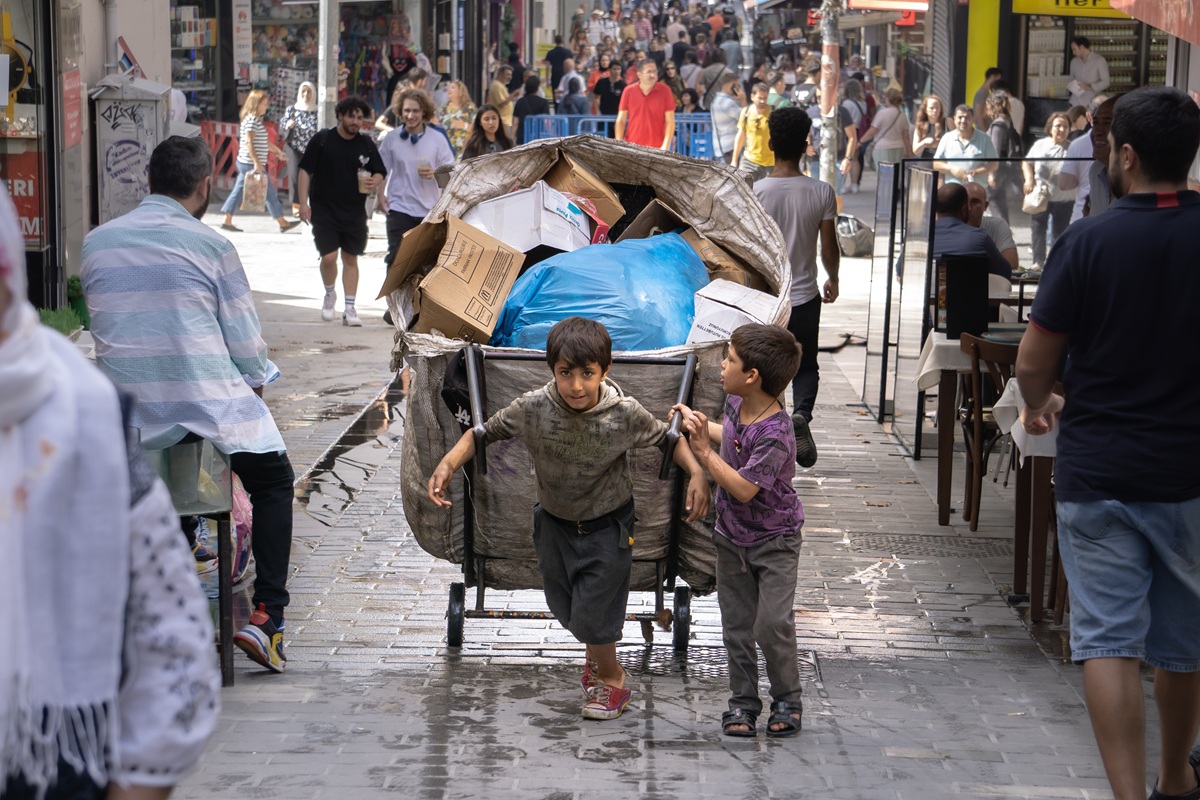
Istanbul (AsiaNews) - Over a third of children in Turkey are at risk of poverty or social exclusion, and their overall share of the total population has nearly halved over the past 50 years, against the backdrop of an aging and impoverished society.
This is what emerges from the data contained in “Children in Statistics 2025”, published in recent days by the Turkish statistical institute TurkStat (see the summary in the graphic here), which presents a worrying picture for the country, confirmed also by figures on the prison population: last year was marked by “systemic failures” in child protection, leading to record-high deaths and incarcerations.
In 2025, the number of children in Turkey stood at 21.3 million, accounting for 24.8% of the total population, with boys making up 51.3% and girls 48.7%. The figures show a clear decline since 1970, when children accounted for 48.5% of the population, with a gradual drop to 41.8% in 1990, 30.9% in 2007, and 24.8% in 2025.
In roughly half a century, the percentage of children in the total population has nearly halved, and no reversal of this trend is expected in the future: projections indicate a further decline to 22.1% in 2030, 19.6% in 2040, and 16.9% in 2060.
Furthermore, 36.8% of children are at risk of poverty or social exclusion: TurkStat data indicate that this figure is calculated by combining three indicators: 34.4% of children are at risk of relative poverty, 6.5% face severe material and social deprivation, and 23% live in low-work-intensity households. Taken together, these indicators show that more than one-third of children in Turkey are exposed to at least one form of basic deprivation.
Looking at schooling, the net enrollment rate at age 5 is 84.3%. At the primary school level, the figure exceeds 95%. A similar picture emerges in lower secondary education.
However, the picture changes at the upper secondary level, with the rate dropping below 90%. This decline demonstrates that dropping out of school, particularly for economic reasons, remains a significant problem. Added to this are persistent inequalities in access to preschool education, with lower rates in rural areas and among low-income families. This trend is expected to continue into the future.
The labor force participation rate among 15- to 17-year-olds is 25.5%, rising to 36.5% among boys while falling to 13.9% among girls—a gap that shows how young men are pushed into the workforce at an early age more often. While one might expect child labor to decrease as children remain in the education system longer, actual data show that this has not happened, particularly for boys, confirming that child labor remains a “structural problem.”
According to TurkStat data, the infant mortality rate is declining, but despite this decline, significant regional disparities persist. A significant percentage of children also face difficulties accessing basic needs such as healthy food, adequate heating, and suitable housing.
According to marriage statistics, the share of official marriages involving girls aged 16–17 out of all official marriages was 7.3% in 2002, a figure that is projected to drop to 1.5% by 2025. In contrast, the share of official marriages involving boys in the same age group among all official marriages was 0.5% in 2002 and fell to 0.1% in 2025.
The persistence of early marriages points to a situation directly linked to school dropout rates and poverty. Furthermore, following divorce, child custody is largely awarded to mothers—at approximately 75%—while fathers are granted custody of the children in about 25% of cases at the time of the couple’s separation.
This demonstrates that childcare remains largely the responsibility of women. Meanwhile, as the number of children benefiting from foster care services increases, the number of minors in institutional care also remains significant.
At the provincial level, significant regional disparities remain evident in the distribution of the child population across Turkey. The southeastern provinces recorded the highest child population ratios, with Şanlıurfa leading at 43.3%, followed by Şırnak at 39.2% and Mardin at 36.7%. At the lower end, the provinces with the smallest shares of the child population are concentrated in the northwestern and eastern regions of Turkey, which have structurally older populations and lower fertility rates. Tunceli, in the eastern region, recorded the lowest rate at 15.9%, followed by Edirne (16.9%) and Kırklareli (17.7%) .
Regarding the juvenile prison population, studies by the FİSA Child Rights Center and CİSST (Civil Society in the Penal System) for 2025 paint a picture of a “lost generation behind bars.”
One of the most alarming figures emerging in April 2026 is the rise in the number of children incarcerated in correctional facilities: over the past decade, this figure has increased by 120%. As of today, there are at least 4,524 children in prison, of whom 3,264 are in pretrial detention awaiting trial and 1,260 are convicted inmates.
Approximately 891 children aged 0 to 6 are currently living behind bars with their incarcerated mothers, often in overcrowded conditions. Experts note that prison capacity is overestimated, with an occupancy rate reaching nearly 132% as of January 2026.
Furthermore, at least 892 children died last year from preventable causes. Child labor remains a “bleeding wound” in the Turkish economy, with 2025 seeing the highest number of deaths among child workers ever recorded by activist groups and statistical agencies.
At least 95 children (other reports suggest 94) died while working, of whom 31 were in the agricultural sector (many seasonal workers), another 27 in industry, and 26 died before the age of 14. For activists and human rights groups, these numbers reveal a “systemic crisis” rather than being linked to an unfortunate series of events.
Finally, regarding the internet and children, it appears that most surf the web, often without supervision. Among children aged 6 to 15, the rate of internet use has risen to over 80%. However, the data does not address how this increase impacts their safety, the risks associated with online browsing, or digital addiction.
Faced with rising numbers but unclear usage patterns, the government appears to be taking action by enacting a law in recent days that bans children under 15 from using social media.
The bill, adopted by the Turkish Grand National Assembly and awaiting President Recep Tayyip Erdogan’s signature to take effect, amends a previous regulation and stipulates that social media providers may not offer services to children under the age of 15.
At the same time, they must take the necessary measures, including age verification, to prevent access. The law also requires social media platforms to create separate, age-appropriate services for minors over the age of 15 and to publish the measures they adopt on their websites.
Finally, the legislation requires social networks to offer parental control tools that allow parents to manage account settings, approve paid transactions such as purchases or subscriptions, and monitor or limit usage time. Platforms with more than 10 million daily users in Turkey will also be required to comply within one hour with certain orders to remove content or block access in urgent cases.

.png)
07/02/2019 17:28
11/08/2017 20:05










