








Clash over maritime borders: Gulf countries and Kuwait against Iraq
Tensions have been triggered by the new map presented to the UN by Baghdad, which redefines sovereignty in a disputed area. Two strategic areas (Fasht Al Qaid and Fasht Al A'aij) over which Kuwait exercises sovereignty are in the spotlight. At stake are economic, historical and social issues, as well as the definition of strategic trade corridors.
Baghdad (AsiaNews) - At a time of great tension in the Middle East, with the eyes of the international community focused on Iran on the eve of a possible military escalation with the United States (and Israel), Gulf nations are looking with concern at a still unresolved territorial dispute in the seas.
This clash involves Iraq and Kuwait and has historical (Saddam Hussein's invasion in 1990), economic (the economic resources contained in the seabed) and confessional implications due to the opposition between the Shiite and Sunni communities in the two neighbouring countries.
Hence the immediate intervention of the bloc of states that make up the Gulf Cooperation Council (GCC), which are united - also for internal interests - alongside Kuwait in an attempt to stop Baghdad's claims.
The controversy was triggered by the announcement by the Iraqi Foreign Ministry that it had submitted to the UN a new map and a list of maritime coordinates aimed at redefining Baghdad's sovereignty over part of the Persian Gulf, in the area shared with Kuwait.
The reaction of its neighbour and other countries in the area was immediate, first and foremost Saudi Arabia, which is also involved in territorial issues and has historical and cultural ties.
The documents, submitted on 19 January and 9 February 2026 to the UN Secretary-General, include new definitions of Iraq's territorial sea, contiguous zone, exclusive economic zone and continental shelf. The government considers these measures to be “in accordance with international law”.
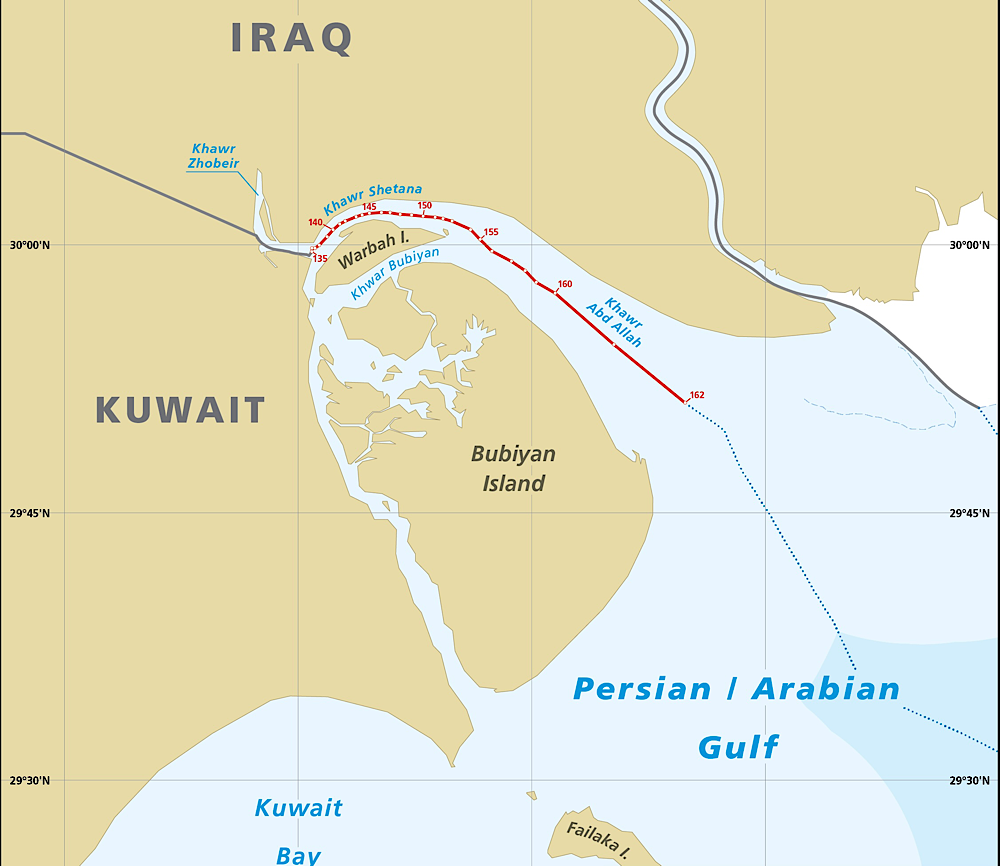
The dispute revolves around two specific maritime points, which are a major part of the new territorial distribution: Fasht Al Qaid and Fasht Al A'aij, areas over which Kuwait exercises sovereignty that “until then had never been the subject of any dispute”, according to the emirate's version reported by regional media outlets including The National and The New Arab.
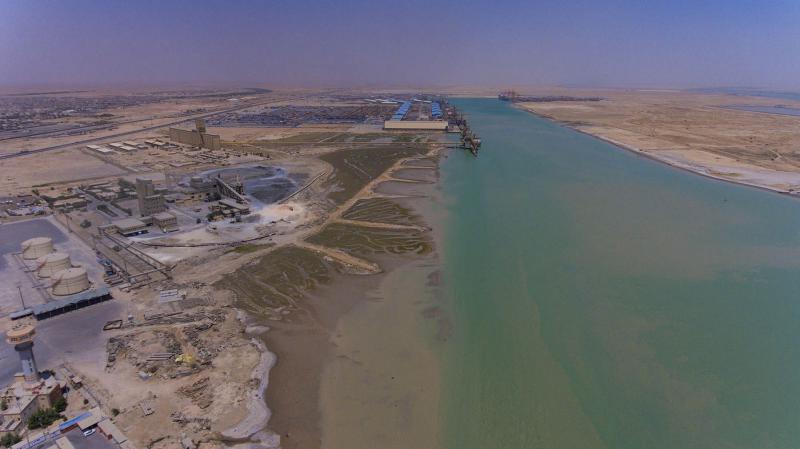
Fasht Al A'aij is located on Khor Abdallah, a strategic (and disputed) maritime passage between southern Iraq and the northern border of Kuwait, which serves as the main gateway for trade from Baghdad to the Persian Gulf.
The area is also home to the Kuwaiti port of Mubarak al Kabeer, which the emirate wants to transform into a logistics hub between Asia, the Middle East and Europe. Upstream, the Iraqi port of Umm Qasr handles 60% of the country's goods and is also the only deep-water port directly connected to the global road network.
Commenting on the issue, GCC leaders are calling on Iraq to “withdraw” the map and related geographical coordinates presented to the United Nations, which, according to Kuwait, are detrimental to its territorial integrity.
In a statement released in recent days, Secretary-General Jasem Mohamed Albudaiwi explains how the map and coordinates represent a clear “violation of Kuwait's sovereignty” over its maritime areas and seabed, including Fasht Al Qaid and Fasht Al A'aij.
He then emphasised the importance of addressing the issue ‘by resorting to the rules and principles of international law and the provisions of the 1982 United Nations Convention on the Law of the Sea (UNCLOS)’ in line with bilateral agreements, treaties and memoranda between the two countries.
Continuing his speech, Albudaiwi reaffirmed the rejection of “any violation of Kuwait's sovereignty over all its lands, islands and maritime areas”. ‘The GCC and the Republic of Iraq,’ the secretary recalled, ‘are bound by deeply rooted historical relations and close ties based on mutual respect and good neighbourliness.’
Hence the final hope on behalf of the association that Iraq will review and withdraw the map and coordinates presented to the United Nations ‘to support mutual trust and stability in bilateral relations.’
Last weekend, the emirate summoned the Iraqi affairs officer to protest against Baghdad's decision to file maritime coordinates and a map with the United Nations, which would constitute clear violations of its territory.
The following day, Saudi Arabia, Bahrain, the United Arab Emirates, Oman and Qatar individually expressed their solidarity with Kuwait. Beyond the ‘deep concern’ and “denunciation” of Abu Dhabi and Doha, which accuse Baghdad of ‘violating Kuwait's sovereignty’, it is above all Riyadh that has declared that it is closely monitoring the situation.
The kingdom is, in fact, directly affected by the affair, not least because the new map includes areas adjacent to the space shared with Kuwait and rich in natural resources.
Furthermore, the conflict between Kuwait and Iraq also has historical roots dating back to the last century, in particular to August 1990, when the then Iraqi dictator and rais Saddam Hussein ordered the invasion of Kuwait, triggering the Gulf War the following year.
The international coalition, led by the United States as part of Operation Desert Storm, drove Iraqi forces out of Kuwait after seven months of fierce conflict. Baghdad and Kuwait City resumed diplomatic relations in 2003 after the fall of Saddam, who was later executed by the new leaders in Baghdad, who were unable to stem the tide of violence and extremism that still characterises part of the country today.
Following the invasion, the UN delimited the land border between the two states with Resolution 833 of 1993; nevertheless, the demarcation did not resolve all aspects of the maritime border, leaving open issues to be addressed through bilateral talks between the two oil-producing neighbours.
The main area of tension concerns navigation in the Khor Abdallah corridor, which is regulated by a specific agreement signed in 2012 and ratified in 2013 by Baghdad.
However, the document was annulled in 2023 by the Iraqi Supreme Court - following a parliamentary appeal - which declared it “unconstitutional”, and was the subject of internal political controversy, with the then government accused of having “conceded too much” by limiting national sovereignty.

.png)
13/09/2018 12:03
28/06/2017 14:03










