








Climate: Asian, African, Latin American and Caribbean bishops united in the fight against fossil fuels
FABC, CELAM, and SECAM, the three continental episcopal conferences, released a paper that is also a shared commitment, calling on world governments to adopt a non-proliferation fossil fuel treaty. For Caritas International, the role of women is crucial in addressing climate change.
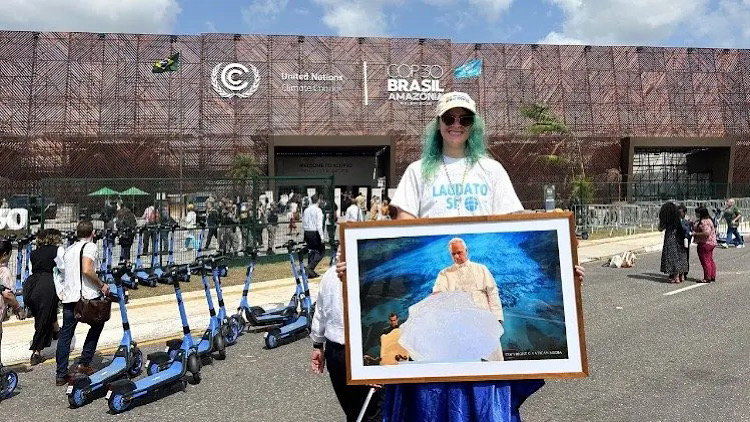
Manila (AsiaNews) – Phasing out fossil fuels, an even more urgent imperative today due to the oil crisis linked to the ongoing Gulf War, must be part of renewed national climate plans and a stronger growing global coalition pushing for a fossil fuel treaty.
This is the call issued by the bishops of the global South, concerned about the extant reliance on fossil fuels – coal, oil, and gas – that is threatening the planet and the world's poorest communities.
The prelates renewed this commitment yesterday at a meeting in Bangkok, Thailand, in a paper drafted by the Federation of Asian Bishops’ Conferences (FABC), as well as their colleagues from Africa (SECAM)[*], and Latin America (CELAM)[†], along with representatives from Europe (CCEE)[‡] and Oceania (FCBCO)[§].
Titled " Manifesto of the churches of the global south for our common home Towards peace with creation: an urgent call for ‘a just transition beyond fossil fuels’, the paper was released ahead of upcoming international events centred on climate change, including the United Nations summit in Antalya, Turkey, in November 2026.
Catholic bishops urge governments around the world to embrace the Fossil Fuel Non-Proliferation Treaty initiative and transition to renewable energy, ending dependence on fossil fuel production.
Climate change is not just an environmental issue, they explain, but also moral and social crises, with unsustainable models of production and consumption, especially in developed countries that contribute to environmental destruction and widening inequality.
Developed nations that rely on fossil fuels should provide funding and technology transfers to developing nations in mitigation efforts, as well as give greater scope to indigenous peoples and vulnerable communities in decision-making.
Key Church figures from across the Global South signed the Manifesto, including CELAM President Card Jaime Spengler, SECAM President Card Fridolin Ambongo, and FABC President Card Felipe Neri Ferrão, as well as CCEE Vice President Card Ladislav Nemet, and FCBCO Vice President Archbishop Ryan Pagante Jiménez.
“We invite all people of goodwill to join a historic coalition between North and South to protect our common home,” reads the Manifesto. “A world free of fossil fuels, just and at peace, is possible and necessary,” it goes on to say.
In the fight against climate change, the role of women is increasingly prominent, especially in countries in the Global South, from Asia and Africa to Latin America and the Pacific Islands.
For Caritas Internationalis’ Regional Jubilee Programme Lead for Asia, Jing Rey Henderson, while women are among the most affected by disasters caused by climate change, they are also a vital force in strengthening and rebuilding communities.
In addition to finding water and food for families, they are often expected to care for the injured and displaced after disasters.
“Women are not just victims of climate crises – they are catalysts for change. Their leadership, knowledge, and resilience are essential to building communities that can adapt and thrive in the face of disasters,” Henderson notes.
In fact, women's important knowledge in environmental conservation is now recognised and appreciated, especially in rural and Indigenous communities where they are responsible for agriculture, seeds, and biodiversity.
An example of women's leadership in environmental conservation is the Chipko Movement in India, where they protect forests from deforestation.
Henderson stressed the importance of including women in the development of climate policies and programmes to further boost communities' capacity to address the challenges of climate change.
“Empowering women is not optional – it is central to creating sustainable, just, and resilient communities across the Global South,” she added.
[*] Symposium of Episcopal Conferences of Africa and Madagascar.
[†] Latin American and Caribbean Episcopal Council.
[‡] Council of European Bishops' Conferences.
[§] Federation of Catholic Bishops Conferences of Oceania.

.png)










