








Colombo: “The 2019 massacres were the final act of a plot that could have been stopped”
Seven years on from the attacks that claimed 269 lives on Easter Sunday, the Minister of Security reported to Parliament on the state of the investigation following the breakthrough in February with the arrest of the former head of the intelligence services. Linked to the same group is a long chain of criminal acts that began two years earlier, of which Sallay was aware but failed to act. Suspicions point to a political level above the Islamist leader Zahran Hashim.
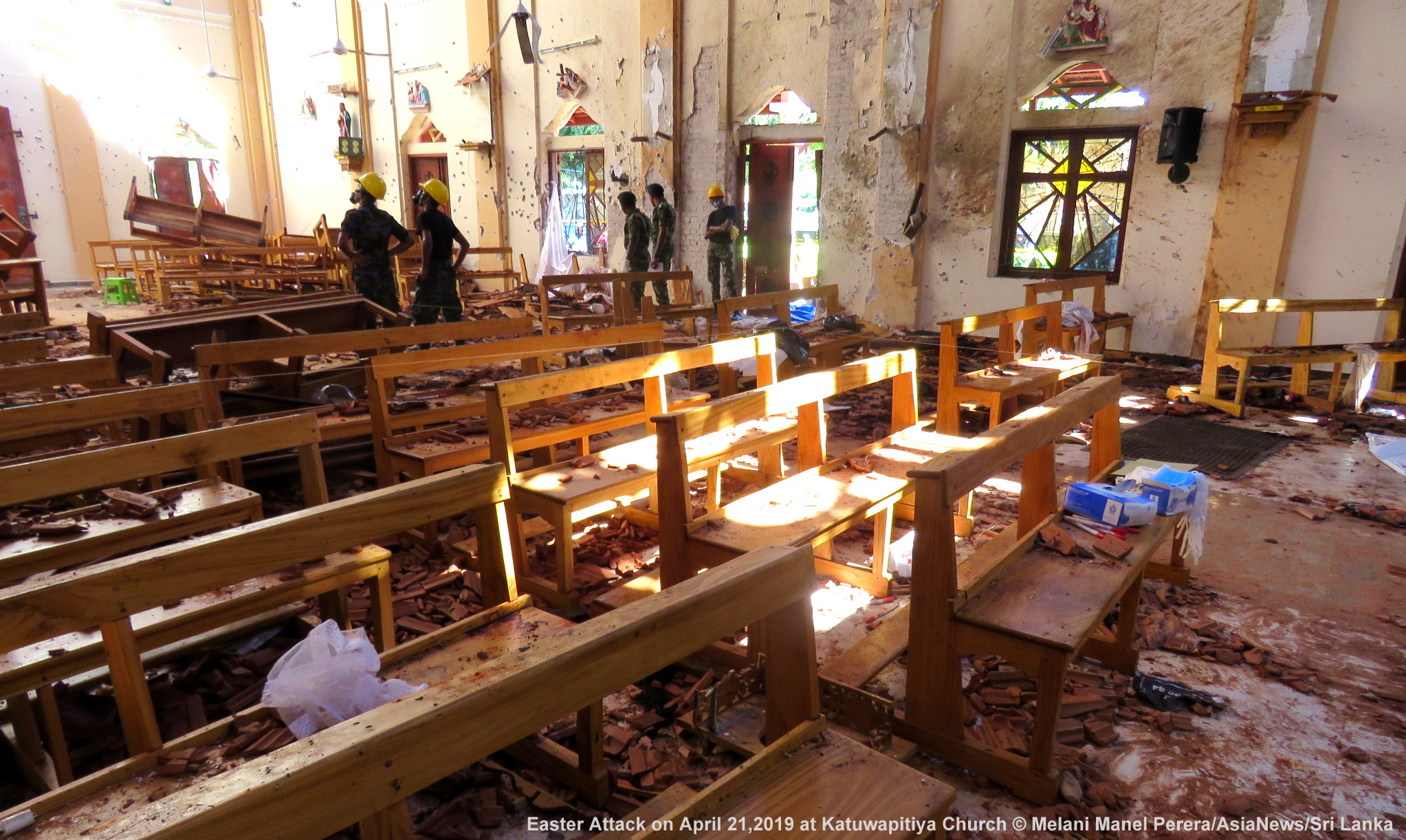
Colombo (AsiaNews) - The Easter Sunday massacres on 21 April 2019, which claimed the lives of 269 people in churches and hotels across Sri Lanka, were not an isolated incident but part of a conspiracy that began in 2017 and had already resulted in other criminal acts. And which, therefore, without the cover-up by the highest echelons of the security forces, could have been prevented.
This is the stark accusation levelled by Colombo’s Minister of Public Security, Ananda Wijepala, who, a few days before the seventh anniversary of the attacks, took stock of the investigations following the breakthrough on 24 February with the arrest of the former head of the Security Intelligence Service (SIS), Suresh Sallay.
“The Easter attacks were the result of a series of events coordinated and carried out systematically over several years by the same group,” the minister stated. Among the previous incidents linked by the investigations are the destruction of Buddha statues in Mawanella on 22 and 23 December 2017, the killing of police officers in Vavunathivu on 30 November 2018, the arrest of four suspects in possession of explosives and detonators at a camp in Wanathawilluwa on 16 January 2019, the shooting of an individual named “Thasleem” in the Mawanella area on 10 March 2019, and the explosion of a motorcycle in the Palamunai area of Kattankudy, Batticaloa, on 16 April 2019, just five days before the massacres.
According to Minister Wijepala, investigations revealed that Suresh Sallay had prior knowledge of extremist activities linked to Islamic militants and failed to take the necessary measures to prevent or report these incidents. “Had thorough investigations been carried out into the murders of the police officers in Vavunathivu, the Easter Sunday attacks might have been prevented,” he stated. Furthermore, it is suspected that Sallay may have acted directly or indirectly to prevent the identification of the individuals and groups responsible for organising the attacks following the massacres.
On the basis of these findings, the minister stated that there were sufficient grounds to reasonably suspect his involvement in unlawful activities linked to the conspiracy and support for the Easter Sunday attacks. And it was this that led to his arrest. He also stated that the findings indicate that former minister Sivanesathurai Chandrakanthan, known as “Pillayan” – who was also arrested a year ago – “had prior knowledge of the attacks”.
Wijepala also claimed that various pieces of evidence suggest the presence of an individual and a group operating above Zahran Hashim – the Islamist leader considered to be the mastermind behind the attacks – and that they had directed his actions.

.png)
07/02/2019 17:28
11/08/2017 20:05










