








Dalai Lama supports Leo XIV's call to lay down arms, seek peace through dialogue
In a message released today, the Buddhist leader endorses the pope's appeal on Palm Sunday for nonviolence and disarmament, emphasising the values common to all religions – “love, compassion, tolerance” as the basis for conflict resolution, from the Middle East to Ukraine.
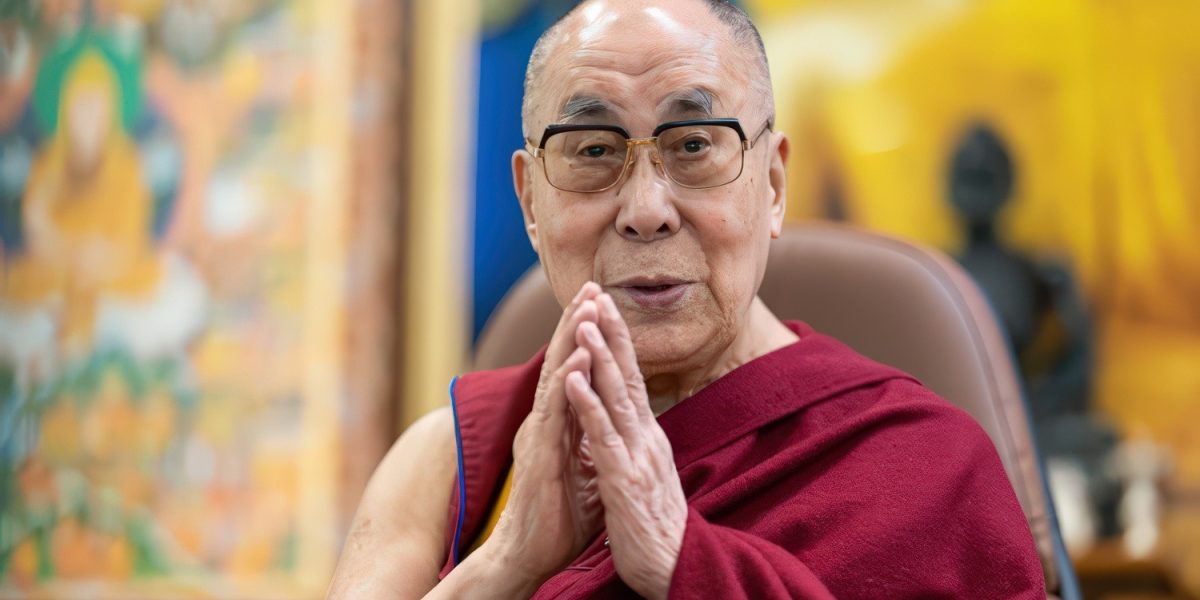
Dharamsala (AsiaNews) – The Dalai Lama issued a statement today expressing his full support for Pope Leo XIV who, during Palm Sunday Mass, called on belligerents to lay down their arms.
In his message for peace under the banner of interfaith dialogue and shared moral responsibility, the Tibetan spiritual leader “wholeheartedly endorse(s) the powerful appeal for peace made by the Holy Father,” stressing how the call to renounce violence “speaks to the very essence of what all major religions teach.”
The Dalai Lama goes on to mention how various religious traditions share a common ground, “whether we look to Christianity, Buddhism, Islam, Hinduism, Judaism or any of the world's great spiritual traditions, the message is fundamentally the same: love, compassion, tolerance, and self-discipline.”
Violence, he adds, “finds no true home in any of these teachings;” on the contrary, history has repeatedly taught us that “violence only begets more violence and is never a lasting foundation for peace.”
Citing the main crises, from the Middle East to the war between Russia and Ukraine, the Buddhist leader reiterated that a true solution can only come from “dialogue, diplomacy and mutual respect,” conscious that, “at the deepest level, we are all brothers and sisters.”
The message wraps with an appeal and a prayer that “violence and conflicts may soon come to an end.”
Relations between the Vatican and the Dalai Lama have a long and complex history, marked by a series of meetings, often conducted confidentially.
The first meeting took place in 1973 with Pope Paul VI, during the Tibetan leader's first trip outside Asia. The dialogue intensified with John Paul II who met the Dalai Lama eight times between 1980 and 2003. With Benedict XVI, in 2006, a private audience was held, deliberately low-key: no official photo, no mention in Vatican bulletins.
This reflects the established practice of recognising the Dalai Lama as a spiritual authority, while avoiding politicising the meeting, especially considering the delicate relations with China.
John Paul II had already expressed his desire that the meetings not be turned into a media circus centred on the Tibetan cause.
The Dalai Lama led approximately 80,000 Tibetans into exile in 1959 and is still based in Dharamsala, northern India.
This caution became even more evident during the pontificate of Pope Francis.
In 2014 and 2016, despite both being in Rome, the pontiff declined to meet the Dalai Lama, citing the "delicate situation" with Beijing, namely the agreement on episcopal appointments, first signed in 2018 and renewed in subsequent years.
Despite this, indirect shows of consideration have continued, such as the delivery of a book by the Dalai Lama to the pope in 2024 through a Tibetan representative.
Photo: The Office of His Holiness the Dalai Lama.

.png)
17/09/2025 17:29
10/05/2025 11:18










