Dhaka (AsiaNews) – Ten years have now gone by since that night that changed the recent history of Bangladesh.
On 1 July 2016, the Holey Artisan bakery in Dhaka’s exclusive Gulshan neighbourhood was the scene of the country's deadliest terrorist attack, which left 22 people dead and a nation grappling with a new and painful reality.
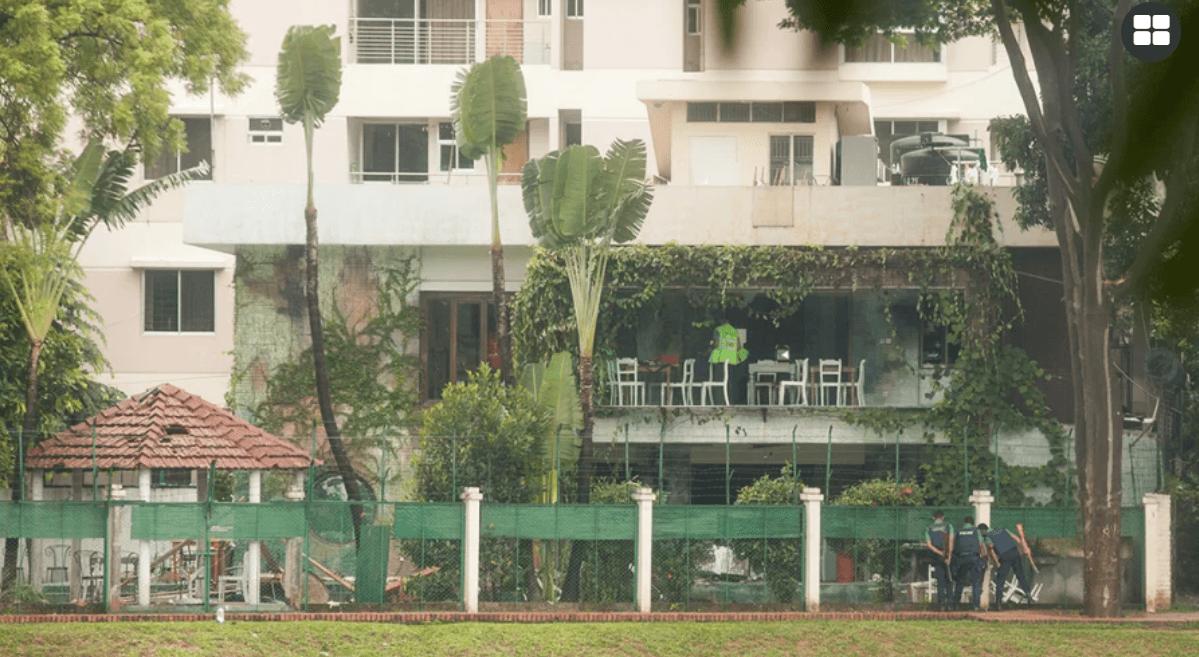
Today, on the site of the restaurant's former location, a multi-story residential building overlooks the lake. Little suggests that it was once the site of a tragedy that shocked the world.
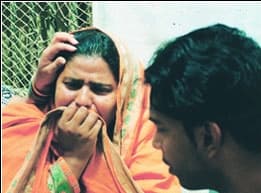
Yet, for many Bangladeshis, especially for the families of the victims, the memory remains vivid: a still open wound and a permanent warning.
“It is not just history,” said a Dhaka-based security official. “It is a reminder that extremism can resurface if we become complacent.”
The attack began on a Friday evening, shortly after Iftar (the dinner marking the end of the Ramadan fast), when armed militants stormed the popular restaurant, a place renowned for attracting both the local elite and foreigners.
The crisis, with numerous hostages taken, continued throughout the night as police and special forces surrounded the building.
By the end of the siege the following morning, 22 people lay dead, mostly foreigners, including nine Italians, seven Japanese, one Indian, one American, two Bangladeshis, and two police officers.
Security forces were able to free 32 hostages. Survivors later described how the attackers attempted to identify the religious affiliation of those inside.
Some Bangladeshi Muslims were spared after reciting verses from the Quran, while foreigners, including Christians, were singled out and killed.
The brutality of the attack and the profile of the perpetrators, young men from educated and relatively well-off families, shattered preconceptions about Islamic extremism and radicalism in Bangladesh.
The Islamic State (IS) group claimed responsibility through its propaganda channels, although the authorities in Dhaka blamed the operation on local militant networks, including Neo-JMB and Ansar al-Islam.
In the previous 18 months, at least 27 extremist-related killings had occurred in the country, targeting bloggers, religious minorities, foreign nationals, and Christian and Muslim figures.
Still, the Holey Artisan massacre marked a turning point, drawing global attention to the reach and organisation of Bangladesh’s domestic militant groups.
Subsequent investigations revealed careful planning. The attackers had inspected several locations in the diplomatic zone before choosing the Holey Artisan, a venue considered vulnerable despite its high-profile clientele.
One of the most painful aspects of the tragedy was the role of young recruits, who had quietly disappeared from their families, months earlier.
In the years following the attack, law enforcement launched a vast crackdown against militant networks. According to authorities, key cells were dismantled, and the frequency of large-scale attacks decreased significantly over time.
The judicial process also saw progress. In 2019, a special court sentenced seven defendants to death, although the High Court later commuted the sentence to life imprisonment.
Despite these measures, analysts warn against complacency.
According to security sources, more than 300 alleged militants remain at large, while several convicted extremists reportedly escaped prison during the 2024 unrest, raising renewed concerns.
“There has been success in disrupting networks,” a counterterrorism officer said. “But dismantling ideology takes much longer.”
Recent changes in law enforcement priorities and the reassignment of counterterrorism experts have also sparked a debate over the country's preparedness, especially in the face of evolving online radicalisation.
Furthermore, unlike past years, no public commemoration was held today at the site of the attack. Foreign embassies held a joint memorial ceremony at the Italian Embassy in Dhaka.
However, the memory is being kept alive in more discreet ways. This morning, the Catholic Church in Dhaka offered prayers for the victims during Mass, invoking peace for their souls and healing for their families.
For many believers, the attack remains a warning not only about security but also about spiritual reflection.
“Violence in the name of religion is a contradiction of faith,” a Catholic priest in Dhaka said. “Our response must be rooted in prayer, education, and dialogue.”
Ten years later, Bangladesh has managed to prevent another attack of this magnitude through valuable intelligence and monitoring efforts; however, the legacy of Holey Artisan continues to shape the national consciousness.
Experts and community leaders agree that security operations alone are not enough to counter extremism. On the contrary, sustained efforts are needed in education, family outreach, interfaith dialogue, and social inclusion.
As the capital moves on and the physical traces of the tragedy fade, the lessons of that night remain paramount. The silence that reigns over Gulshan Lake today reminds us that the threat may be less visible, but it has not gone.