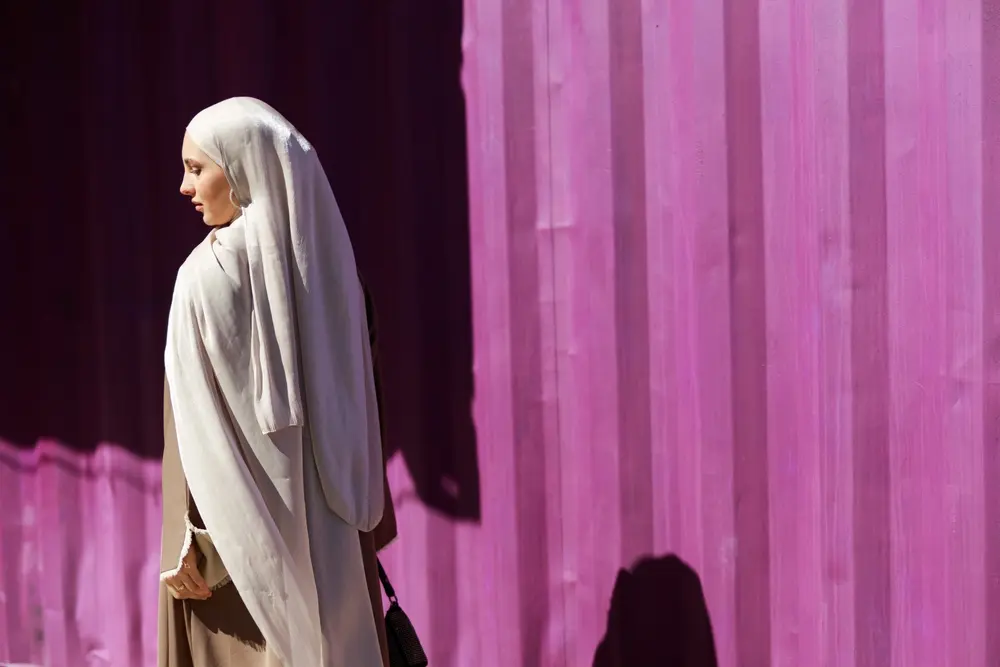
Moscow (AsiaNews) - In Chechnya, the main Russian republic in the North Caucasus, any action by a woman deemed inappropriate by men immediately becomes grounds for condemnation on social media. Dancing in a tight-fitting dress, a careless word or gesture, an Instagram live stream with a stranger: in the eyes of conservative public opinion, all this “brings shame upon the clan, the people and the nation”.
Consequently, a woman finds herself under pressure not only from society, but also from her own family. Kavkaz.Realii has investigated why male opinion has become increasingly harsh in public debates in recent years, whilst the boundaries of what is acceptable for women have narrowed ever further.
Anything can trigger condemnation: profession, appearance, gesture or word. A hairdresser who cuts men’s hair becomes the target of attacks; a dance or a song sparks a wave of lectures on what is permissible and what is not.
Behind every such incident lies a whole system of expectations and prohibitions that shapes the image of a ‘respectable’ woman in the eyes of the most radical fringe of society. Comments, threats and reprimands have become a constant in the lives of many women, ranging from moral pressure to a genuine threat to their safety and freedom.
A telling example is a story from a few days ago: two men on a beach in the town of Dagestanskye Ogni dived into the sea to save some Chechen women who were drowning. It could have ended in tragedy, but at great personal risk, they managed to save them.
Instead of gratitude, hundreds of condemnatory comments appeared beneath the video on social media. Users urged the women and their families to ‘show some sense’: ‘no one needs saving if women stay at home’, ‘in Islam, touching a woman is forbidden’, ‘what do you think if strangers touch them?’, ‘where are the fathers and brothers of these girls?’, wrote the commentators in Chechen.
The same thing happened following the murder of Larisa Arsanukaeva in Nice, a Chechen mother of many children who was killed by her ex-husband. Whilst many women wrote about the tragedy, expressing solidarity and condolences, a significant number of men chose to remain silent and some radical commentators attempted to justify the crime: “there is something fishy about this story”, “he wouldn’t have killed someone like that for no reason”. T
hese incidents reflect the rise of radical views in recent years, the increasing control over women’s behaviour, and the amplification of the phenomenon by social media, which turns every move into a subject of public scrutiny.
Meanwhile, the republic’s authorities frequently propose restrictions on women: these include “explanatory interviews” with those who do not wear the headscarf and a ban on models parading in designer clothes in Grozny’s shops.
Conservative social media users are calling on Amir Sugajpov, Deputy Minister for Youth Affairs and assistant to President Ramzan Kadyrov, to impose new restrictions. Commentators are asking him to “isolate lingerie shops” and to ban women from seeing psychologists, going out in the evening, wearing tight-fitting clothes and visiting massage parlours.
Journalist, human rights activist and blogger Aida Mirmaksumova notes that in recent years the influence of religion has grown in the North Caucasus, against a backdrop of social problems such as unemployment, corruption and systematic human rights violations.
People seek refuge in mosques, but the sermons delivered there are not always balanced and responsible, nor are they always given by truly qualified theologians.
Aida points out that numerous videos are circulating online of people posing as Islamic scholars, who discuss in detail what women should and should not do, but almost never mention men’s responsibilities: caring for the family, paying maintenance, respecting women’s rights and the inadmissibility of separating a child from its mother after divorce.