








Elections in Armenia: Between East and West
The vote on 7 June in Yerevan is set to resolve the turbulent domestic political situation, either ushering in a new phase oriented towards Europe or bringing the country back under Russian control, whilst seeking to avert civil war between the various factions of the Armenian people. Meanwhile, the current Prime Minister Pashinyan has indicated that he intends to meet Putin immediately after the vote.
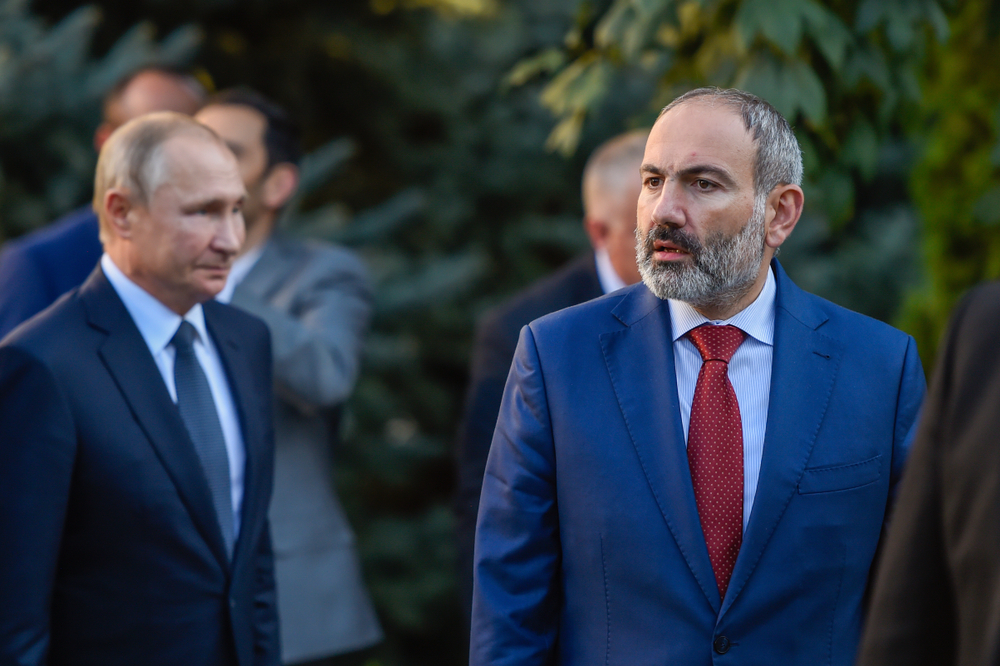
Yerevan (AsiaNews) – Armenia is set to go to the polls on Sunday 7 June for parliamentary elections that are being watched very closely, not only within its borders. The country has in fact long been torn by a bitter divide between its current leadership, which looks to the West, and its opponents who criticise its handling of negotiations with Azerbaijan and – more generally – the cooling of historic relations with Moscow.
On the eve of the election, the current Armenian Prime Minister Nikol Pashinyan – the favourite in the polls – has announced that he intends to meet Vladimir Putin immediately after the vote, in a meeting agreed during a recent telephone conversation on the occasion of Pashinyan’s birthday on 1 June, during which “various outstanding issues” were discussed. Previously, the Russian president had made statements suggesting that, should Armenia pursue integration with the EU, it would then have to terminate its free trade agreement with Russia, repeal documents relating to technical regulations and phytosanitary standards, and forfeit other benefits granted to the country by virtue of its membership of the Eurasian Economic Union (EAEU).
Previously, the Russian side had warned Armenia of a possible termination of the 2013 gas agreement, and the agency Rosselkhoznadzor had consequently begun restricting the supply of Armenian products to Russia. At the same time, several Armenian imports into Russia – including fruit, vegetables and alcohol – were blocked, on the grounds of ‘inadequate health standards’, after Putin himself had pointed out that ‘Armenia’s GDP depends on trade with Russia’.
Putin’s threats were accompanied by various statements from senior figures in Moscow’s political establishment, such as those by Foreign Minister Sergei Lavrov regarding the “possible development of the situation in Armenia along the lines of that in Ukraine”, where conflict had erupted in 2014 precisely because of the Ukrainians’ desire to forge economic agreements with the European Union. Yerevan has in fact expressed a desire to integrate with Europe, whilst still being a member of the EAEU, and this choice could provoke a reaction similar to that which led to the invasion of Ukraine in 2022.
The tension with Russia mirrors that within Armenia itself, a country historically very close to Moscow, due to its defence against Turkish claims following the genocide of the early 20th century. All of Armenia’s leaders have always been heavily dependent on the Kremlin, whilst Pashinyan had, from his youth, opposed the leadership in Yerevan, which he accused of corruption. In 1999, he spent a year in prison for refusing to pay a fine of around ,000, imposed for criticism in the newspaper he founded, Oragir, of the then foreign minister Serzh Sargsyan, who later became president of the republic between 2008 and 2018, after serving as prime minister.
Having become one of the main figures of the opposition, Pashinyan organised protests following the referendum imposed by Sargsyan to extend his term of office further, eventually becoming prime minister in 2018 with the new Civil Agreement party. Over the past eight years, he has therefore sought to free Armenia from its dependence on Russia, and has had to deal with the crisis of the Nagorno-Karabakh conflict with Azerbaijan, which had been dragging on since the early post-Soviet years. After 44 days of war, during which Russia refused to intervene, effectively facilitating the Azerbaijani military campaign, an armistice was signed with Baku in November 2020, without ever reaching a genuine peace agreement.
Now the chickens are coming home to roost: Pashinyan has now re-established a constructive relationship with Azerbaijan, breaking away entirely from Russia and taking advantage of US mediation, which envisages the opening of the ‘Trump Peace Corridor’ as a final solution that would effectively exclude the Russians from the trade routes of the South Caucasus. The Armenian Apostolic Church, led by its Catholicos Karekin II, has taken a stand against the Prime Minister; the Prime Minister would like to see him resign on grounds of “immorality” and corruption, and the Church is represented by the pro-Russian oligarch Samvel Karapetyan, leader of the opposition to the government. Sunday’s vote is set to resolve the turbulent situation, either ushering in a new phase of Armenian politics oriented towards Europe or bringing the country back under Russia’s control, whilst seeking to avert civil war between the various factions of the Armenian people.

.png)
08/06/2021 10:26
19/12/2022 19:08
25/09/2018 11:19










