








Extreme heat in India drives workers towards climate insurance
Increasingly frequent heatwaves are reducing the income and increasing the expenses of millions of informal workers. To tackle this crisis, parametric insurance is becoming more widespread, offering automatic compensation when temperatures exceed certain pre-set thresholds.
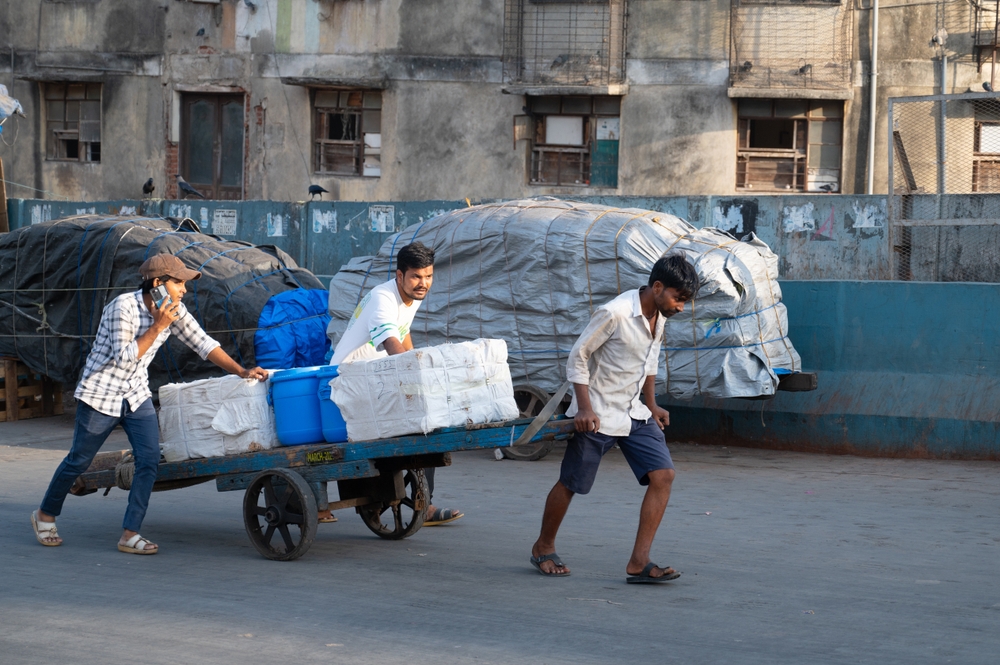
New Delhi (AsiaNews) - For some time now in India, extreme heat has been not just a climate emergency, but also a growing economic threat to millions of informal workers. For those who make a living from street vending, casual day labour, or outdoor agricultural and construction work, heatwaves – such as those currently occurring – mean fewer working hours, lower earnings and a consequent rise in expenses, particularly regarding electricity and medical care.
To address this phenomenon, forms of ‘parametric insurance’ are becoming widespread across the country; this is a model that provides for automatic payouts when certain climate indicators exceed pre-set thresholds, without the need to assess individual claims. In the case of heatwave policies, compensation is triggered when temperatures remain above a certain level for several consecutive days.
According to the Lancet Countdown research group, in 2024 India lost around 247 billion working hours due to extreme heat, with economic losses estimated at nearly 4 billion. The sectors hardest hit were agriculture and construction, but rising temperatures are also causing hardship for millions of workers employed in the informal sectors in cities.
In recent years, Indian summers have become increasingly scorching. The Indian Meteorological Department (IMD) has described 2024 as the hottest year since 1901, with an annual average temperature 0.65 degrees higher than the historical average. The frequency of heatwaves has also increased: between 1981 and 2000, large areas of India recorded an average of 2.5 to 5.5 days of extreme heat per year; between 2001 and 2020, this figure rose to 3.5–8.5 days, affecting much larger parts of the country.
According to the IMD’s criteria, a heatwave is declared when the maximum temperature reaches at least 45 degrees Celsius or exceeds the seasonal average by 4.5–6.4 degrees for at least two consecutive days.
Since 2024, the Mahila Housing Trust (MHT), an Ahmedabad-based organisation dedicated to the development of women’s communities, has launched a parametric insurance scheme for informal female workers in partnership with insurance companies and climate organisations.
The policy covers the hottest months, from April to July. When temperatures exceed the established threshold – initially set at 43.72 degrees for two consecutive days – beneficiaries automatically receive a payment. In 2024, payouts reached up to 750 rupees; this year the threshold has been lowered to 42.74 degrees and compensation will range from 850 to 2,000 rupees, depending on the intensity of the heat. However, the payment remains a one-off and is made at the end of the summer season, in September.
The scheme began with 26,000 women in the state of Gujarat. By 2026, it already covers over 30,800 female workers and is expanding towards Delhi, the National Capital Region and certain areas of Maharashtra. Participants pay a heavily subsidised premium: around 90 rupees for four months’ cover, compared to an actual cost of nearly 400 rupees.
For many families, these are modest sums, but they are helpful nonetheless. In India, the average monthly income of a rural household is around 10,000 rupees, whilst many informal sector workers earn as little as 3,000–4,000 rupees a month. Furthermore, during heatwaves, earnings can fall by more than 2,000 rupees in a single summer season.
The project organisers emphasise that the heat has a dual economic impact: on the one hand, it reduces the ability to work and generate income; on the other, it increases household and healthcare costs. Many female workers report being forced to limit the hours they spend working outdoors, whilst others give up working for entire days to avoid heatstroke, dehydration or illness.
Parametric insurance is faster and more transparent than traditional policies because it does not require individual assessments, but there are still significant limitations at present. One concerns, for example, the so-called ‘basis risk’. It may happen, in fact, that the actual conditions experienced by workers are unbearable even if the official temperature does not exceed the threshold set by the policy, thus preventing any compensation.
The amount of compensation also remains limited and is often insufficient to fully offset the financial losses incurred, but the Indian government is already considering supporting these insurance schemes as a supplement to traditional social protection systems. The system is already being applied in other contexts too. In the north-eastern state of Nagaland, for example, the government has insured the entire population against economic losses caused by extreme rainfall through parametric assessments since 2024.
Meanwhile, other organisations are experimenting with even faster forms of assistance. In May, the Good Business Lab (GBL), an independent think tank studying workers’ wellbeing, launched a study in the Delhi region focusing on ride-hailing drivers and delivery workers. Instead of waiting for compensation after a heatwave, some workers receive advance payments of 250 or 500 rupees whenever the meteorological service forecasts extreme conditions.
The aim is to understand whether immediate financial support might encourage workers to stop working on the most dangerous days, thereby avoiding putting their health at risk due to financial necessity. According to interviews conducted by GBL, 44% of workers say that extreme heat reduces their daily earnings, whilst almost half claim they cannot meet their household expenses if forced to stop working for even just two days.

.png)










