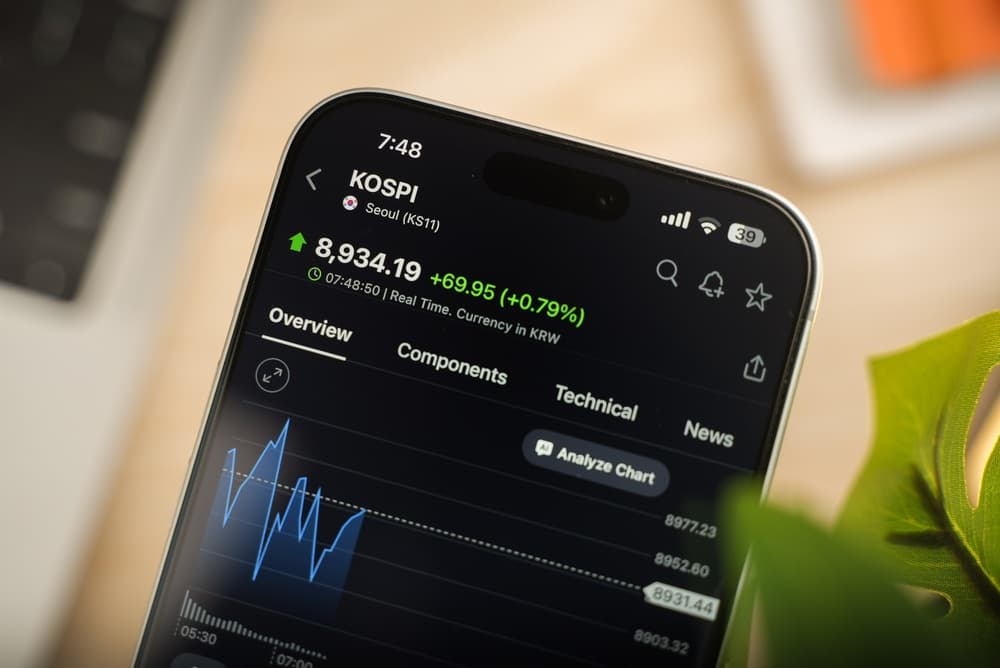
Seoul (AsiaNews) – The boom in demand for microchips, fuelled by the rapid development of artificial intelligence (AI) systems, is driving up at a rapid pace the benchmark index on the Korea Composite Stock Price Index (KOSPI), but also fuelling speculative bubbles that risk ruining small investors tempted by the prospect of easy profits.
This is the crux of the heated debate that has erupted recently in South Korea over new Exchange Traded Funds (ETFs) linked to the microprocessor sector. ETFs are special investment instruments linked to an index that often, through leverage, amplify the index's gains and losses.
At the centre of the controversy are 16 new products, launched in late May in South Korea and linked to the performance of the country's two largest microchip manufacturers: Samsung Electronics and SK Hynix.
These companies represent more than half of KOSPI’s market capitalisation, and are considered strategic for the South Korean economy.
The goal of microchip ETFs was to allow investors to bet more heavily on the sector's prospects. However, their debut was followed by disappointing results. Within a month, all funds recorded negative returns, with losses of up to 35.9 per cent.
Regulators believe these instruments contributed to increased market volatility rather than promoting stability.
The problem stems from the way leveraged ETFs work. To maintain the level of exposure promised to investors, managers must buy and sell the underlying product every day, a process known as rebalancing.
When Samsung Electronics or SK Hynix shares decline, ETFs are often forced to sell additional shares to adjust their positions. This can exacerbate the decline in the stocks, fuelling a vicious cycle that increases overall market volatility.
The concerns have prompted both the Financial Supervisory Service (FSS) and the Bank of Korea to issue repeated warnings.
According to FSS Governor Lee Chan-jin, the use of leverage exposes investors, especially retail investors, to very high losses and can jeopardise household financial stability.
The governor admitted that the authorisation granted to ETFs may have been rushed. The central bank has also noted that concentrating large capital flows on a few stocks risks making the market more unstable.
Politically, some members of the People Power Party, the main opposition party, are calling for the delisting, or removal, of these ETFs from the stock exchange, arguing that they have transformed the stock market into an environment dominated by speculation.
However, this appears unlikely, both because Korean regulations allow delisting only in specific cases and because eliminating all these products simultaneously could cause further instability and undermine investor confidence.
The authorities are therefore evaluating alternative solutions, such as introducing stricter requirements for the purchase and sale of these products to limit speculative trading.
South Korean Finance Minister Koo Yun-cheol stated during a parliamentary hearing that the government is evaluating measures to mitigate the problems, which he attributed to unexpected factors that had not been taken into account when the authorities analysed the potential effects of the new products on the currency and financial markets.
Although the KOSPI has risen more than 100 per cent since the beginning of the year, it has shown marked fluctuations in recent months. A clear sign of instability is the increasingly frequent use of emergency market mechanisms.
In 2026, the Korea Exchange activated six circuit breakers, temporarily putting trading on hold after KOPSI lost more than 8 per cent in a single session. This is exceptional considering that, this tool had only been used six times before 2026.
So-called sidecars, which temporarily halt trading in derivative financial products to contain excessive volatility, were activated 32 times, surpassing the previous annual high of 26 during the 2008 financial crisis. These figures reinforce authorities' concerns about market stability.