








From Minsk to Hanoi, Kim Jong-un's new course beyond the 'rhetoric of isolation'
The meeting between North Korea’s leader and Belarus’s Lukashenko marks a new course. The North Korean regime is managing its isolation as a strategic resource rather than simply enduring it. Pyongyang is choosing its interlocutors, building relationships, and using the diversification of its partners as a tool to maintain its autonomy from Beijing and Moscow with a growing focus on Southeast Asia at the expense of South Korea.
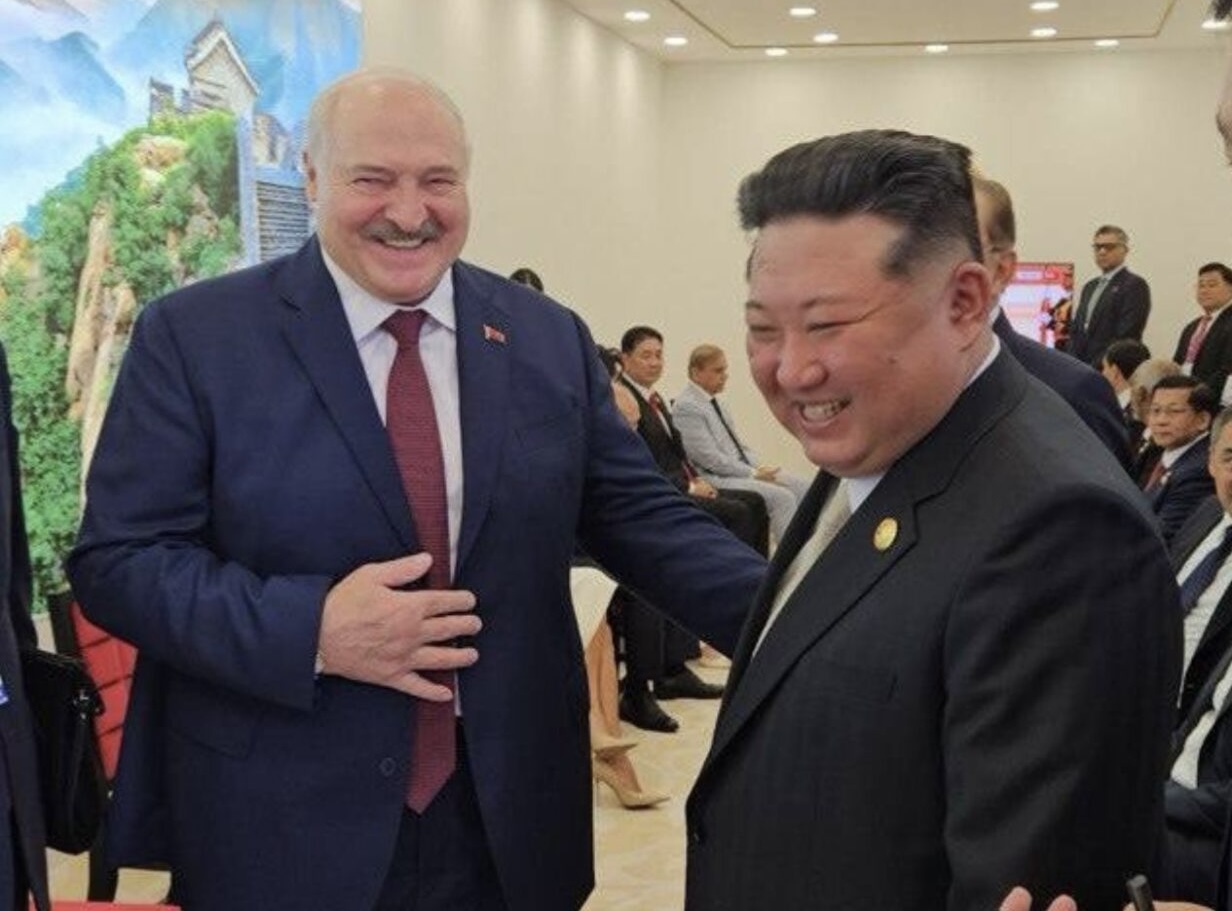
Milan (AsiaNews) – Kim Jong-un is a leader who rarely engages in bilateral meetings. In nearly 15 years in power, he hosted only five heads of state in Pyongyang, and the total number of world leaders with whom he has held formal meetings, at home or abroad, is just eight.
In this context, Belarusian President Alexander Lukashenko's visit to Pyongyang in late March takes on a significance that goes beyond its choreography, marked by white horseback rides and 21-gun salutes.
It was the most significant bilateral diplomatic development North Korea has started with a country beyond its traditional allies since the end of the pandemic lockdown.
The summit produced a Treaty of Friendship and Cooperation and a dozen sectoral agreements in areas such as agriculture, education, healthcare, and sports.
The text of the treaty has not been made public, but the Belarusian presidential office described it as a document defining the institutional framework for future cooperation.
It is unlikely to contain mutual defence commitments similar to those enshrined in the Comprehensive Strategic Partnership Treaty signed with Russia in 2024, which effectively provided the legal basis for North Korea's deployment of troops to Ukraine.
Instead, according to prevailing interpretations, it is a commitment to mutual consultation in the event of threats, a standard format in friendship treaties.
The most interesting aspect of the summit, however, was perhaps the way it came about. The relationship between Pyongyang and Minsk was patiently built in a gradual sequence of diplomatic steps over several years, starting with sectoral technical meetings followed by negotiations at the deputy and ministerial levels, preliminary agreements, a formal intergovernmental commission, and finally the negotiation of the treaty, culminating in the summit between the two leaders.
This is a very different path from the top-level summit diplomacy that Washington and Seoul have promoted in the past towards North Korea, and it could represent a framework by which Pyongyang intends to develop relations with other countries in the future.
Understanding whether and with which other countries Pyongyang is developing a similar path is crucial to identifying the direction in which North Korea's new foreign policy is moving.
China and Russia, two parallel tracks
The summit with Belarus is part of a broader diplomatic repositioning in which relations with Beijing and Moscow are proceeding on separate but coordinated tracks.
On the Chinese front, North Korea quickly reestablished connections interrupted by the pandemic, with the resumption of passenger rail service between Pyongyang and Beijing on 12 March and the return of direct flights on 30 March, both after six years of suspension.
The two leaders exchanged messages on the occasion of Kim Jong Un's re-election as chairman of the State Affairs Commission, with Xi Jinping calling relations between the two countries a “precious asset”.
Chinese Foreign Minister Wang Yi's visit to Pyongyang in early April was the first since 2019 and confirms the desire of both sides to consolidate a relationship that had appeared strained in recent years due to Pyongyang's growing rapprochement with Moscow.
Wang Yi's visit comes just before the summit between Donald Trump and Xi Jinping in May, and interpretations converge that Beijing intends to use its influence over Pyongyang as a negotiating lever against Washington.
In 2018, during the first round of meetings between Trump and Kim Jong Un, Seoul acted as intermediary between the two leaders. Today, Beijing appears to have taken that role. With Wang's visit to Pyongyang, China might have assessed North Korea's willingness to engage with the United States.
For now, China seems inclined to consider the stability of the North Korean regime as an established geopolitical fact, thus abandoning attempts to exert economic pressure to achieve denuclearisation.
The reopening of trade links with North Korea demonstrates that a nuclear-armed North Korea is now considered an established geopolitical reality, not a negotiable issue.
With Russia, cooperation has intensified along a different path. Starting with the 2024 strategic partnership agreement, it was consolidated with the deployment of North Korean troops to Ukraine.
More recently, the Rodong Sinmun[*] reported that the North Korean embassy in Moscow hosted a ceremony for the Ninth Congress of the Workers' Party, while the transport ministers of the two countries began talks on the construction of a cross-border pedestrian bridge, a project modest in scale but with evident symbolic value.
In a letter to Russian President Vladimir Putin on 24 March, Kim Jong-un reiterated that "Pyongyang will always be with Moscow," further evidence of the depth of alignment between the two governments.
Pyongyang, however, appears to be managing the two relationships with great caution, to prevent its rapprochement with Moscow from appearing excessively skewed in Beijing's eyes.
Diversification of partners is one of the stated objectives of the new foreign policy outlined by Kim Jong-un in his keynote speech to the Supreme People's Assembly in March, to “redefine diplomatic preference" based on medium- and long-term national interests and for updating relations with traditionally friendly countries “in line with the requirements of the new era.”
The strengthening of relations with Belarus, the intensification of ties with Vietnam and Southeast Asia, and the joint declaration signed in February with Russia, Belarus, Iran, and Myanmar for a new Eurasian security framework further delineate the outlines of this strategy.
The price of Seoul's isolation
This diplomatic activism has direct consequences for the balance of power on the Korean Peninsula. While Pyongyang strengthens its negotiating position through a growing network of bilateral relations, Seoul finds itself increasingly marginalised.
South Korean President Lee Jae Myung's repeated overtures towards the North have been ignored, and Kim Jong-un's "two hostile states" doctrine explicitly excludes any dialogue with the South.
In Seoul, the prevailing view is that any progress in inter-Korean relations will depend on the evolution of the dialogue between Washington and Pyongyang rather than on direct initiatives between the two Koreas.
At the same time, North Korea is skilfully exploiting tensions between the United States and its Asian allies.
Trump's criticism of South Korea for its lack of support for the war in Iran, while Washington maintains tens of thousands of troops on South Korean soil, has created a political room that Pyongyang has readily exploited.
Kim's decision to avoid any direct criticism of Trump, thus keeping open the possibility of future contact, is accompanied by an increasingly harsh rhetoric towards South Korea.
The overall picture that emerges is that of a country that has stopped enduring isolation and has instead begun to manage it as a strategic resource.
North Korea carefully chooses its interlocutors, builds relations with a gradual method that allows it to control timing and content, and uses the diversification of its partners as a tool to maintain its autonomy from both Beijing and Moscow.
This approach challenges the established image of a hermetic state incapable of diplomatic initiative, and presents those seeking to negotiate with Pyongyang with a more complex challenge than the rhetoric about isolation suggests.
[*] The official newspaper of the Central Committee of the Workers' Party of (North) Korea.

.png)
12/02/2016 15:14
18/05/2016 09:26
18/06/2022 08:00
26/08/2025 17:33










