








From Rajasthan to Uttar Pradesh: The everyday faces of Hindutva against Christians
In a village in the district of Banswara, four Catholics were arrested on charges of “conversion” for organising a Marian prayer in a private garden. At St Teresa’s Academy in Modinagar, a dispute with a teacher has become a “cause” for nationalists. Orissa human rights group: “Police and authorities complicit in violence against Christian Adivasis and Dalits”.
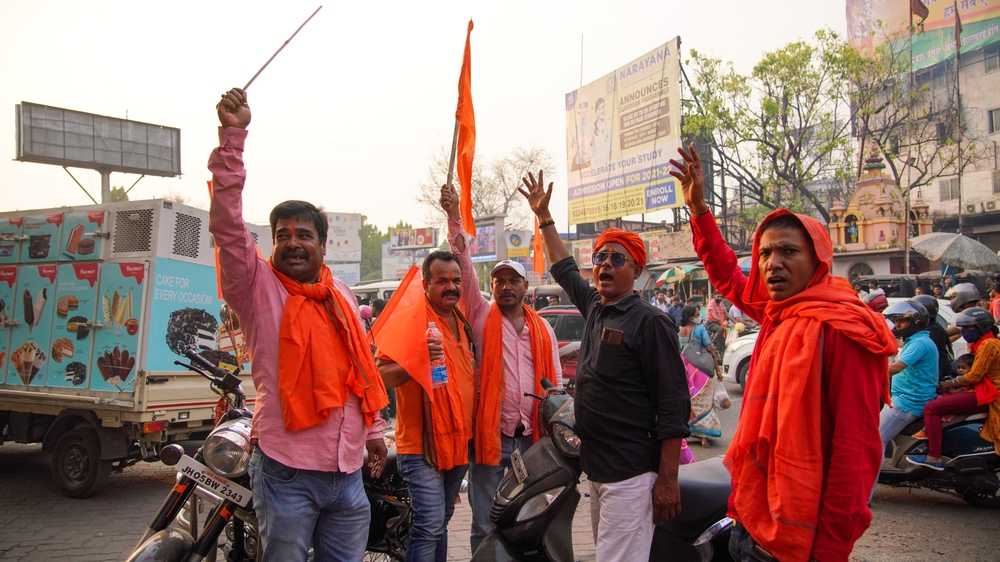
Mumbai (AsiaNews) – Prayer meetings in private homes disrupted by Hindu nationalists, personal grudges turned into sweeping accusations against Catholic educational institutions, even Adivasi villagers tied to trees to humiliate and beat them for being Christians: in the shadow of major international issues, from Prime Minister Narendra Modi’s India – bolstered in recent days by the success of his Hindu nationalist party in the West Bengal elections – reports of serious incidents of intolerance by fundamentalist groups continue to emerge almost daily.
The most serious incident took place in Rajasthan on 1 May, when, during a Catholic prayer meeting in a village in the district of Banswara, four Catholic worshippers were detained by the police on charges of alleged forced conversions. According to Fr Arvinda, parish priest of Trinity Church in Kushalgarh, the service was taking place at a Lourdes grotto within a private garden, as there is no church in the area. The gathering was part of a Marian novena and brought together Catholic families and residents from neighbouring villages.
During the distribution of communion, a group of about twelve men reportedly burst in, accusing those present of carrying out forced religious conversions. The situation escalated when one of the intruders was reportedly seen with a knife, leading to a scuffle. “The police immediately arrested four Catholics without launching any investigation into the allegations,” Fr Arvinda told AsiaNews. “There was no conversion: it was merely a peaceful prayer meeting.”
The four arrested are charged with attempted murder and violating anti-conversion laws. According to the local community, largely made up of Bhil tribal people, many now live in fear and some men have gone into hiding for fear of further arrests. Bishop Devprasad Ganawa of the local diocese of Udalpur has also expressed grave concern: “The incident is disrupting village and community life. Being a Christian today entails great difficulties and we often feel as though we are under constant surveillance.”
In the state of Uttar Pradesh, however, an internal disciplinary dispute at St Teresa’s Academy in Modinagar turned into a religious case after some Hindu nationalist organisations protested outside the school, accusing it of forced conversion activities.
The demonstrations broke out on 5 May following allegations made by Aruna Rani, a physical education teacher employed at the school since 2012. Protesters chanted slogans outside the building and drew “Om” symbols on the school gates.
The school management strongly rejects all accusations. Fr Jesu Amrutham, head of the school, told AsiaNews: “This institution has existed since 1982 and today has around 1,500 students. Of these, only 14 are Christians, whilst the others belong to the majority community and choose our school for the quality of its education and its educational values. The teacher had received a verbal warning on the evening of 4 May and subsequently made unfounded accusations”.
According to Sr. Lourd, the school’s headmistress, the issue concerned solely the teacher’s professional conduct; she was accused of creating internal tensions, using offensive language with students and parents, and ignoring repeated disciplinary warnings. The school also maintains that it never dismissed the teacher. The Bishop of Meerut, Monsignor Bhaskar Jesuraj, has also condemned the accusations: “We are absolutely not involved in conversion activities in our schools. We have been running educational institutions for many years and nothing of the sort has ever happened. Certain groups with vested interests are taking advantage of the situation and existing laws, even going so far as to take the law into their own hands.”
Finally, in Orissa, the human rights group Karwan-e-Mohabbat (“Caravan of Love”), together with a collective of citizens and activists, issued an open letter following a visit carried out from 2 to 5 May, accusing the local authorities of being complicit in the persecution of Christian minorities.
The delegation visited several districts, including Nabarangpur, Jeypore, Balasore and Baripada, meeting around 300 people. According to the report, the police, public officials and political representatives have encouraged or participated in acts of discrimination and violence against Christians.
“We heard repeated testimonies regarding the role of the police, the civil administration, elected representatives and even members of the state government in encouraging the persecution of Christian minorities and the denial of their fundamental rights,” the letter states. Attacks on churches, social exclusion, economic boycotts and the refusal to grant burials in village cemeteries were recorded. The violence is said to have affected mainly Christians belonging to the Adivasi and Dalit tribal communities.
“In some districts, the violence has gone beyond all limits,” the document states. “Christians have been tied to trees and beaten, stuffed into sacks and physically assaulted; there have also been cases of sexual violence and attempts to burn some victims alive.” According to the group, in many cases the police have charged the victims instead of the attackers. “What is evident is a complete collapse of the state’s constitutional system with regard to Christian minorities,” the letter concludes.
The Orissa authorities reject the accusations and defend the state’s anti-conversion law, arguing that it is necessary to prevent forced conversions.

.png)










