








In the shadow of missiles: forgotten, Yemen is starving
Even before war broke out again in the Gulf, UN agencies were reporting that more than 20 million Yemenis were experiencing severe food insecurity in the country divided by the conflict with the Houthis that has been raging since 2014. Many families have been forced to eat only one meal a day, mostly watered-down food, while vaccination campaigns are in crisis because of aid cuts. For humanitarian workers, this is the most dangerous phase in recent years.
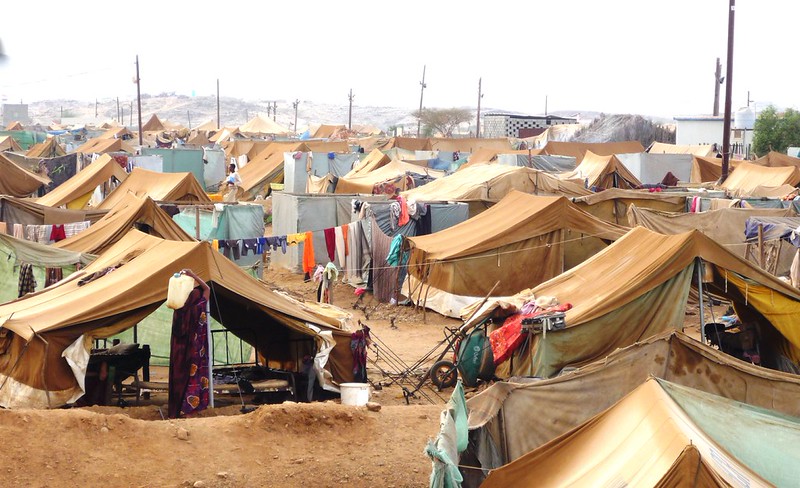
Milan (AsiaNews) – "Children are dying and it’s going to get worse," warned in mid-February Julien Harneis, UN resident and humanitarian coordinator in Yemen, expecting a deterioration of the situation that today appears even more evident.
Sometime later, Swedish diplomat and UN special envoy for Yemen Hans Grundberg, warned the Security Council that, “While regional tensions have increasingly fueled the conflict, [. . .] Yemen must not be pulled back into broader confrontation.”
These warnings weigh heavily today, amid the escalation between the United States, Israel, and Iran, which has exacerbated instability across the entire region, and now involves the Gulf states and reactivated proxy warfare.
On the ground, the crisis in Yemen remains fluid. Since 2014, the conflict has pitted Houthi rebels, backed by Iran, against government forces backed by a coalition led by Saudi Arabia.
The result is a divided country. Sana'a and the north are under Houthi control, while the recognised government operates from Aden, with the south plagued by separatist movements.
This fragmentation is fuelling one of the world's most serious humanitarian crises. According to a recent report by the United Nations Office for the Coordination of Humanitarian Affairs (OCHA), over 22 million people are in need of assistance, and more than 20 million face acute levels of food insecurity.
Reports by the Integrated Food Security Phase Classification (the partnership network involving UN agencies, NGOs, governments, and regional bodies) indicate a further deterioration in 2026. More than 18 million people, more than half the population, will enter an acute crisis phase, while over 40,000 are at risk of starvation.
An alarming number concerns resources. At the end of 2025, the Humanitarian Response Plan developed by OCHA was less than 25 per cent funded, the lowest level in the last decade.
Nutritional interventions operated at only 10 per cent of their potential, while those related to food security were at 15 per cent. The results have been devastating: services halved, facilities closed, assistance reduced just as needs were growing.
Yemen’s health system is collapsing: more than 450 facilities have closed, while vaccination campaigns are in crisis with only two thirds of children fully immunised.
On the ground, humanitarian organisations report that hunger is now a daily occurrence: families forced to eat only one meal a day, watered-down food, and increasingly extreme survival strategies.
In a country that imports up to 90 per cent of its staple grains, war, inflation, and climate shocks have made food unaffordable.
Irregular rainfall and rising temperatures linked to climate change have further reduced agricultural productivity.
Even in rainy seasons, families report that water scarcity and soil degradation make farming a challenge; furthermore, without security and functioning markets, local production cannot even come close to meeting the most immediate needs.
“Yemen is entering its most dangerous food security phase in years,” reads a report cited by Samiha Awad Bataher, health coordinator for the International Rescue Committee (IRC), the NGO founded in 1933 by Albert Einstein, which operates nutrition centres and medical clinics in Yemen.
“This deterioration is not driven by large-scale conflict escalation. It is the result of a collapse of household purchasing power and the sharp decrease of humanitarian assistance in 2025, which has dismantled food security, nutrition, and surveillance systems just as needs are peaking.”
According to the IRC, nutrition service coverage has plummeted by 63 per cent in one year. Hospitalisations for severe acute malnutrition are decreasing not because children are better, but because there are no longer any facilities that can provide care for them.
Nearly 80 per cent of families suffer from hunger, and half of those with young children report at least one malnourished child.
The priorities, notes Awad Bataher, are clear: urgently restore funding, prioritise treatment of child and maternal malnutrition, ensure constant supplies of therapeutic foods, and strengthen monitoring systems.
“Immediate, targeted donor action,” she writes, “can prevent widespread loss of life”.
The estimated need for 2026 is approximately US$ 2.5 billion, but the outlook remains uncertain. With regional tensions intensifying and international attention declining, the crisis risks slipping further into obscurity.
After more than a decade of war, Yemen remains suspended in a fragile state. And while the world looks elsewhere, the warning from United Nations agencies and humanitarian workers on the ground is clear: without immediate and coordinated action, 2026 could mark a point of no return.
Photo: ECHO/H. Veit

.png)
12/02/2016 15:14
11/08/2017 20:05










