








Israel and Lebanon sign Trump’s ‘armed peace’, but clouds remain over the future
Beirut will not hold direct talks with Israel if the destruction of the south continues. Aoun is to be received by Trump ahead of a possible face-to-face meeting with Israeli Prime Minister Netanyahu. An Arab safety net is being mobilised to reduce Hezbollah to a civilian status, meet Israeli demands and implement the Taif Agreement. A moved crowd at the funeral of journalist Amal Khalil.
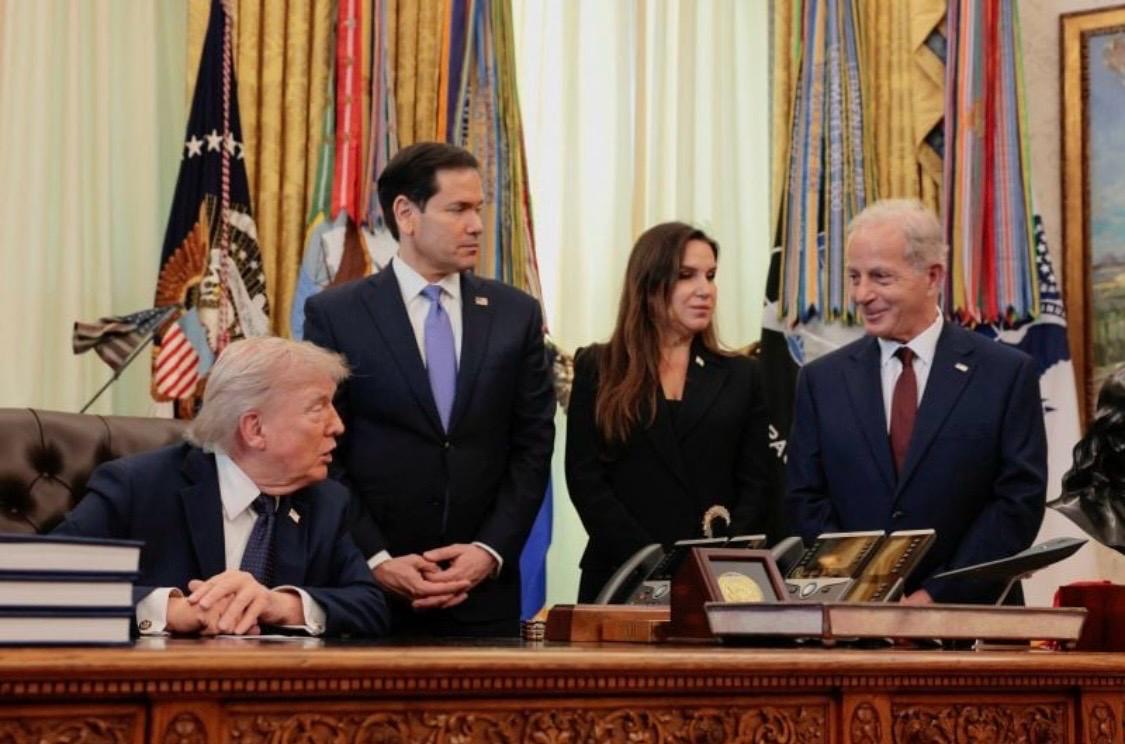
Beirut (AsiaNews) - The ceasefire between Israel and Lebanon will be extended by three weeks, starting from Sunday 26 April. This is the main concrete outcome of yesterday’s meeting at the White House between the ambassadors of Lebanon and Israel, Nada Hamadé Moawad and Yechiel Leiter, the second such high-level meeting to be held in the United States.
An initial meeting had already been organised at the State Department on 14 April. However, the venue of the meeting and the presence of US President Donald Trump, who attended most of this 75-minute session, make a significant difference in the eyes of observers. For Beirut, this suggests a more concrete commitment from Washington on the Lebanese issue.
The US President stated, at the end of the meeting, that the United States would “work with Lebanon to help it protect itself from Hezbollah” . Trump also said he hoped to welcome Israeli Prime Minister Benjamin Netanyahu and Lebanese President Joseph Aoun to the White House soon. The tycoon made it clear that he would work towards the repeal of the law on the boycott of Israel, recently added by the Jewish state to its list of demands, but categorically rejected at this stage by all political forces in Beirut.
On the other hand, Lebanon has clearly stated that it will not compromise on either its borders or the return of the population to their villages, and that it is absolutely unthinkable to accept the creation of any Israeli ‘buffer zone’ in the south. In capital circles, however, there is talk of the possibility of deploying an international peacekeeping force, in which France would also participate. This was reportedly discussed between French President Emmanuel Macron and Prime Minister Nawaf Salam, who was recently received at the Élysée Palace.
Trump: agreement in 2026
Among those present at the Washington meeting were US Secretary of State Marco Rubio, the Israeli and Lebanese ambassadors to Washington, and the US ambassador to Lebanon, Michel Issa. The US Ambassador to Israel, Mike Huckabee, was also due to attend. According to the US President at the end of the meeting, resolving the dispute between the two countries is, in principle, “relatively easy, compared to other issues”.
“There is a good chance that a peace agreement will be reached and that Lebanon will regain its strength as early as this year,” added Trump, who described Lebanon as “a beautiful country” and stated that “the Lebanese people are the smartest in the world”.
“Iran must stop funding Hezbollah,” the White House occupant stated. Both the Israeli and American sides considered it “difficult” to prevent Israel from violating the ceasefire, especially as Hezbollah also rejects it, but President Trump asked Israel to avoid targeting civilians and journalists.
Lebanon’s ambassador, Nada Hamadé LMouawad, and her US counterpart in Lebanon, Michel Issa, have come to the defence of President Aoun, who has set as a condition for the start of direct talks “an end to the destruction of homes and attacks on civilians, places of worship, journalists, as well as the health and education sectors”.
The Israeli ‘yellow line’
It is well known that the Israeli army has established a ‘yellow line’ of separation in the south, as in the Gaza Strip, claiming it is to protect the population of northern Israel. Under the terms of the current truce, Israel claims to reserve the right to act against ‘planned, imminent or ongoing attacks’ in Lebanon.
However, the Jewish state is using this “right” as a pretext to occupy and erase the traces of over fifty villages in a Lebanese border strip averaging up to ten kilometres in width. Many Lebanese believe the president’s request comes too late and that hundreds of thousands of Lebanese are unable to return to their villages located beyond the “yellow line” drawn by the Israeli army.
A blank slate in the south
Journalist Katia Kahil thus denounces the existence of a veritable “blank slate made of ash and shattered stones”. She quotes a resident of Debbine who says: “I had to ask a neighbour where my house was. Everything looks the same. It’s all destroyed.” “No thresholds. No landmarks. The destruction is total and makes the landscape of rubble uniform,” comments the journalist, “even if the war were to end, everything has been done in such a way that we cannot return.”
Aoun soon to be in Washington
The head of state had set out his requests, stating that he “hoped to be able to travel in person to Washington to meet President Trump and inform him of the truth about what is happening in Lebanon”. He had clearly rejected any idea of direct contact with Netanyahu at this stage of the war that Israel is waging on Lebanese soil.
Indeed, aware that Lebanon as a whole is “tired of war”, the president believes that a non-aggression pact, or even a peace agreement, with the Jewish state is necessary, but that it will only be legitimate if it is part of the broader framework of the 2002 Arab summit held in Lebanon under the chairmanship of Saudi Arabia. During that summit, ‘peace’ had been offered to Israel ‘in exchange for the territories’ conquered in 1967. In any case, an authoritative source close to the presidency points out that Beirut ‘remains firmly committed to the Arab peace initiative based on the two-state solution’.
Implementation of the Taif Agreement
Saudi Arabia is actively involved in preparations for direct talks between Lebanon and Israel. One of its envoys, Yazid Ben Farhan, the Saudi foreign minister’s right-hand man, was in Beirut yesterday. This mobilisation aims in particular to secure from Iran the disarmament of Hezbollah, its “reduction to a civilian status”, in exchange for the full implementation of new political rules based on the application of the Taif Agreement and the prevention of any internal conflict.
“More generally,” writes analyst Mounir Rabih in L’Orient-Le Jour (LOJ), “numerous international actors are converging on an overarching objective: to preserve the Lebanese state and prevent any geographical or demographic changes [to the nation]. It is also a matter of preventing Lebanon from remaining isolated vis-à-vis Israel or being drawn into its orbit, which would have repercussions on other Arab countries, particularly Syria”.
Death of journalist Amal Khalil
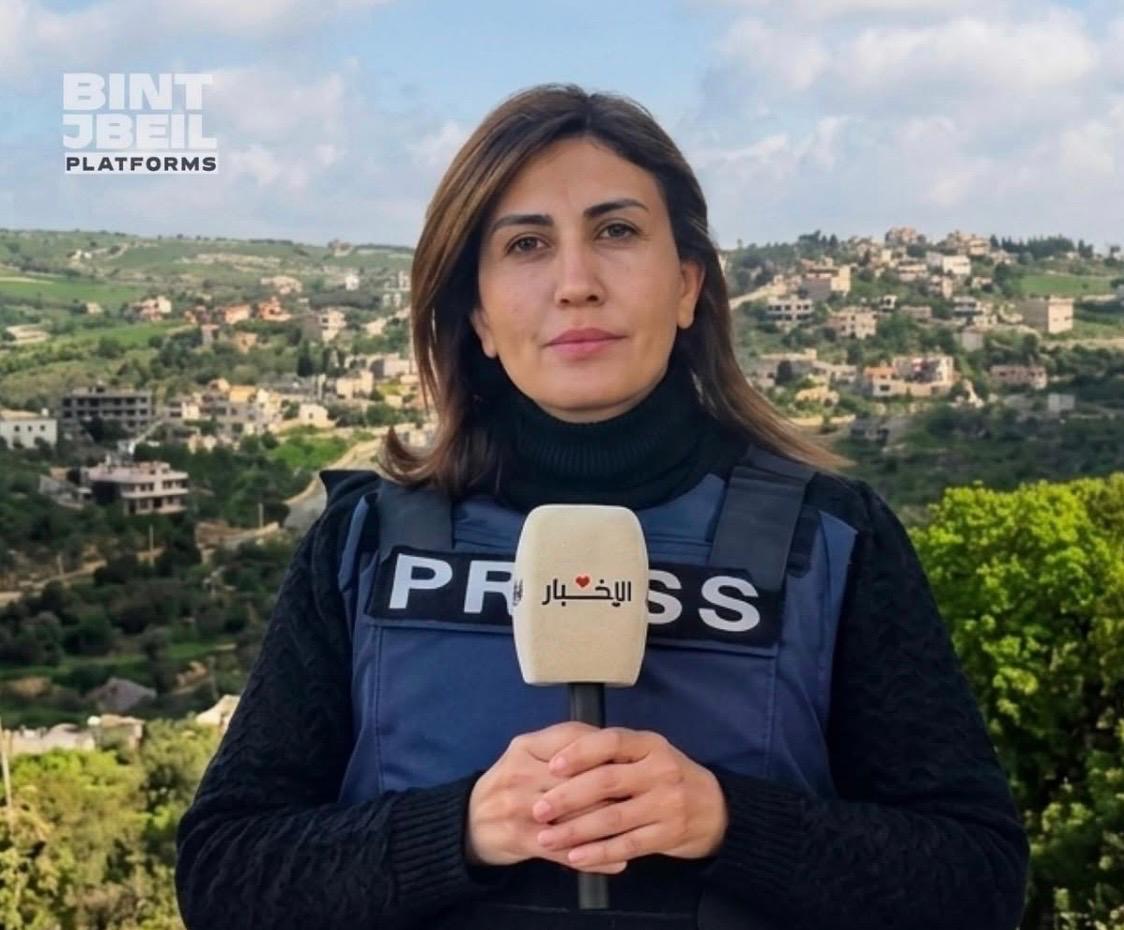
The “Arab network” that is being sought to be established in Lebanon in the face of Israel, and in which Saudi Arabia, Egypt and Turkey are participating, should enable it to raise its voice against the actions of the Israeli army. This is why both the Lebanese government and the public are currently accusing the Jewish state of having committed “a war crime” by assassinating Amal Khalil, a senior journalist with the pro-Hezbollah daily Al-Akhbar, on 22 April, and wounding her colleague Zeinab Faraj, in the village of Tiri. Indeed, according to current international standards, Israel committed a “war crime” by striking the house where the journalists had taken refuge and by obstructing the arrival of rescue teams sent to save Amal Khalil from the rubble of the building. It is a controversial incident, regarding which the Israeli army stated yesterday that it intends to “examine the facts”.
“How many crimes are buried in these commissions!”, states a press release from the Lebanese Press Union, which recalled that “the journalist had already received death threats in 2024 from an Israeli number, warning her to leave the south, to destroy her home and to behead her”. The message contained details of her movements between villages in the south: “We know where you are and we will find you when the time comes.” The text ended with: “I suggest you flee to Qatar or elsewhere if you want to keep your head on your shoulders.”
Failed return
The journalist, buried yesterday in her village of Qasmiyé in the presence of a large and emotional crowd who had come to express their condolences and outrage, had highlighted the barbarity of an Israeli army whose “moral failure” is now being denounced even by Israelis themselves, along with the violence against places of worship and religious symbols that form the collective memory of Lebanon.
Furthermore, a video is circulating showing Israeli soldiers loading a motorbike, a carpet and a television set onto a van. On their return, after having tried in vain to go home, many displaced people are now languishing in reception centres. “The legendary resilience of the people of southern Lebanon,” writes expert Suzanne Baaklini, “has been severely tested by this new exodus, then by this failed return, and by the images of devastation that now haunt them.”

.png)










