








Kampung Ribu, the village that brightens the end of Ramadan with a ‘sea of lights’
Residents set up an imposing structure with 1,400 oil lamps for the 27th night of the fast. Part of the preparations for Eid al-Fitr, the initiative engages the community in a collective effort. Well known in Malaysia and across Southeast Asia, the tradition was revived more than ten years ago.
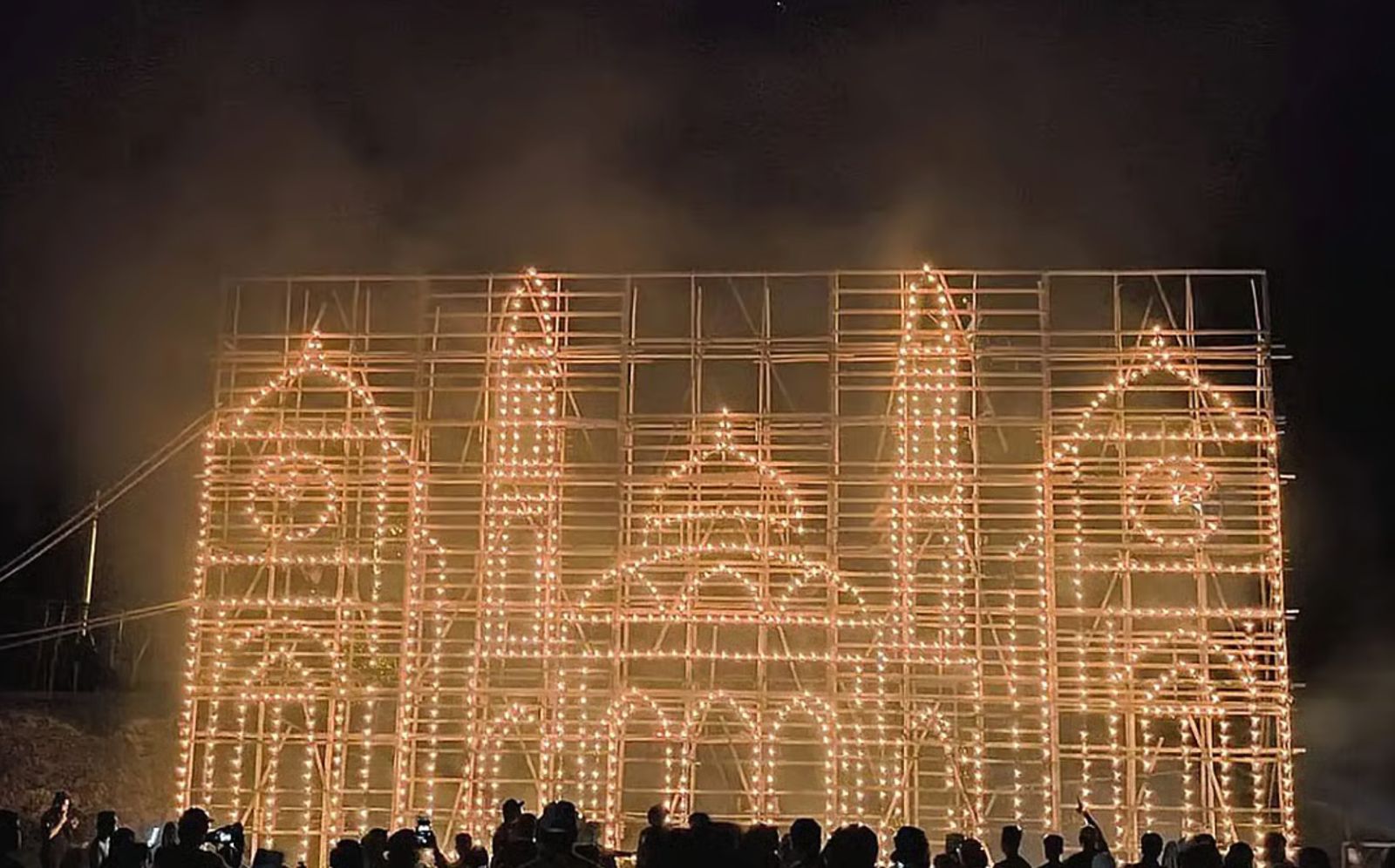
Kuala Kangsar (AsiaNews) – Residents in Kampung Ribu, in the royal town of Kuala Kangsar, prepared a giant traditional oil-lamp installation that will illuminate the village on the 27th night of Ramadan, keeping alive a centuries-old Malay cultural tradition linked to the approaching festival of Eid al-Fitr, known as Hari Raya Aidilfitri in Malaysia.
In the previous two weeks, villagers gathered nightly in an open field after terawih prayers (nightly voluntary prayers during Ramadan), working with bamboo, wood and oil lamps to construct a towering panjut display expected to stand about nine metres tall and 15 metres wide, illuminated by as many as 1,400 lamps.
The structure, which this year recreates the Melaka Straits Mosque, will be lit on the night known locally as Malam Tujuh Likur (27th Night), a traditional observance during the last days of the Muslim month of fasting.
According to Amiruddin Mohd Lazim, chairman of the Persatuan Penggemar Panjut Kampung Ribu (Panjut Fans Association of Kampung Ribu), the effort is about more than festive decoration.
“If no one takes the initiative to organise it, it may eventually fade from memory and future generations may never experience it,” he told the Bernama, Malaysia’s national news agency.
The lighting of panjut or pelita lamps is part of Malam Tujuh Likur, the broader Malay cultural practice commonly observed in Malaysia, Indonesia’s Riau Islands, and other parts of the Malay Archipelago.
During the final ten days of Ramadan, families place small oil lamps around their homes, along village roads and near mosques, creating a glowing landscape often described as a “sea of lights”.
Traditionally, the lamps serve both symbolic and practical purposes. They mark the approaching celebration of Hari Raya Aidilfitri, while also helping illuminate pathways for villagers walking to mosques for nighttime prayers.
Over time, the simple act of lighting lamps evolved into a communal activity rooted in gotong-royong (to carry together), the Malay tradition of collective voluntary work.
In parts of Perak State, the custom has grown into elaborate community projects where thousands of lamps are arranged into large structures resembling mosques, ships or traditional buildings.
In Kampung Ribu, the initiative began more than a decade ago when villagers revived a fading tradition. The local panjut association, formally registered in 2019, now has about 90 members, with around 20 volunteers forming the core team responsible for constructing the annual display.
Preparation begins months in advance, including cutting and transporting bamboo from nearby land.
According to association secretary and project technical head Ahmad Ridzuan Kamaruddin, each installation requires between 130 and 150 bamboo poles, though some designs may need up to 200.
“It takes between 14 and 20 days to complete the entire structure before the oil lamps are lit,” he said.
In an unusual blend of tradition and modern technology, the structure is first designed using AutoCAD software to ensure the precise placement of the lamps.
Historical records suggest that large-scale panjut displays once existed in the region decades ago.
Amiruddin said archival newspaper reports show that such installations were already being built in Padang Rengas as early as 1963, sometimes featuring political party logos because election seasons occasionally coincided with Ramadan.
The tradition later faded but saw renewed interest around 2014, when competitions were organised, rekindling interest among villagers to revive the displays.
Kampung Ribu won the competition in 2016 and 2017, giving villagers the momentum to continue even after the contests ended.
Similar lamp-lighting traditions exist elsewhere in Southeast Asia, reflecting a shared cultural heritage across the Malay world.
Indonesia celebrates a similar heritage called Tumbilotohe, where thousands of lamps illuminate villages during the final nights of Ramadan, while parts of the State of Sabah on Borneo observe a related practice known as Berjusul.
For the residents of Kampung Ribu, however, the significance remains deeply local.
As the final nights of Ramadan approach, the quiet village field slowly transforms into a glowing monument of bamboo and flame – a reminder that traditions endure not through nostalgia alone, but through the collective effort of a community determined to keep them alive.

.png)
18/01/2023 17:40
31/10/2016 09:51










