








Lebanon and Israel's grumble are a test case for the US-Iran agreement
In the last few hours, a few displaced people have started to go home, but the situation in the south remains critical. The Jewish state has no intention to relinquish the territories it has occupied. Furthermore, the plan leaves the issue of Hezbollah's disarmament open and unresolved. Uncertainty and unresolved issues surround the future of direct talks between Israel and Lebanon.
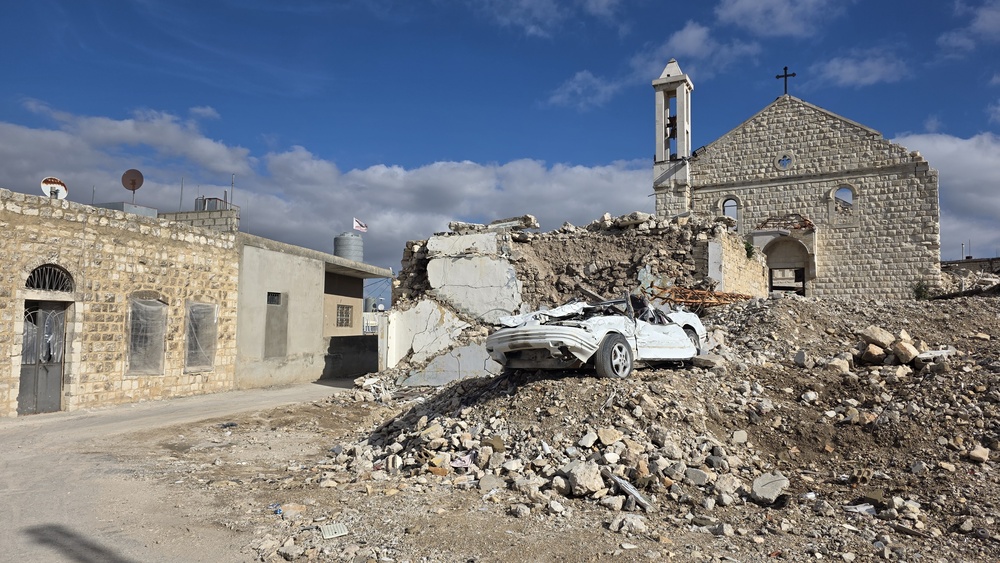
Beirut (AsiaNews) – Despite the sigh of relief that hostilities in southern Lebanon may have come to an end, a certain confusion, mixed with doubts, reigns in Lebanon after Pakistani Prime Minister Shehbaz Sharif announced the end of the war between the United States and the Islamic Republic of Iran.
“Both sides have declared the immediate and permanent termination of military operations on all fronts, including in Lebanon,” writes Shehbaz on X. “The official signing ceremony will be on Friday, 19 June in Switzerland.”
This announcement, which saw few cheer in Israel, leaves major questions unanswered, preventing Lebanese authorities from being fully reassured about the details of the arrangements to follow, even though the announcement stipulates an "immediate and permanent cessation of military operations”.
In Lebanon, officials are awaiting the official signing on 19 June and are wondering whether Israel will exploit the time between the announcement and the official signing to occupy more territory.
Despite these reservations, a tentative return to the deserted villages in the Bekaa Valley and the south appears to have begun following the announcement of the memorandum, but the Lebanese army is advising extreme caution, blocking certain roads in the south exposed to Israeli fire.
Warning shelling was heard on the outskirts of Nabatiyeh, intended to discourage this return movement.
In a statement, the Lebanese army command stressed “the need for residents to wait before returning to the southern border villages and towns." It further emphasised the need to exercise "caution and vigilance in areas targeted by Israeli attacks, and to report any unexploded ordnance or suspicious objects to the nearest army or other security force post."
For his part, Lebanese President Joseph Aoun welcomed the agreement between Iran and the United States.
“I followed with interest the announcement of the Memorandum of Understanding (MoU) reached between the United States of America and the Islamic Republic of Iran, and its emphasis on halting military operations and de-escalation in the region, including Lebanon,” he said.
“In this context, I appreciate the Memorandum's respect for Lebanese sovereignty and its recognition that Lebanon's stability and security are an integral part of any serious effort to consolidate stability in the region,
Parliamentary Speaker Nabih Berri on Monday also welcomed the MoU announced by Iran and the United States and thanked both countries for including a clause providing for the halt of “Israeli aggression against all of Lebanon, to preserve its sovereignty over its entire territory, without jeopardizing the independence and freedom of its national and sovereign decision, and to avoid falling into the trap set by the Israeli political echelon led by Israeli Prime Minister Benjamin Netanyahu."
Katz: Israel will not withdraw from the territories seized in Lebanon
In Israel, views are different.
“Prime Minister Benjamin Netanyahu and I are pursuing a clear policy under which the IDF will remain in the security zones in Lebanon, Syria and Gaza for an unlimited period of time, in order to protect the border and Israeli communities from there against jihadist elements,” said Israeli Defence Minister Israel Katz in a statement that made no reference to the US-Iranian accord.
“Holding territory and maintaining security zones are among the IDF's greatest achievements ... therefore, we oppose an IDF withdrawal from Lebanon, despite all the existing pressures and those that will come,” Katz stated, adding that Netanyahu had informed US President Donald Trump.
Katz also warned Iran, asserting that Israel would retaliate with "full force" if the Islamic Republic attacked it in response to its military operations in Lebanon.
Meanwhile, Israel's far-right national security minister, Itamar Ben Gvir, on Monday criticised the US-Iran agreement to end the war in the Middle East, including Lebanon, saying that Israel was not bound by its terms.
“We must not accept anything less than the dismantling of Hezbollah. We should not withdraw from any inch of the territories our soldiers have taken and cleared of infrastructure in Lebanon,” Ben Gvir posted on is Telegram account.
What will become of the direct talks?
In light of these statements, what will become of the direct talks initiated by Lebanon with Israel, aimed at a comprehensive cessation of hostilities? A new meeting between the two delegations is scheduled for 22 June in Washington. Are these talks compromised? Does the memorandum between the United States and Iran leave the issue of Hezbollah's disarmament and its place on the Lebanese political scene unresolved?
"The paradox," explains analyst Jeanine Jalkh of L'Orient-Le Jour, speaking to AsiaNews, "is that this disarmament is sought, but for different reasons, by both Lebanon and Israel.
“That said, the Israeli Prime Minister perceives the Iranian-American agreement as the prelude to a political and electoral defeat, since it forces him to end his military operations in Lebanon. This means that Lebanon will remain an open arena for him.”
According to the analyst, “the real issue at stake in this development is that by insisting on including the Lebanese issue in its own negotiations, Tehran seems to have succeeded in imposing a fait accompli that Beirut, Washington, and Israel categorically reject: the continuation of its influence over Lebanon. In fact, Hezbollah is gloating.”
Will this be the end of it? How can this impasse be broken and the withdrawal of both the Israeli army from Lebanon and the disarmament of Hezbollah achieved? One possible option would be for Hezbollah to withdraw from the area south of the Litani River, as “proposed and guaranteed” by the Speaker of Parliament, in exchange for a complete withdrawal of the Israeli army.
But this solution has the disadvantage of leaving the question of party’s weapons to tedious internal negotiations, during which the pro-Iranian party would be on equal footing with the Lebanese state.
The other solution is to continue what was already initiated during the three previous rounds of talks, namely, that "pilot zones" controlled by Israel be defined in southern Lebanon.
The Lebanese army, re-equipped by Washington and Pakistan, would successively take control of these zones while awaiting the completion of the disarmament process of Hezbollah, now deprived of its military objectives and motivations. This would enable the Lebanese government to regain control of all Lebanese territory.
“Certainly, Hezbollah and the Speaker of Parliament are firmly opposed to this option," Jeanine Jalkh explains, “but Iranian assistance could be sought in this regard. However, this will be done indirectly, through a mediator, such as Qatar, Saudi Arabia, or France. For Baabda, the matter must remain under Lebanese control.
“It remains to be seen whether Israel is prepared to make a genuine concession in the areas it occupies in southern Lebanon. Or whether Iran is willing to pave the way for the disarmament of Hezbollah, its main bargaining chip in the region.”

.png)
15/04/2026 17:14










