








Malaysia criticises the Philippines over a senator's statements on Sabah and oil
Malaysian political groups slam Philippine lawmaker Robert Padilla's claim to the Malaysian state in northern Borneo and warn of the risk of tensions within ASEAN. The statement on the oil- and gas-rich region comes as the Philippines is in the throes of an energy crisis. This has reignited a dispute that dates back to the 19th century.
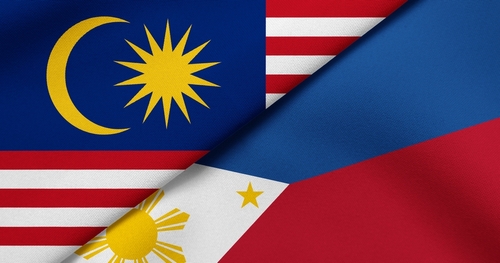
Kuala Lumpur (AsiaNews) – Malaysian political youth leaders and civil society groups have strongly condemned a renewed call by a Philippine senator to revive Manila’s long-dormant claim over Sabah, warning that such rhetoric risks unsettling fragile regional diplomacy and undermining ASEAN cohesion.
The backlash follows remarks by Senator Robin Padilla, who urged Philippine President Ferdinand Marcos Jr. to pursue the country’s historical claim over Sabah, citing the territory’s oil and gas potential amid a global energy crunch.
Padilla’s comments, which framed Sabah as a possible solution to the Philippines’ energy concerns, have drawn swift and pointed responses across Malaysia – particularly from Sabah, where sensitivities over sovereignty remain acute.
Nurhanani Dhamirah, communications director of Parti Keadilan Rakyat (PKR) Youth, described the senator’s remarks as “irresponsible and provocative,” warning that linking territorial claims to petroleum resources risks inflaming geopolitical tensions in Southeast Asia.
“Such narratives suggest an attempt to politicise territorial issues for narrow economic interests,” she said in a statement.
“This is especially dangerous at a time when regional stability must be preserved.”
She stressed that Sabah is “a legitimate and inseparable part of Malaysia,” and that attempts to revive what she called “outdated and unfounded claims” run counter to international law and the principles of peaceful coexistence.
Nurhanani further called on the Malaysian government to summon the Philippine ambassador for clarification and to reinforce Malaysia’s legal and historical position on Sabah at the international level.
She also urged heightened security vigilance in Sabah’s waters and border – an echo of lingering concerns following the 2013 Lahad Datu incursion, when armed followers of a self-proclaimed Sulu Sultan entered Sabah, triggering a deadly standoff with Malaysian security forces.
In Sabah itself, political leaders were even more direct.
Azrul Ibrahim, acting chief of the youth wing of Parti Gagasan Rakyat Sabah, rejected any attempt to frame the state as an economic asset for external actors.
“Sabah is not a commodity to resolve the challenges of other countries,” he said. “It is an integral part of a sovereign nation, and its status cannot be questioned.”
He also suggested that such claims may be politically motivated, aimed at diverting attention from domestic issues within the Philippines.
The response reflects a long-standing sentiment in Sabah, where the question of sovereignty is not merely legal but deeply tied to identity and lived experience. For many Sabahans, the matter was settled decades ago through their participation in the formation of Malaysia in 1963.
Angkatan Belia Islam Malaysia (ABIM), a prominent Islamic youth movement, also weighed in, calling the senator’s statement “baseless and provocative.”
The group expressed concern that such rhetoric could undermine regional stability, particularly given the Philippines’ current role as ASEAN chair.
“ASEAN’s strength lies in mutual respect, justice, and non-interference,” ABIM said. “Any statement that contradicts these principles risks eroding trust within the bloc.”
The Philippine claim over Sabah traces back to the 19th century, when the Sultanate of Sulu exercised influence over parts of North Borneo. In 1878, the Sultan agreed with the British North Borneo Company – an agreement whose interpretation remains disputed.
While the British – and later Malaysia – viewed the agreement as a permanent cession of sovereignty, the Sulu Sultanate and the Philippines have historically argued it was a lease.
In 1963, Sabah joined the Federation of Malaysia following a United Nations-backed process that assessed the will of the people. The majority supported integration into Malaysia, a point Kuala Lumpur cites as affirming its sovereignty.
The Philippines formally adopted the claim in 1962 but has largely kept it dormant in official diplomacy in recent years, even as it has not formally renounced it.
What distinguishes the latest remarks is the explicit linkage between the territorial claim and Sabah’s natural resources.
Analysts note that invoking oil and gas wealth introduces a dimension to an already sensitive issue, potentially reframing a historical dispute in terms of contemporary economic.
For now, the issue remains more rhetorical than real.

.png)
27/07/2016 10:02










