








Nabatieh, Lebanon’s Gaza, and the south on hold, between apparent calm and war
This is the second night of relative quiet along the southern border since the war broke out on 2 March. The 14 June massacre of civilians has slowed down the return of the population. Some residents told AsiaNews that they hope for a return to "normal life”, amid uncertainty and fears about the future. A new round of talks between Lebanon and Israel is set for tomorrow in Washington.
Beirut (AsiaNews) – First hours Monday morning, and South Lebanon just woke up after its second night of quiet since the outbreak of hostilities on 2 March between Israel and Hezbollah, following the start of the war against Iran by Israel and the United States.
The return of residents to their villages in the combat zones is real, but it is no longer happening at the rapid pace seen last week. People have learnt their lesson.
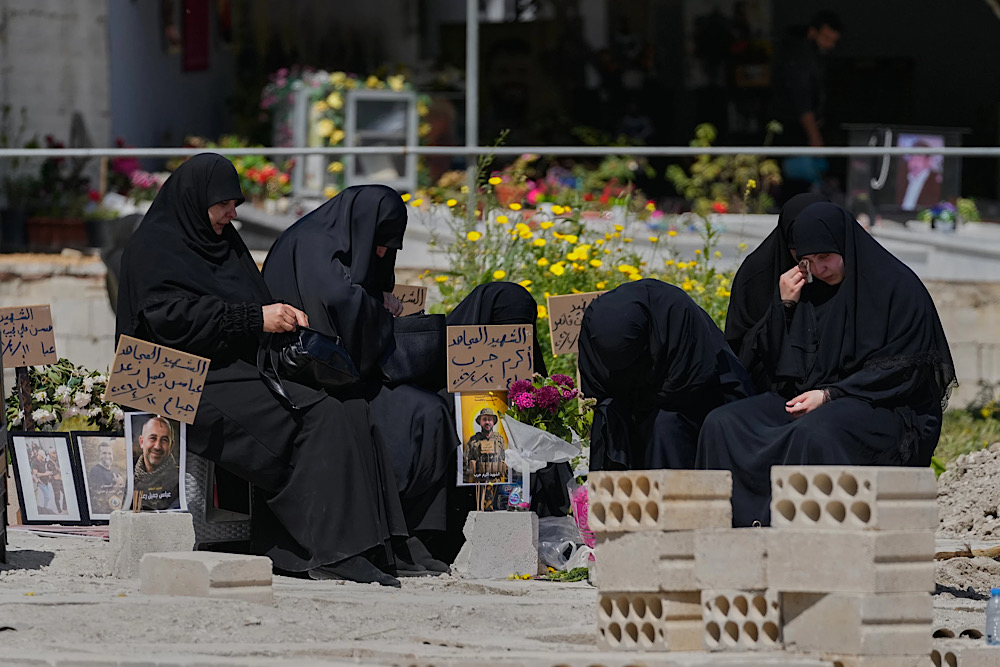
When the ceasefire – announced informally on the night of Saturday, 13 June, to Sunday, 14 June – broke down it resulted in a massacre among Lebanese civilians, who naively thought that hostilities had ended, despite warnings from the Lebanese army deployed near the combat zones.
It has not been possible to determine what triggered the resumption of bombing last week. Was it a last-ditch effort by the Israeli army? Or an attempt by Binyamin Netanyahu to sabotage the ceasefire? The fact remains that these clashes resulted, according to Hezbollah, in 26 Israeli soldiers killed and wounded, and around 100 Lebanese soldiers killed, although Hezbollah no longer releases figures regarding its own losses.
The Israeli army, for its part, announced the death of a commander and three crew members of a Merkava tank, likely hit by a fibre-optic First-Person View (FPV) drone.
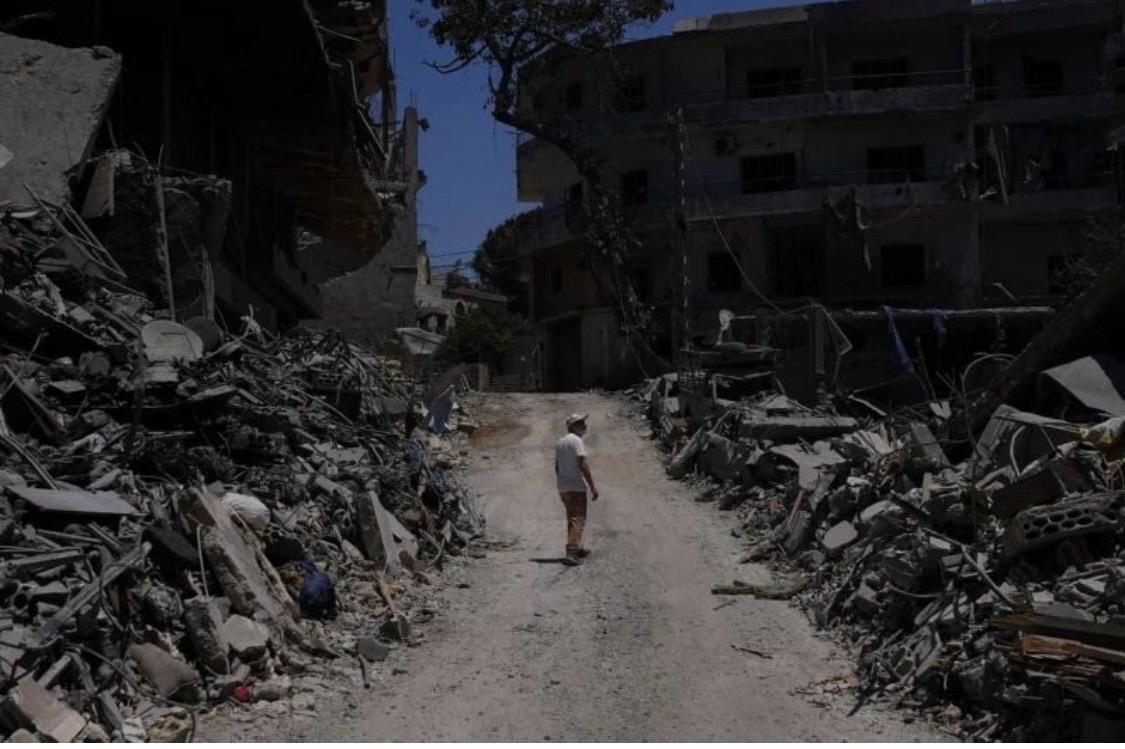
“We no longer have a home, the family home, my grandmother’s, my uncles’ home, nothing. Nabatieh and the surrounding villages are like Gaza,” wrote journalist Houda Ibrahim in a WhatsApp message. “A family of seven, my brother-in-law’s cousins, and his entire family died under the rubble of their home,” the journalist lamented.
On the ground, rescue teams from various organisations are continuing the search for victims whose bodies remain trapped in the rubble, in areas inaccessible during the fighting of the preceding days and weeks.
Thirteen bodies have been recovered from the rubble in the Nabatieh region and in the villages of Debbine and Blat (Marjeyoun District), the Civil Defence announced. Seventy other bodies had been extracted from the rubble in two villages in the Bint Jbeil District.
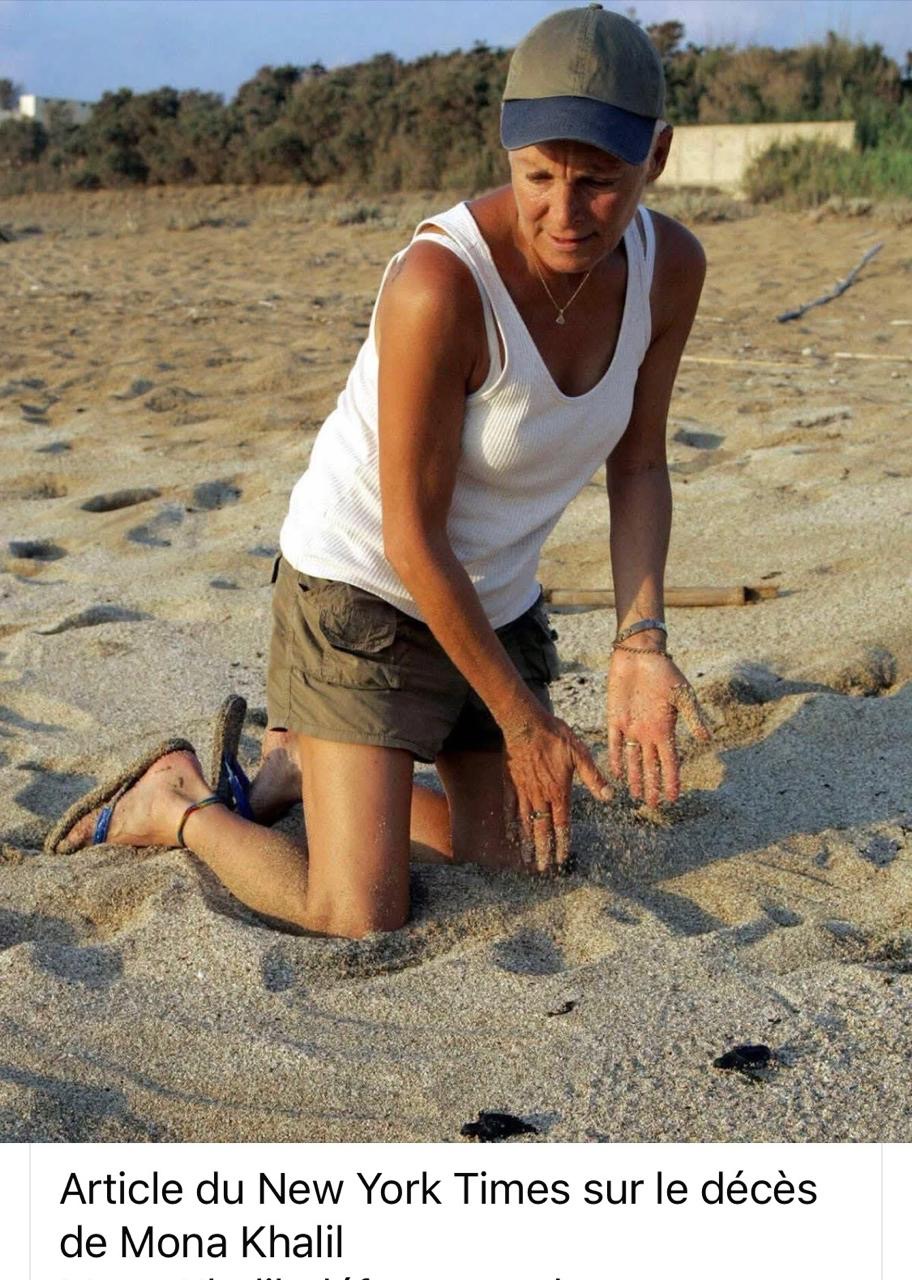
Last Friday, the press announced the death of Mona Khalil (76), an environmental activist and leading figure in the protection of sea turtles on the Tyre coastline, who succumbed to the injuries sustained in an Israeli airstrike that directly hit her family home in Mansouri on 4 June. “Like many other victims, being completely neutral, she believed she was safe from direct Israeli fire,” her relatives reported.
Preserving a semblance of normalcy
Amidst the war in South Lebanon, some villages are trying to maintain a semblance of normalcy amidst the uncertainty. A convoy from the local NGO Nawraj, founded by Fouad Abou Nader, reached the Christian villages of Deir Mimas, Kleyaa, Jdeidet Marjeyoun, and Kawkaba yesterday. The residents are deeply affected by the bombings, drone strikes, sleepless nights, and water and electricity cuts.
“Beyond material aid, generators, and fuel, uncertainty about the future prevails in these villages of Marjeyoun,” noted journalist Katia Kahil in a telephone interview. “Overall, it’s mostly the men who are returning, to inspect the damage. Many families are going back to the shelters after realising their homes are uninhabitable,” she added.
“It seems like the situation is improving,” she explained. “Two days without gunfire is significant. Yes, we still have water and electricity, unlike other areas in the south where the Israelis have destroyed the infrastructure, but our streets are disgustingly filthy because there’s no garbage collection.”
“People no longer know whether to stay or leave, or what the coming months hold for them,” said a Marjeyoun resident. “Since last March, some have had no income. Many families can no longer pay their children’s school fees. The Antonine nuns who ran the large school in Nabatieh were all evacuated when the school buildings were hit. Here, the Sacred Heart School has also been affected by the situation.”
“Is Hezbollah the victor in this confrontation? Not judging by the rubble,” noted the journalist. “The fighting has shattered normal human and economic ties between villages. While a sense of community remains, there are no longer opportunities to express it. The regions are isolated by the fighting, hindering human and economic exchange between farmers, merchants, and the general population. We are living in a state of suspended animation.”
Washington talks and Ali Taher Hill
Talks between Lebanon and Israel will resume this Tuesday in Washington, chaired by Marco Rubio, and are expected to last three days. Lebanon is demanding a total ceasefire before considering any coordination with the Israeli army in certain "pilot zones" of the territory occupied by Israel, which continues to demand the disarmament of Hezbollah.
According to Scarlett Haddad, an analyst close to the pro-Iranian party, the central issue in the current battle between Israel and Hezbollah is the capture of Ali Taher Hill, both a strategic site and a Hezbollah command centre.
The Israelis are even claiming, without providing any evidence, that the Imad 4 tunnel, which Hezbollah has repeatedly shown in videos and which is said to be one of its most advanced, is located there. A fierce battle raged around this hill, but the Israelis failed to seize it.
“For this reason,” the journalist notes, “Hezbollah expects the ceasefire announced on Saturday to be short-lived. But for the pro-Iranian party, the battle of Ali Taher should be a factor in the negotiations between Iran and the United States taking place in Switzerland, and especially in the (direct) talks between Lebanon and Israel scheduled for 23 June in Washington.”

.png)










