








Nearly 900 Rohingya die at sea in 2025 while fighting in Rakhine prompts new flight
According to the UNHCR, last year was the deadliest for Rohingya refugees, who continue to make the journey from Bangladesh and Myanmar to Malaysia and Indonesia due to fresh fighting in Myanmar's Rakhine State, and continued persecution, worsening conditions in refugee camps in Bangladesh.
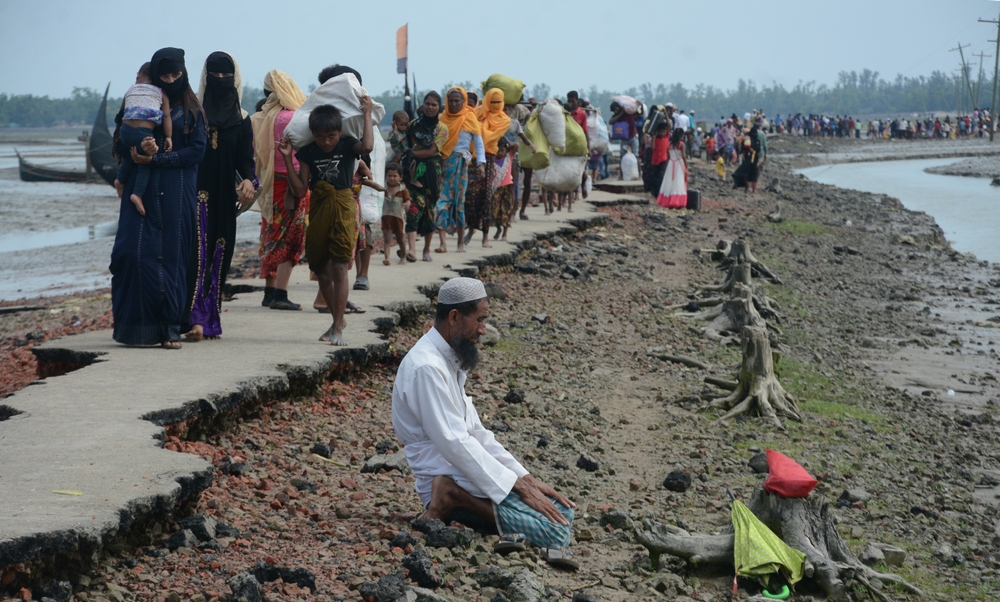
Sittwe (AsiaNews) – Nearly 900 Rohingya refugees have reportedly died or gone missing between the Bay of Bengal and the Andaman Sea in 2025, making the past year the deadliest on record.
According to the United Nations Refugee Agency (UNHCR), at least 2,800 people have taken the same route in 2026, departing from Bangladesh or Myanmar's Rakhine State in an attempt to reach Malaysia or Indonesia.
Earlier this month, an overcrowded fishing boat with approximately 250 people on board sank in the Andaman Sea while heading to Malaysia from the Bangladeshi port of Teknaf. Only nine people were rescued, with hundreds still missing.
For UNHCR spokesperson Babar Baloch, this area has become a “unmarked graveyard for thousands of desperate Rohingya refugees”, with an estimated 5,000 people drowning in the crossing over the past decade.
In addition, more than half of those making the journey are women and children, who are particularly at risk of trafficking and exploitation.
The Rohingya exodus began in 2017 due to a violent crackdown by Myanmar’s military, which forced hundreds of thousands of people to seek refuge in Bangladesh, particularly in the Cox's Bazar, whose refugee camps continue to receive new arrivals due to Myanmar’s ongoing civil war.
At present, cuts in humanitarian aid forcing the United Nations to reduce food assistance, limited educational and employment opportunities, and security concerns within the camps, where extremist movements have targeted Rohingya community leaders, are pushing many to attempt another escape by sea.
In Myanmar’s Rakhine State, the military is fighting the Arakan Army (AA), which represents the majority of the ethnic Rakhine population and is Buddhist. The Rohingya, for their part, are mostly Muslim and have long been denied Myanmar citizenship.
In recent years, the country’s ruling military regime has also forced many young Rohingya men to join the fight against the AA.
Many refugees express a desire to return to Myanmar, but the current conditions in the country make it highly unlikely. The “ongoing conflict, persecution, and the absence of citizenship prospects leave them with really little hope,” Baloch explained.
Sittwe, the capital of Rakhine, remains one of the military junta’s last strongholds in the state. Overall, the military controls three areas, including Kyaukphyu Township (where several important Chinese infrastructure projects are underway) and Munaung Island, while the AA has conquered almost all of the surrounding territory thanks to an offensive launched in November 2023.
In recent months, fighting has intensified around Sittwe, where 250,000 people, both Rakhine and Rohingya continue to live.
In the past few days, the junta has carried out multiple air strikes targeting locations in Mrauk-U and Punagyun townships, dropping at least eight bombs, one of which struck a Buddhist monastery in the village of Kyauksepin, setting the building on fire.
Back in December, the military bombed a hospital in Mrauk-U, killing more than 30 people.
As the International Crisis Group (ICG) think tanks recently reported, Sittwe is geographically isolated and easily defensible.
Surrounded by sea on three sides, and rivers, it is accessible by land only via a bridge, blown up by the army in 2024 to slow the AA’s advance.
In the areas under AA control, a separate administration has been set up in the past two years.
In an attempt to discourage the AA from laying siege to the city, Myanmar’s military has imposed an economic blockade on Rakhine, cutting off access to essential goods and fuelling concerns of an impending famine.
As a result, many residents have returned to subsistence practices such as farming, fishing, and bartering. “[I]t feels like we've reverted to an ancient era," said one Rohingya resident, describing a reality in which “Everyone is simply struggling to survive."
Meanwhile, the military is turning Sittwe into a fortress. After expelling residents from about twenty surrounding villages and turning some of them into military bases, the junta built a network of trenches, fences, and defensive outposts.
Anti-personnel mines have reportedly been deployed in several areas, while the naval presence has been boosted to protect access by sea.
The junta and the Arakan Army accuse each other of serious human rights violations. In May 2024, according to local sources, soldiers killed at least 50 civilians in the village of Byaing Phyu during a security operation.
Thousands of people have been displaced and forced to take refuge in cities or rebel-controlled areas. In such a situation, the Rohingya community is once again the most vulnerable.
It is estimated that approximately 120,000 people rely on humanitarian aid, living in the Sittwe Township displaced persons camps, after fleeing ethnic violence in 2012.
The forced recruitment of Rohingya into militias affiliated with the army (which they cannot formally join without citizenship) portends the outbreak of new sectarian clashes.
They are “feeding us to the wolves," said one resident, fearing retaliation in the event of an AA attack, like in 2024. “If the Arakan Army really attacks Sittwe, [the military] will retreat into their battalions inside the city, and then the Arakan Army will kill us,” they added.
So far, the AA has conducted targeted raids around the city, perhaps to test its defences or strengthen its position ahead of possible negotiations.
The junta may be interested in a ceasefire, allowing it to concentrate its forces on other war fronts, but hope remains a scarce commodity.
China – which has strategic interests in the area and has already facilitated mediation attempts in the past, even sending private security companies to defend its investments – is ready to manage the situation with whichever side prevails in the event of a decisive clash, maintaining contact with both sides.
According to the ICG, a large-scale offensive against Sittwe cannot be ruled out, but it is clear that it would entail huge losses among the civilian population.
For the AA, taking the city would mark a strategic and symbolic turning point, bringing the goal of an autonomous Rakhine closer and strengthening the entire resistance movement against the military junta.
For the local population, however, it would mean a new phase of violence and suffering.

.png)










