








Order of Malta, with Lebanese ‘hostages’ to Iran and Israel war
From Beirut, Oumayma Farah describes a country at risk of being overwhelmed by the conflict. The displacement crisis is a priority, with only a small fraction of people being accommodated in shelters. Schools are being used as makeshift shelters, putting the education of thousands of students at risk. The Order’s mission: “To serve all without distinction of race, colour or religion, but focusing on needs and suffering”.
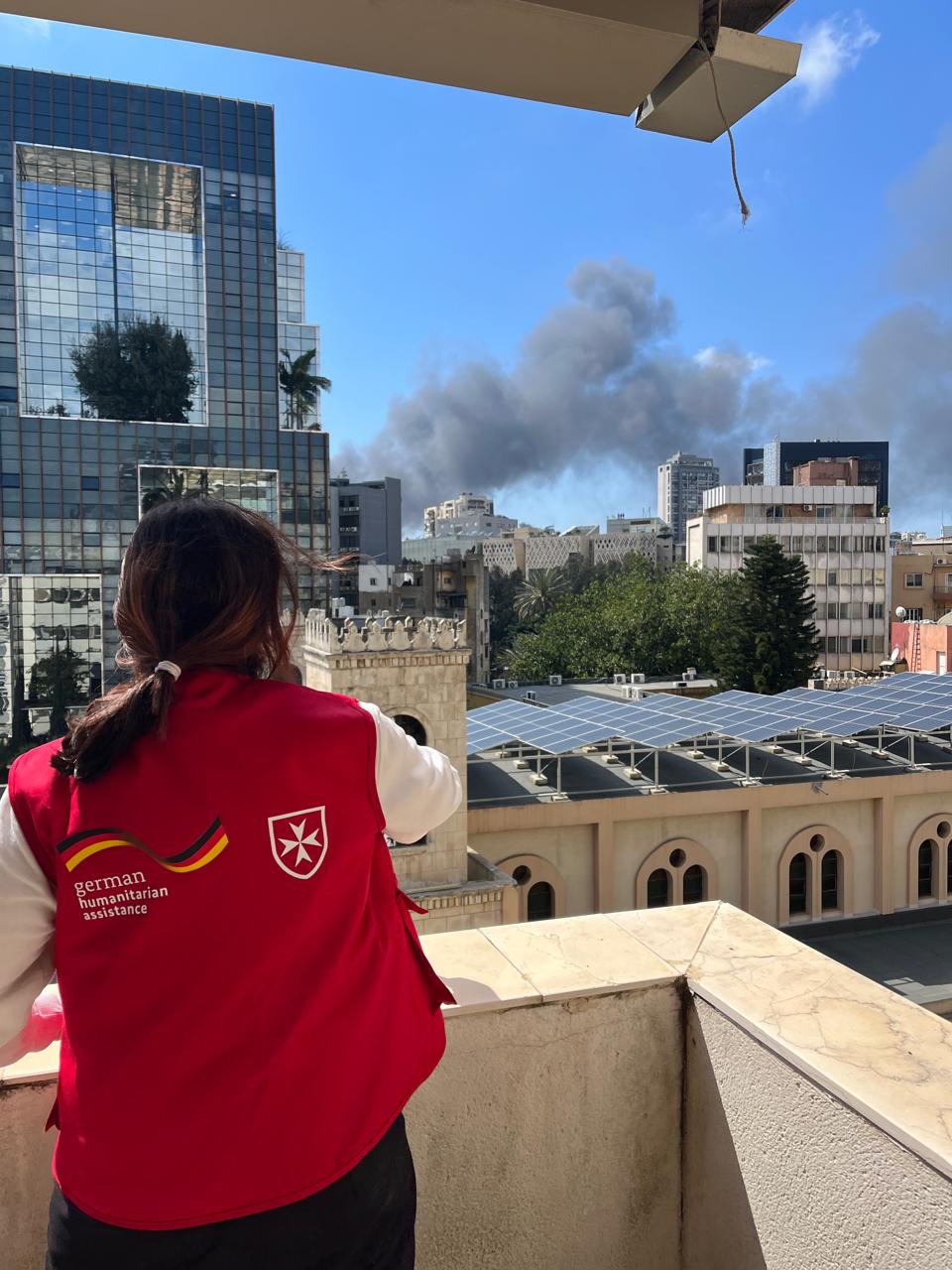

Milan (AsiaNews) - The Lebanese are “trapped, held hostage” by a war “that is not ours and was neither chosen nor desired by the government or by the majority of citizens.” Speaking to AsiaNews, Oumayma Farah, Director of Communications and Development at the Lebanese Association of the Order of Malta, expresses the anxiety shared by a large segment of the population—one that fears being dragged ever deeper into a conflict not of its making.
Referring to the peace talks scheduled to begin tonight in Washington and led by Marco Rubio, Farah explains that a portion of the population linked to Hezbollah “does not want them” and “accuses other factions within society of betraying the cause,” arguing that “Israel is occupying Lebanon.” This, she says, is a fact that is “just as obvious,” while at the same time underscoring another equally evident reality: “the vast majority of Lebanese are against Israel, just as they are against the Iranians.”
These tensions have been exacerbated by recent violence, particularly the sudden and devastating Israeli attack of 8 April. The trauma, Farah notes, “is still fresh” in people’s minds. “The situation,” she continues, “is chaotic. More than 2,000 people have been killed, countless homes destroyed and entire villages wiped out. We now have over 1.3 million internally displaced people, primarily concentrated around Beirut, in the north of the country, and in the Bekaa Valley.”
Humanitarian crisis
Lebanon is among those that have suffered most acutely from the consequences of the war waged by Israel (and the United States) against Iran, with Prime Minister Benjamin Netanyahu’s government having repeatedly emphasised the exclusion of the ‘Land of the Cedars’ from the (partial) truce between Washington and Tehran. Despite the warnings, he explains, “they went to war to avenge Ali Khamenei” and today we are witnessing the “second war in less than two years. And even the first one, in support of the Gaza Strip, did not involve our direct involvement, but was always for the sake of others. A section of the population – he warns – is deciding the fate of an entire people, whilst each faction is taken under the wing of a regional protector”.
In addition to the casualties, the devastation of buildings and infrastructure, and the psychological trauma – because “for many it felt like reliving the tragedy of the Beirut port explosion in August 2020” – there is also “the unresolved issue of refugees”.
“On the ground,” the expert continues, “the situation is extremely difficult because, of the total, perhaps fewer than 150,000 are being housed in shelters. And by shelters we mean mainly state schools” converted into reception centres with classrooms “housing between 10 and 15 people who sleep on the floor and are forced to eat in communal areas. “There are not enough bathrooms or toilets,” she continues, “and this leads to the spread of epidemics. Hygiene and health are a problem,” as is heating in a spring season that exists only on paper, because “it rained at the weekend and people have no shelter.”
“Some,” continues Oumayma Farah, “are in tents, others are taken in by relatives or friends, with three or even four families in a single flat. Following last week’s attack, there is the issue of security; people are in shock.” “Instability and fear” prevail as they wait for an “alarm” at any moment. Sometimes there are raids without prior warning. Nothing is predictable, unfortunately, in this war. We are at the mercy of a conflict and negotiations being played out at a regional level, the repercussions of which are, however, evident in Lebanon, especially in the south where the consequences are severe.”
The fear is that the Lebanese mosaic might shatter – that fragile yet precious model of coexistence for the Middle East which risks collapsing under the blows of opposing extremisms. “The Lebanese people,” explains the Director of Communications, “are not in favour of war, nor is the government. We are faced with a faction that is deciding the fate of a people.” And the consequences fall not only on Christians and Sunnis, but on the Shiites themselves, who are considered close to the Islamic Republic and the Hezbollah movement, the armed and political arm of Tehran.
“The Lebanese have always been fraternal and supportive,” she recalls, and the problem “is not religion itself, but its political exploitation”. The fear is that amongst the Shiites “welcomed into Christian, Sunni or Druze areas, there may be Hezbollah members or Iranian officials, and that the entire neighbourhood could become a target because of their presence”. This, he warns, creates “a sort of stigma towards the Shia community, as we have already experienced during the 15 years of civil war” between 1975 and 1990.
The Order’s mission
Present in over 130 countries worldwide and in Lebanon since 1953, the Order of Malta’s activities also extend to other crisis-hit regions of the Middle East, starting with Palestine, where Ordre de Malte France runs the Holy Family Hospital in Bethlehem. The centre is a leading facility in obstetrics and neonatology, having cared for over 110,000 newborns since 1990, and is the only one equipped with a neonatal intensive care unit.
In Gaza, through Malteser International and in collaboration with the Latin Patriarchate of Jerusalem, around 200 tonnes of food aid have been distributed to thousands of families since 2024, and a primary care clinic has been established. In Iraq, it supports the initiatives of Fraternité en Irak, which is committed to assisting religious minorities who are victims of violence, and the Mary Mercy Centre, run by the Diocese of Sulaimaniya and specialising in the rehabilitation of children with autism. Finally, in northern Syria, between Idlib and Aleppo, where it also contributed to post-earthquake relief operations in 2023.
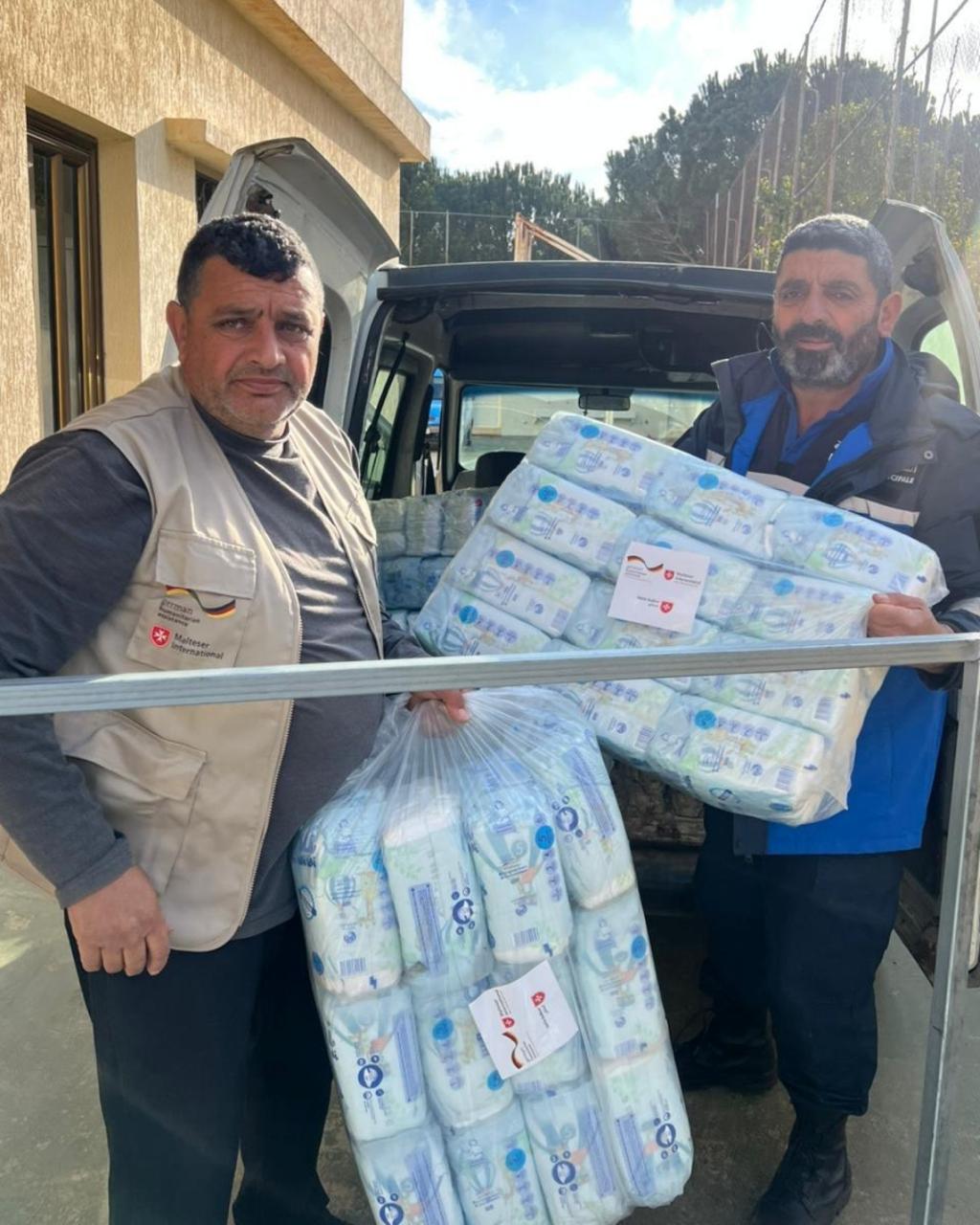
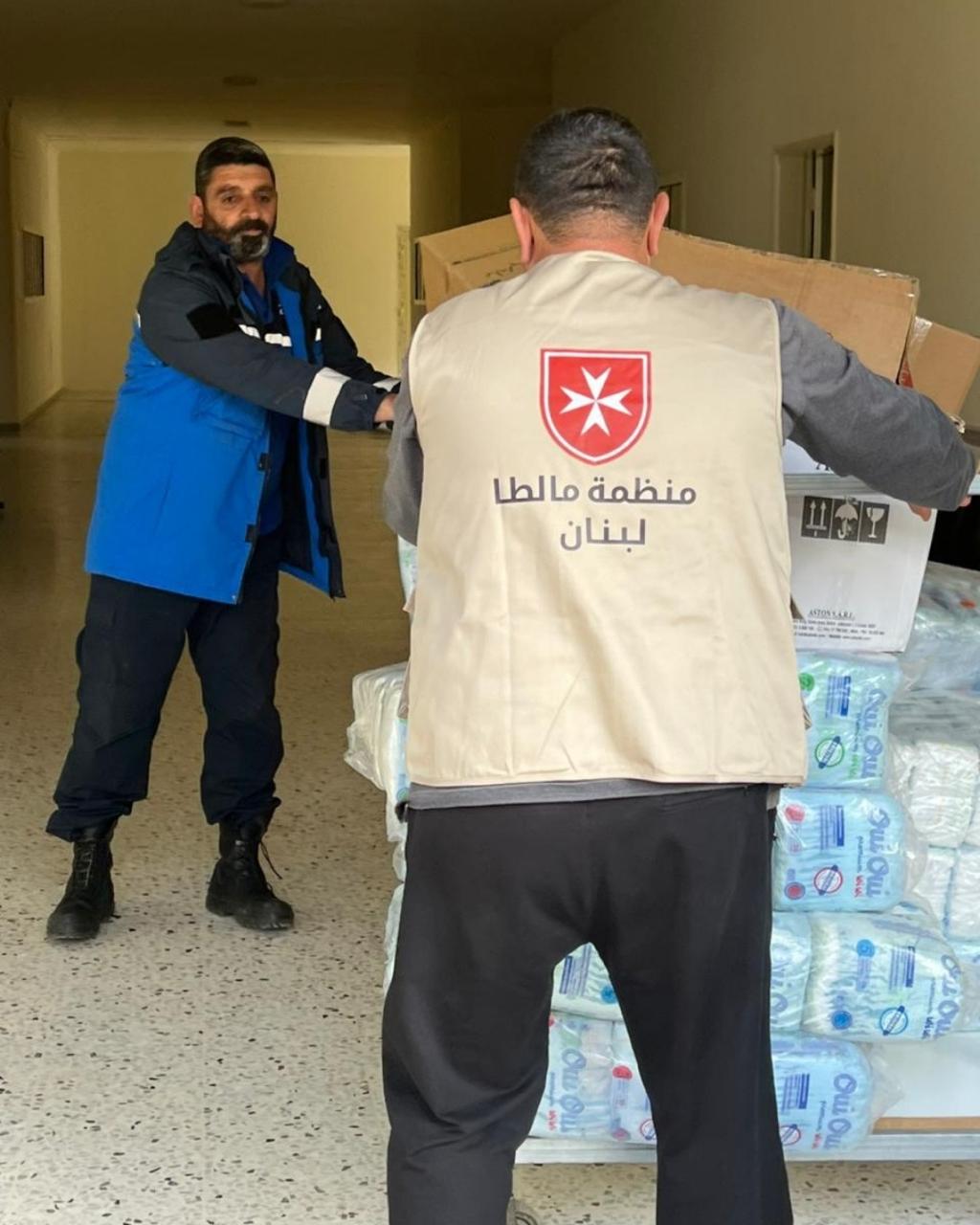
In the aftermath of the Israeli attack on Lebanon, the Grand Chancellor of the Order of Malta, Riccardo Paternò di Montecupo, sent a letter to Prime Minister Nawaf Salam expressing “solidarity and unwavering commitment” to the Lebanese people. In recent weeks, the Order has provided essential support in the form of healthcare services, pharmaceutical products, meals, educational and recreational kits, and other forms of aid.
The priority remains serving the most vulnerable communities, without ethnic or religious discrimination, across various sectors through “a network of 64 programmes, from north to south, benefiting around 300,000 people in normal times,” says Oumayma Farah, but today “many more”. These include 12 health centres, 12 mobile medical units, seven agro-humanitarian centres, three mobile kitchens and two reception centres for people with disabilities.
Christian commitment
“As a Christian organisation,” the director continues, “we serve everyone without distinction of race, colour or religion, but by focusing on needs and suffering. This helps to ease tensions and is a source of comfort for a population” which in some cases is “stigmatised”, particularly its Shia component. “Not everyone belongs to Hezbollah, not everyone is a fighter, and they too have lost homes and lives and are afraid. We must bring comfort,” she emphasises, “preventing a war between the poor and on the streets.”
Today the priority is “to meet the needs of the displaced”, because “there are huge numbers of them”, not only internally displaced persons but also Syrians, who number close to 1.2 million out of a total population of 4.3 million. “Some have returned to Syria,” he continues, “but many others have not yet done so, because their homes are destroyed and the overall situation is not good. The road leading to the border through the Bekaa Valley – he emphasises – is dangerous, as it is a target for the Israelis”.
One of the order’s priorities is to ensure educational continuity for students, a task hampered not only by the war and the bombs but also by a lack of space, as many schools are taking in displaced people. “
“In some schools that are large enough,” she explains, “lessons take place on one floor, whilst another houses those who have been left homeless, and this is certainly not a healthy environment for children.” Hence the need, as during the Covid-19 pandemic, to resort to distance learning, but “the problem is that state exams will have to be held in the coming months and we do not know if they will be able to sit them, because they have not been able to complete the curriculum”.
In response, experts and volunteers are not only offering educational support but “providing psychosocial support because they themselves are among the first victims of the war and are paying a huge price”.
Finally, the Director of Communications confirms the “alarming” situation in the south, where the Order has been present for 40 years, where most of the villages and border towns “have been wiped out. Many roads – she continues – have been completely cut off, bridges bombed, infrastructure destroyed and areas isolated. That is why it is very important for us to stay and bring comfort to a population that, whatever happens, will not be left alone”.
“Since the start of the war, we have ensured a large supply of medicines and hygiene kits in one of the villages where we are present, and this is how we are now also able to serve the surrounding ones. Today, the focus is on Lebanon – he concludes – because of what happened last week, but the cry for the villages in the south and the country must always be kept alive. We must prevent their occupation.”
GATEWAY TO THE EAST IS THE ASIANEWS NEWSLETTER DEDICATED TO THE MIDDLE EAST. WOULD YOU LIKE TO RECEIVE IT EVERY TUESDAY? TO SUBSCRIBE, CLICK HERE.

.png)










