








Ceasefire between the US and Iran: Islamabad takes the lead, while Beijing remains behind the scenes
Talks between Washington and Tehran will take place in Islamabad on Friday after threats of escalation. China has applied pressure, consolidating its influence in the region. Pakistan’s Field Marshal Asim Munir has played a crucial role. Uncertainties remain regarding the actual reopening of the Strait of Hormuz and the Israeli-Lebanon front. Pakistani Christians tell AsiaNews that they are praying for lasting “peace and prosperity”.
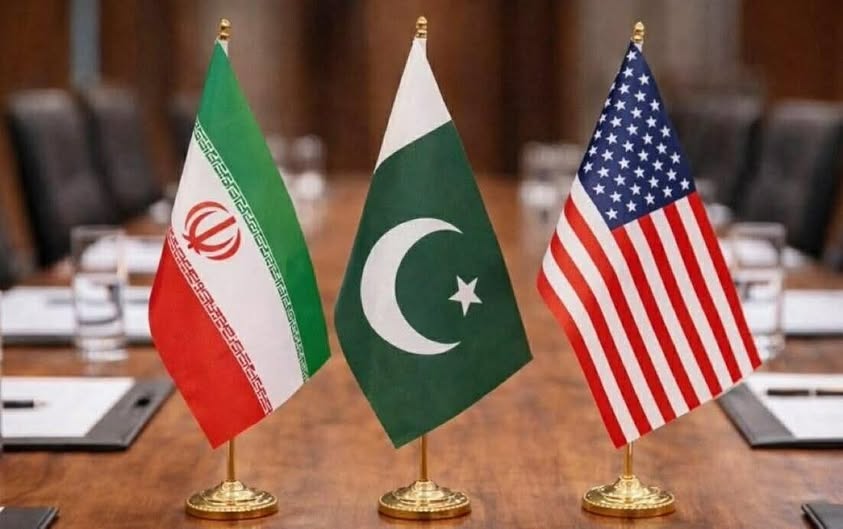
Islamabad (AsiaNews/Agencies) – US and Iranian delegations are set to meet in Islamabad, the capital of Pakistan, next Friday after the announcement of a last-minute ceasefire. Pakistan, along with Egypt and Turkey (with China’s support), has been working for weeks to end hostilities in the Middle East.
Following statements by US President Donald Trump, who had threatened the destruction of Iran's “whole civilization”, Pakistani Prime Minister Shehbaz Sharif requested a two-week extension to the deadline imposed on Tehran.
Just as the US attack was supposed to start, the Pakistani leader issued a statement saying: “With the greatest humility, I am pleased to announce that the Islamic Republic of Iran and the United States of America, along with their allies, have agreed to an immediate ceasefire everywhere including Lebanon and elsewhere, EFFECTIVE IMMEDIATELY,” noting that meetings have been set for 10 April.
According to Al Jazeera, in Islamabad the two delegations will be led by US Vice President J. D. Vance and the Speaker of the Iranian Parliament, Mohammad Bagher Ghalibaf, the same person Axios had already indicated as the interlocutor when news first surfaced that contacts had been made between the two sides to settle the conflict.
Towards the end of March, the foreign ministers of Egypt, Turkey, Saudi Arabia, and Pakistan met in Riyadh. The Wall Street Journal reported that Egyptian intelligence had managed to open a channel of communication with the Iranian Revolutionary Guard Corps (IGRC), the paramilitary group that protects the regime and is (now) the most powerful political force in the country.
According to some observers, Pakistan, despite being home to the world's largest Shia community after Iran, had no direct channels of communication with the Revolutionary Guards, relying primarily on diplomatic relations with the president and the foreign minister.
The Chinese may have helped establish a connection with the IGRC. According to the New York Times, Trump made two phone calls before announcing the truce: one to Asim Munir, Pakistan's Chief of Defence Forces, and one to Israeli Prime Minister Benyamin Netanyahu who had pressured the US administration to start this war.
Within Pakistan, Marshal Asim Munir has centralised political power in his hands over the past year, and after meeting Trump in July 2025, has emerged as Washington's main interlocutor.
“Following the footsteps of Pope Leo, we have always condemned wars,” said Father Khalid Rashid Asi, director of the Catholic Commission for Justice and Peace, speaking to AsiaNews. “If Pakistan succeeds in mediation and stops the war, it will have strong status in the region and get more respect from the world,” he added.
Echoing this view, Mariyam Kashif, a Catholic peace activist from Karachi, said that, “It is indeed a big day for world peace; it is a beginning, not the end of the peace [process] among these great nations.”
For Islamabad, this is a huge diplomatic coup, positioning the country within the Middle East security framework (in September, Pakistan signed a mutual defence agreement with Saudi Arabia), while arch-enemy India, an ally of the United States and Israel, has turned out to be once again the loser.
For their part, Russia and China (which is also mediating a peace deal between Pakistan and Afghanistan) yesterday vetoed a United Nations resolution proposed by Bahrain and the Gulf States calling for the reopening of the Strait of Hormuz.
This can be seen as a rebuff to the United States (and the rest of the international community) by China, which placed itself among the mediating (and victorious) powers in this war.
According to Associated Press sources, China – the Islamic Republic's main trading partner – pushed Iran’s new rulers to accept the ceasefire; an official reported anonymously that Beijing used its influence with the intermediaries.
“All parties need to demonstrate sincerity and quickly end this war that should not have happened in the first place,” said Mao Ning, spokesperson for the Chinese Foreign Ministry, yesterday morning, adding that China is “gravely concerned” about the impact the conflict has had on the global economy and energy security.
“We are praying for peace and prosperity. Due to this war, the whole world economy is being disrupted. Even Pakistanis are facing many economic issues as petrol prices are getting higher making everything more expensive and out of reach for poor people,” Rev Javed Bashir, pastor of Christ Holiness Church, told AsiaNews.
“It is possible that Trump himself has put Shahbaz Sharif in the middle to simply fix the matter,” said Raja Saad, a political analyst. “The war has stopped for 15 days and next month, in May, Trump is going to visit China before that, the situation must be fixed. But the companies and Trump's personal greed have ended America's superpower status.”
It is currently unclear to what extent Iran will guarantee safe passage through the Strait of Hormuz, whether it will demand a toll, and if so, whether it will be paid in yuan rather than dollars.
The Gulf countries, whose economies are closely tied to the free transit of gas and oil, have been lobbying heavily on this issue.
It remains to be seen to what extent other areas of active conflict will be contained, particularly Lebanon, which, according to Sharif's statements, appears to be included in the ceasefire, while Israel is excluded, indicating that fighting on this front could continue.
(Shafique Khokhar contributed to this article)

.png)
12/03/2026 19:05
04/09/2008










