








Patriarch Hoayek, father of the ‘Lebanon-message’ of pluralism, to be beatified
Pope Leo XIV has authorised the decree on the miracle. Speaking to AsiaNews, Sister Marie-Antoinette Saadé, superior of the Congregation of the Maronite Sisters of the Holy Family, describes him as the architect of “the historic vocation of Greater Lebanon”.The beatification will be a “providential and prophetic sign” of a “pluralistic, free” country. Bishop of Batroun: “God’s grace at a time when Lebanon’s identity and integrity are under threat”.
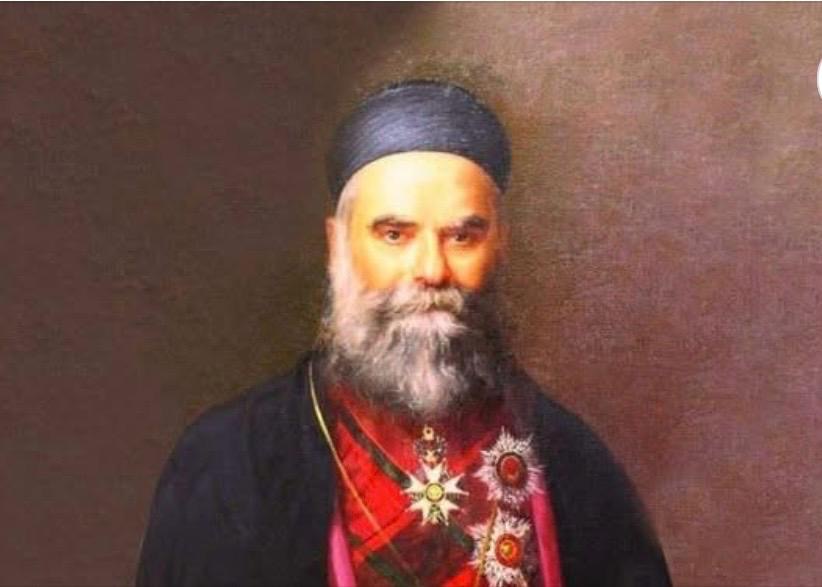
Beirut (AsiaNews) - The Maronite Church and the Land of the Cedars are celebrating. Patriarch Elias Hoayek (1843–1931), whom many Lebanese consider “the father of Greater Lebanon” (1920), may soon be beatified: on 22 May, Pope Leo XIV authorised the promulgation of a decree recognising a miracle attributed to his intercession. This miracle dates back to 1965 and concerns the healing of Nayef Abou Assi, an army officer and member of the Druze community, who suffered from a chronic spinal condition (chronic bilateral spondylolysis). The officer woke up one day in perfect health after seeing the patriarch in a dream.
Born in Helta, a village in the diocese of Batroun (north of Beirut), Patriarch Hoayek was the son of a priest. From an early age, he stood out for his balanced character and lively intelligence. After studying at the ‘minor seminary’ of St John Maronite in Kfarhay, he entered the seminary in Ghazir run by the Jesuit Fathers. In 1866, he was sent to Rome to study theology at the Pontifical Urban College of Propaganda Fide, and was ordained a priest on 5 June 1870, on the occasion of the opening of the First Vatican Council.
On his return to Lebanon, he was appointed professor of theology at the “minor seminary” of Kfarhay and secretary to Patriarch Paul Massaad. In 1889 he was ordained patriarchal vicar bishop and entrusted with delicate and important missions to the Holy See and France, including that of reopening the Maronite College in Rome. Among the key milestones of his ecclesiastical career were the foundation, on 15 August 1895, of the Congregation of the Maronite Sisters of the Holy Family and his election, on 6 January 1899, as patriarch.
As head of the Maronite Church, he placed emphasis on the formation of the clergy and on welcoming the poor, and strove to improve the training of priests so that they might become formators and catechists for their people.
During the First World War, the primate became extremely popular by opening the doors of convents and monasteries and mortgaging the patriarchate’s lands to feed those who were exhausted by the conflict and threatened by starvation, regardless of their religious denomination. In 1919, following the dismantling of the Ottoman Empire by the Allies, he succeeded in securing the ‘Declaration of the State of Greater Lebanon’ at the 1919 Versailles Conference. This is a pluralistic, multi-confessional and democratic state that prioritises belonging to Lebanon, whilst respecting the diversity of its religious communities, a fact that ultimately earned him the title of “Father of Greater Lebanon”. His body rests in Ibrine (Batroun), in the cemetery of the mother house of the congregation he founded. Finally, the beatification ceremony will be held at the patriarchal see in Bkerké, or in Ibrine, on a date to be announced at a later stage.
He is “the Lebanon-message”
Responding to AsiaNews on the news of the green light for beatification at a time when, due to disagreements, doubts are arising in public opinion regarding the validity of creating a pluralist state, Sister Marie-Antoinette Saadé, superior of the Congregation of the Maronite Sisters of the Holy Family—the religious order he founded—saw this as “a providential, prophetic sign”.
“It is an immense joy for us,” said the nun, “first and foremost because the new Blessed is the founder of our congregation, but also because he embodies the ‘Lebanon-message’. He is the father of the historic vocation of Greater Lebanon, which Pope John Paul II presented as a ‘model of pluralism and freedom for the East and the West’. His beatification,” she added, “is a providential and prophetic sign calling us to believe once more in a pluralistic, free Lebanon, in a nation that is today fragmented and whose territorial integrity is under threat.”
“We regard this announcement as a grace from God and a sign of the times, at a moment when Lebanon’s identity and integrity are under threat!” said Msgr Mounir Khairallah, Bishop of the Diocese of Batroun, commenting on the news to AsiaNews. “It is a message,” the prelate continued, “of hope for Lebanon, a country that is a message in itself!” “Regardless of the national role he played, Patriarch Hoayeck was a great reformer,” added a Maronite church figure, who asked to remain anonymous.
“He restored order both in the dioceses and, thanks to the understanding of Abbot Ignace Tannouri, in the monasteries. Those who today contest the creation of Greater Lebanon,” the source concluded, “cannot judge a past era by today’s standards. With Greater Lebanon, the Maronites received a gift that they were unable to manage and which, alas, they still do not know how to manage.”

.png)
07/02/2019 17:28
12/02/2016 15:14










