








Pope: ‘Everyone has a place in the mosaic of peace!
At the Regina Caeli, Leo XIV invoked the "principle of humanity" to "protect the civilian population" from war. He mentioned the peoples of Ukraine, Lebanon, and Sudan. Yesterday, at the vigil in St Peter's, he appealed to political leaders to “Sit at the table of dialogue and mediation, not at the table where rearmament is planned”. He stressed that praying is a “transformative response to death”.
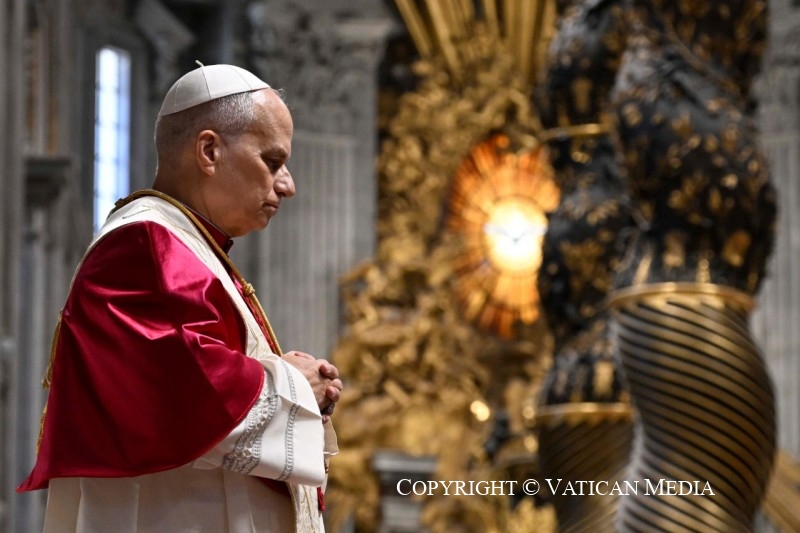
Vatican City (AsiaNews) – While the first negotiations in Islamabad between the United States and Iran are faltering, the call for peace pervades Leo XIV's words this weekend, at the prayer vigil held in St Peter's Basilica yesterday, and in the words following the recitation of the Regina Caeli today.
The pontiff insisted on the "principle of humanity" present in the conscience of "every person" and "recognized in international law", which “entails a moral obligation to protect the civilian population from the horrific effects of war.”
Before a crowded, colourful, and festive St Peter's Square, Leo made his direct appeal to the parties involved in the conflict, urging them to “declare a ceasefire and urgently seek a peaceful solution.”
For many Eastern Churches, today is Easter Sunday in the Julian calendar. “In communion of faith in the Risen Lord,” the pontiff extended his “heartfelt wishes for peace to all these communities.”
Tomorrow, he will leave for Africa on a ten-day apostolic journey to Algeria, Cameroon, Angola, and Equatorial Guinea. From the window of the Vatican Apostolic Palace, he asked the faithful to keep him “in your prayers.”
Leo XIV spoke about “all those suffering due to war,” especially “the dear people of Ukraine. May the light of Christ bring comfort to afflicted hearts and strengthen the hope for peace. May the international community’s attention to the tragedy of this war not waver!”
Turning to the "beloved people of Lebanon,” he expressed his closeness “In these days of sorrow, fear, and unwavering hope in God”.
The Holy Father also remembered the Sudanese people, "innocent victims of this inhuman tragedy” in a brutal conflict that enters its third year on Wednesday.
“I renew my fervent appeal to the warring parties to silence their weapons and begin, without preconditions, a sincere dialogue aimed at ending this fratricidal war as soon as possible,” he said. “War divides; hope unites. Arrogance tramples upon others; love lifts,” he added.
Yesterday afternoon, Leo spoke from St Peter's Basilica saying that "a mere ‘crumb’ of faith" is enough to face "as humanity and alongside humanity” the current tragic “hour in history”.
He added that praying, an instrument in the hands of people of faith, is “the most selfless, universal and transformative response to death.”
Leading the vigil and recitation of the Holy Rosary, with thousands of faithful in attendance, he remembered the warnings of his predecessors John Paul II and Paul VI who said: "No more war!” Praying, Leo said, “teaches us how to act.”
Sadly, “The balance within the human family has been severely destabilized. [. . . ] Enough of the idolatry of self and money! Enough of the display of power! Enough of war! True strength is shown in serving life,” he said.
In his appeal, the pope called on the majority part of humanity that believes in peace to unite their "moral and spiritual strength”. The letters from boys and girls from conflict zones sent to the pope reveal “all the horror and inhumanity of actions that some adults boast with pride. [. . .] It is time for peace! Sit at the table of dialogue and mediation, not at the table where rearmament is planned and deadly actions are decided!”
When he turned his attention to the adults responsible for wars, he stressed that “an immense multitude [. . .] rejects war not only in word, but also in deed. [. . .] Let us believe once again in love, moderation and good politics. We must form ourselves and get personally involved, each following our own calling. Everyone has a place in the mosaic of peace!” Leo said.
Finally, the pope renewed his call to the ecclesial community to "pray without ceasing," as a “people at the service of reconciliation and peace," even “when rejecting the logic of war may lead to misunderstanding and scorn."
The Church “proclaims the Gospel of peace and instills obedience to God rather than any human authority,” he noted.
As for human dignity, it “is threatened by continuous violations of international law,” he added.
Before the recitation of the Regina Caeli, Leo XIV spoke about the Gospel of the day (Jn 20:19-31), on Thomas's struggle to have faith before the Risen Jesus.
“Faith needs to be nourished and sustained,” he said. For this reason, “The Sunday Eucharist is indispensable to the Christian life.”
The pope related the story of the Martyrs of Abitinae, from the early African Church. Theirs is a "beautiful testimony," noteworthy in relation to the coming apostolic journey to Africa.
“When offered the chance to save their lives by renouncing the celebration of the Eucharist, they replied that they could not live without celebrating the Lord’s Day. It is there that our faith grows and is strengthened,” Leo said.

.png)










