








Preliminary hearings begin in the Duterte trial in The Hague
The International Criminal Court (ICC) is due to rule on the charges of crimes against humanity involving the former Philippine president over killings he allegedly ordered during the war on drugs. Now in his eighties, Duterte has been under arrest in the Netherlands for almost a year, but his figure continues to be a source of division back home. Meanwhile, UN High Commissioner for Human Rights Türk has called on the Philippines to rejoin the Rome Statute.
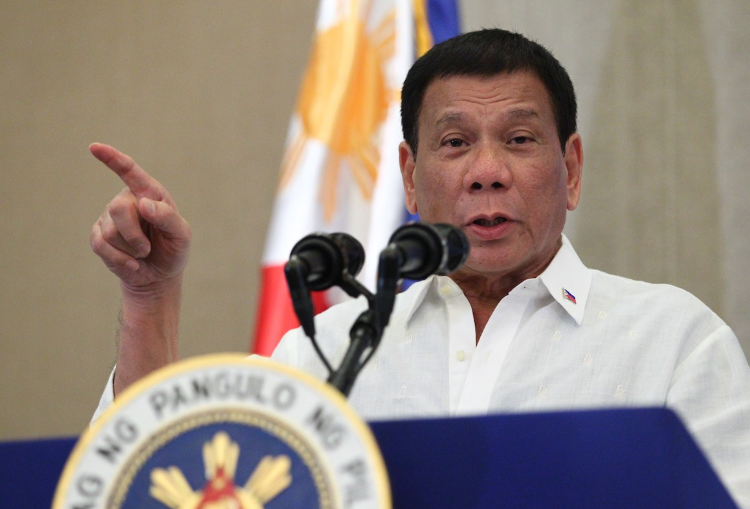
The Hague (AsiaNews) – The legal case against former Philippine President Rodrigo Duterte formally began today at the International Criminal Court (ICC) in The Hague, almost a year after his extradition. Duterte declined to be present, but his supporters gathered outside the courthouse.
The judges – President Iulia Antoanella Motoc, from Romania, and Judges Reine Adélaïde Sophie Alapini-Gansou and María del Socorro Flores Liera, from Benin and Mexico respectively – began the hearings at 10:00 am, which will continue tomorrow, as well as Thursday and Friday.
The court will hear the prosecution present its case, as well as arguments from the defence and the victims' legal representatives in the case filed for crimes against humanity against the 80-year-old Duterte, who has never recognised the authority of the Court.
The indictment refers to Article 7 (1) (a) of the Rome Statute for murders committed during the anti-drug campaign Duterte undertook between 1 March 2011 and 16 March 2019, first as mayor of the large southern city of Davao – where he organised "death squads" against drug dealers, addicts, and squatters – and then as head of state, a position he held from 2016 to 2022.
For this reason, after a tense standoff with the ICC, which had issued an arrest warrant against him on 7 March 2025, he was arrested four days later in Manila by Philippine police with the approval of his successor, President Ferdinand Marcos Jr., and Interpol, and immediately transferred to the Netherlands.
ICC Prosecutor Karim A. A. Khan described this as a "significant" step, which UN High Commissioner for Human Rights Volker Türk welcomed as crucial to seek justice for the thousands of Filipinos who died.
The arrest has, however, polarised the country, with those in favour his prosecution, and those who still view positively his authoritarian attitude and unwillingness to compromise.
When running for president, Duterte had made the "war on drugs" a key plank in his electoral campaign, which won him widespread support, this in a country where illegal drugs are a scourge, thanks to widespread poverty and a lack of opportunities and rights, as well as the actions of violent criminal organisations, collusion and corruption.
Türk, who emphasised the importance of international legal frameworks in addressing impunity and preventing future violations, called on the Philippines to rejoin the Rome Statute, from which it withdrew on 17 March 2019, at Duterte's request. Despite the latter, however, the statute still applies to the Philippines for charges of crimes against humanity carried out before the country’s withdrawal.
Back home, the former president remains a controversial and divisive figure; for their part, Philippine authorities continue to refuse to cooperate with the ICC and, despite domestic pressure, have not allowed its investigators entry into the country.

.png)
07/02/2019 17:28
15/03/2025 14:59
26/11/2024 18:16
15/06/2021 16:29










