Tehran (AsiaNews) – The Iranian authorities have stepped up pressure on one of the few remaining Protestant churches in the country, threatening to confiscate its valuable complex in central Tehran and evict its residents.
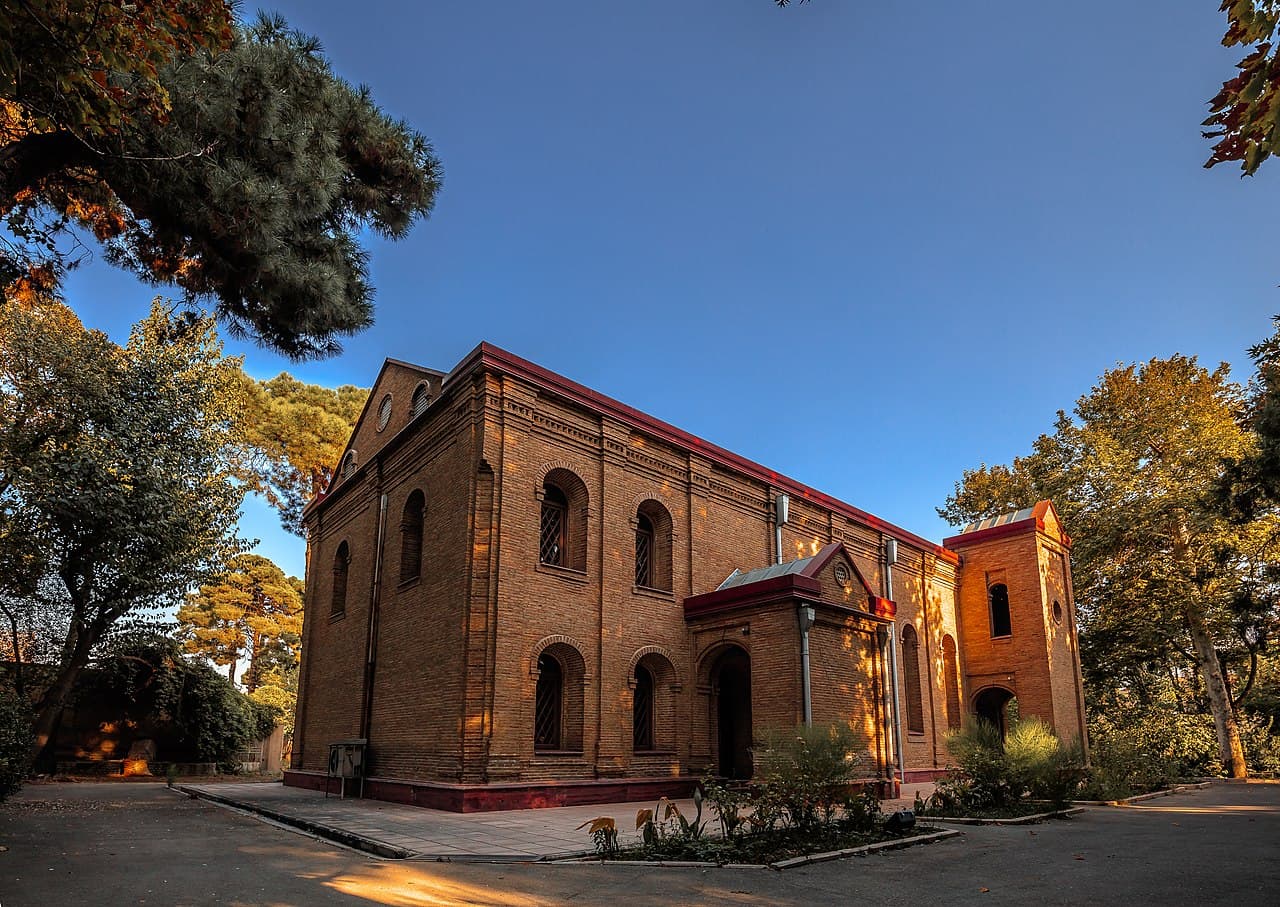
Iran International website, close to the opposition to the ayatollahs abroad, reports the alarm raised by local Christian leaders that the events of recent days are merely “the latest in a series” of attacks on places of worship. St Peter’s Evangelical Church, commonly known locally as the “Qavam Church” due to its location on Si-e-Tir Street (formerly Qavam-ol-Saltaneh Street), has been serving Tehran’s small Protestant community for almost 150 years.
“Six security officers entered the church and attended a service, saying they wanted to ‘identify’ the people,” reported Sasan Tavassoli, a pastor of the Presbyterian Church in Iran who resides in the United States. “They said,” added the Christian leader, “that they would return later to evict those living on the premises and take control of the building.”
Founded in 1876 by American missionaries during the era of the Shah on land granted by the monarch Naser al-Din Shah, the church has long been a focal point for Armenians and Chaldeans in Iran, whose numbers have fallen dramatically since the rise of the Islamic Republic in 1979. Tavassoli emphasised the property’s considerable value: “It is worth tens of millions of dollars,” the Christian leaders warn, noting that it stands on an area spanning “several hectares” of prime land, situated in the centre of Tehran and in an exclusive neighbourhood.
In response to the raid, the Evangelical Church of Iran has launched an urgent appeal to the international community to intervene. In a letter signed by the Executive Secretary of the Synod of the Iranian Evangelical Church in the Diaspora (SECID-E), the Protestant leaders expressed “deep distress” and accused the regime of becoming increasingly brazen since negotiations began on a potential agreement between the United States and Iran. “The regime,” the letter states, “is no longer afraid of the international community.”
The authorities have already seized a 10,000 m² garden belonging to the church, which is reportedly now occupied by four officials from the Islamic Revolutionary Guard Corps (IRGC). A new title deed has been issued in the name of the Pasdaran, meaning that church staff and members are now considered intruders on what was historically their own property.
The authorities in Tehran claim that the church had improperly let parts of the premises to its members. Christian leaders respond by stating that this move is part of a wider pattern of “pressure” on Iran’s tiny Protestant community. The latest threats follow the destruction of the Evangelical Church in Mashhad on 4 June.
The synod’s letter warns: “It is clear that, without a timely response to this crisis, we could be deprived of the last remaining places of worship in the country”. The Protestant community is calling for international intervention to halt what it describes as “the ongoing process of expelling Christians from their places of worship and the occupation and destruction of these properties”. Iranian Christian communities, particularly Protestants who hold services in Persian, have faced increasing restrictions ever since the Ayatollahs first came to power.
Whilst recognised religious minorities, such as Armenian and Chaldean Christians, enjoy a certain degree of protection, Evangelical and Protestant groups have repeatedly reported cases of surveillance, forced closures and the seizure of property – a situation that has not even spared the (few) Latin Catholics. St Peter’s Church itself had previously been ordered to cease holding services in Persian. As one of the last remaining active Protestant places of worship in the capital, the fate of the church in Qavam has become a symbol of the ever-dwindling freedom of religious practice for minorities in the Islamic Republic.
The Pasdaran raid on the Protestant church forms part of a wider policy of repression against Christians, as evidenced by the recent annual report from activist groups which confirms an escalation in trials and imprisonment for reasons of faith, possession of religious material or conversion. In 2025, almost twice as many Christians were arrested on charges relating to religious beliefs or activities compared with the previous year (254 versus 139). Furthermore, more than twice as many were sentenced to imprisonment, exile or forced labour in 2025 (57) compared with 2024 (25). Forty-three Christians were serving sentences at the end of 2025, whilst a further 16 were in pre-trial detention. At least 11 Christians received sentences of 10 years, whilst others were sentenced to a total of nine years’ exile and 249 years of social deprivation, being denied basic rights such as healthcare, employment or education.
The most recent cases of persecution involved the Iranian political activist and Christian convert Mohammad Nikbakht, who is reported to have been threatened with execution after his two brothers, Hadi and Fazlullah, were sentenced to death on charges of “corruption on Earth”. Mohammad has been detained since last March in Dastgerd Prison, in Isfahan, after being arrested during a large-scale operation by the security forces. According to human rights organisations, the charges against the brothers relate to their alleged role in organising protests against the regime. The three had also promoted a referendum on the future of the Islamic Republic, and Mohammad had previously been arrested and was the victim of an assassination attempt.