





-64776.html&is_video=&description=Reporting+corruption%3A+journalist+arrested+%28despite+Xi%27s+campaigns%29)


Reporting corruption: journalist arrested (despite Xi's campaigns)
A well-known reporter from Chengdu has been deprived of his freedom along with one of his colleagues for reporting on Chinese social media about the abuse of power by a local Communist Party official that led to a professor's suicide. Meanwhile, in Beijing, the secretary of the Chinese Communist Party is touting the ‘fight against corruption’ to justify the purges.
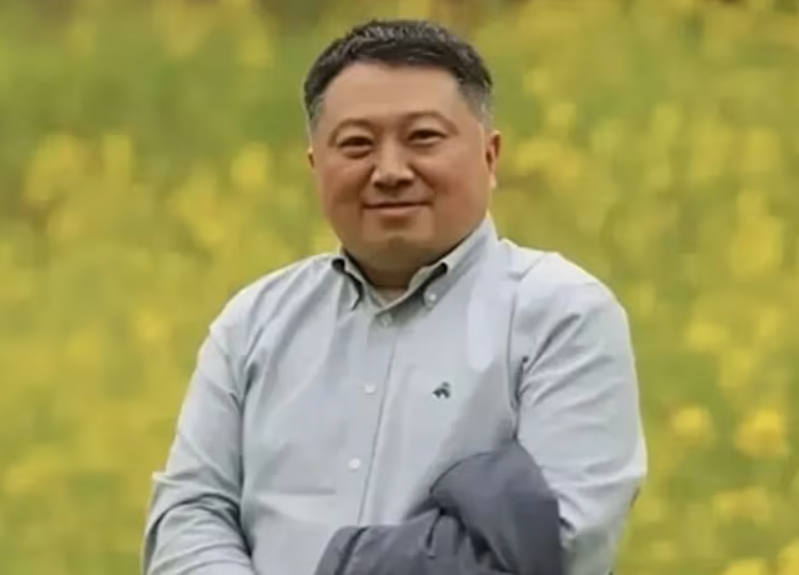
Milan (AsiaNews/Agencies) - In the name of the ‘fight against corruption’, Xi Jinping continues to remove people from the top ranks of the Chinese Communist Party. But in China, in a local case, a journalist who publicly and in detail denounced episodes of corruption ended up in prison. This is what the news coming out of Beijing in recent days tells us.
Just yesterday, state media reported the life sentence of former Justice Minister Tang Yijun (in office from 2020 to 2023, accused of pocketing 137 million yuan in bribes during his political career in Ningbo) and analysts around the world are wondering about the repercussions of yet another purge at the top of the army with the removal of General Zhang Youxia (powerful vice-chairman of the Central Military Commission) for “serious disciplinary and criminal offences”, new evidence is emerging from China about how risky it is for an ordinary citizen to report abuses by those in power.
On 2 February, the Jinjiang District Police posted a notice on social media stating that a 50-year-old man surnamed Liu and a 34-year-old man surnamed Wu had been “subjected to coercive criminal measures in accordance with the law” on charges of making “false accusations” and carrying out “illegal commercial operations”.
According to the Chinese media outlet Caixin, the two detained individuals are the well-known journalist Liu Hu and his collaborator, Wu Lingjiao. Liu is an investigative reporter who previously worked for the Guangzhou-based newspaper New Express. In recent years, he has managed a social media account as an independent journalist, covering disputes between private companies and local government authorities.
In an article published last week, which was later deleted, Liu cited a source claiming that Pu Fayou, the Communist Party secretary of Pujiang County, under the jurisdiction of Chengdu, had abused his power to crack down on private businesses. The article also claimed that Pu was involved in the forced demolition of two properties belonging to local literature professor Tuo Jiguang, who took his own life in 2021 after a years-long dispute over the homes.
Liu had already been arrested in 2013 for alleged defamation, although the charges were later dropped. After his re-arrest, a screenshot of a conversation between the journalist and a person claiming to be part of the Chengdu Discipline Inspection Commission – the body responsible for investigating allegations of corruption and misconduct – circulated online. The message reminded Liu to file any complaints through legal channels. The response stated that the article ‘was neither a report nor a petition, so there is no need for a reminder from your office.’
The arrest of Liu and Wu is not an isolated incident. A few days ago, the Chinese Human Rights Defenders website reported the story of former police officer Yang Shunmin, originally from the city of Rui'an in Zhejiang province. Since 2021, he had been reporting alleged abuses of power by public officials within local legal departments. He recorded and posted videos on social media, including WeChat and Douyin. In 2024, his videos averaged 20,000 views, and in 2025, they were becoming increasingly popular.
That is, until 18 April 2025, when the police arrested him, claiming that his videos had caused a ‘negative social impact’. The Rui'an Procuratorate charged Yang with the crime of ‘provoking disturbances’ and transferred the case to Wenzhou, in the same province, where the Ouhai District Court sentenced him to two years and six months in prison in December 2025.
The charge of ‘inciting quarrels and provoking disturbances’ is frequently used by the Chinese authorities to crack down on public complaints and protests. In September 2025, the UN High Commissioner described it as overly broad and vague, calling for its repeal. In February 2023, a delegate to the National People's Congress, Zhu Zhengfu, said that the legislation should be revised because it was unclear and prone to abuse.

.png)
07/02/2019 17:28










