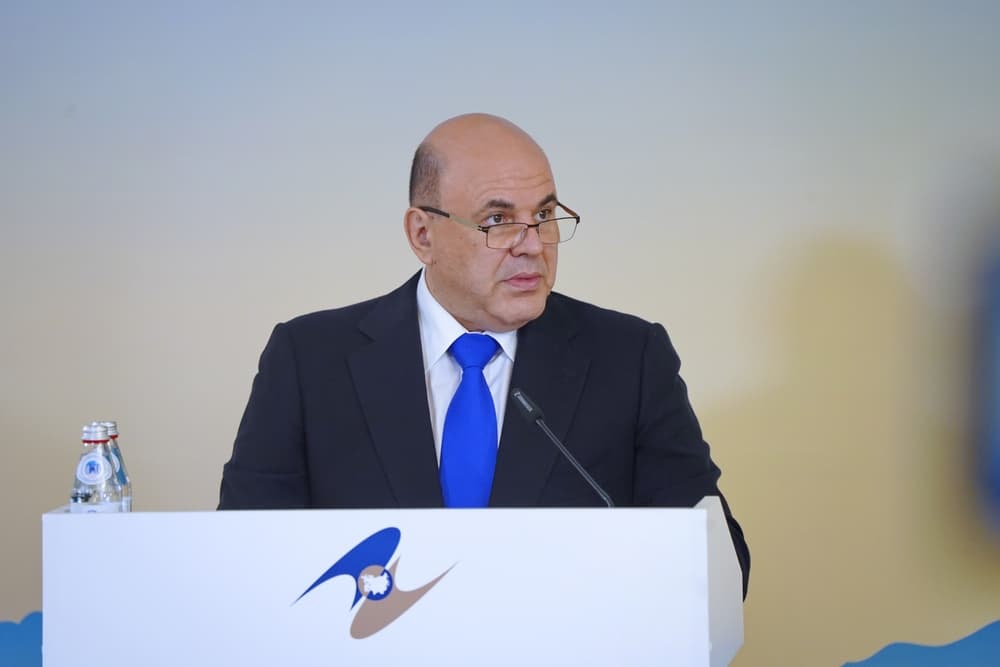
Moscow (AsiaNews) - Independent political scientist Vsevolod Chernozub commented in Novaya Gazeta Evropa on the attempt by the “hardliners of Mishustin”, the Russian head of government, to build a sovereign economy based on technology platforms.
Following the regulatory crackdown of recent years, when the state tightened tax controls, abolished preferential regimes and overwhelmed micro-enterprises with mandatory labelling, the last from whom one would have expected intervention – the tech giants – have joined the crackdown.
Sellers on Wildberries, Ozon and Yandex Market are discovering that even a huge turnover can sometimes surprisingly turn into a “negative profit”. The platforms’ base commissions rise without warning, and logistics and warehousing costs can eat into the cost of goods even with the slightest miscalculation.
Furthermore, the platforms often impose price cuts under the threat of penalties in search result rankings, and this pressure on prices is compounded by a complex algorithmic system of fines for incorrect dimensions or labels, as well as the obligation to pay for advertising within the platform.
Why destroy a goose that lays golden eggs, especially at a time of evident economic decline and the stagnation of the militarised economic model? The answer to this question, according to Černozub, is at once “incredibly cynical and fundamentally revolutionary”.
For a long time, the Russian state needed a “respectable bourgeois class” that provided for itself, created jobs, paid taxes, supported local communities and actively consumed goods and services, from catering to children’s education.
Now, however, the modern state, characterised by total digital control and the slogan “People are the new oil”, no longer needs a complex and autonomous economic fabric, which, on the contrary, contradicts the new state logic.
It is precisely on the ideas and practices of total digital control, implemented within the tax service, that Mikhail Mishustin rose to power, demonstrating to Vladimir Putin and his entourage that modern technology and traditional coercion can squeeze the people dry. In the ‘Mishustin model’, the independent entrepreneur, with his self-serving motives, ambitions and desire to optimise taxes, represents a systemic failure and a problem.
The ‘Mishustinisation’ of public administration, according to the political scientist, has historically coincided with the trend towards what the economist and politician Yanis Varoufakis calls ‘techno-feudalism’ .
In his view, traditional markets, where supply and demand determined prices, have now been ruthlessly destroyed and replaced by digital ‘fiefdoms’: closed platforms such as Amazon and Apple, or WeChat and Meituan.
The capitalists of the old regime, who produced real goods, have been transformed into vassals, condemned to buy whatever is on offer, and with every purchase the algorithms are freely trained to sell even more rubbish, tailored to users’ characteristics and habits.
The main driver of the economy in such a system is no longer the profit derived from sales themselves, but the rent paid to the tech lords for the right to operate on their ‘digital land’.
In place of the usual ‘entrepreneurs’ and ‘employees’, millions of couriers, taxi drivers and autonomous collection point operators are emerging. For the state and its allies, the ‘tech lords’ (in Russian teknoprikažšiki), this class is far more attractive than the bourgeoisie.
Mass employment exploits surplus labour and maintains social stability, whilst the precariat is extremely vulnerable. This is why the Moscow Duma has solemnly approved the law ‘On the Platform Economy’, which will come into force on 1 October this year, without even the strict state control seen in China.