Kuala Lumpur (AsiaNews) – Malaysia’s Hindu community organised the world's largest Thaipusam celebrations outside of India, which formally began last Friday night with the traditional silver chariot procession, when the statue of Lord Murugan departed from the Sri Maha Mariamman Temple in Kuala Lumpur’s city centre.
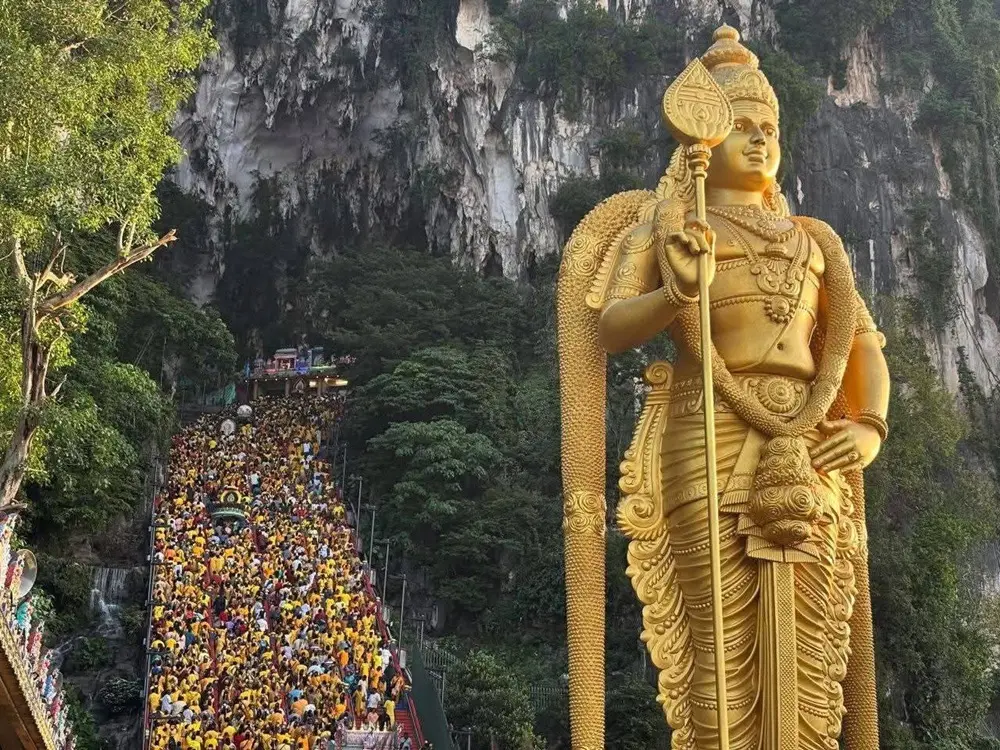
Thousands of devotees lined the streets, many carrying trays filled with coconuts, fruits, flowers and money — as the chariot made its slow journey towards Batu Caves, Malaysia's main Hindu site, located 13 kilometres from the capital, where celebrations culminated yesterday.
In Hindu tradition, Thaipusam commemorates the Lord Murugan’s victory over the demon Surapadman, whom he vanquished with the divine spear (vel) bestowed upon him by his mother, Goddess Parvati.
The festival symbolises the triumph of good over evil and the restoration of cosmic order in Hindu mythology. It is estimated that more than 2.5 million devotees and visitors attended.
For the occasion, the faithful were able to admire once again the imposing 43-metre-tall golden statue of Murugan, which has been completely restored.
The air resonated with the rhythmic beats of Indian drums and the piercing tones of clarinets and trumpets, blending with chants of “Vel! Vel!” from the faithful.
Some devotees balanced milk pots as offerings on their heads, while others performed intricate devotional gestures along the route.
Police personnel and volunteers managed crowds and traffic, ensuring the procession moved safely and smoothly.
Many climbed the rainbow-coloured stairs with 272 steps to the Cave Temple in trancelike devotion, carrying milk pots and elaborately decorated kavadi, which are metal or wooden contraptions adorned with peacock feathers, flowers and jingling bells and carrying images and statues of Hindu deities.
Others undertook acts of profound penance, including body piercings through the cheeks with metallic skewers or hooks embedded in their backs to support heavy frames.
Together, the Friday night chariot procession and Saturday’s ascent to Batu Caves formed a seamless spiritual journey, linking the city streets to sacred heights and ritual devotion to public witness.
Elsewhere in Penang, another major Thaipusam centre, similar scenes unfolded. From as early as 5 am on Saturday, thousands of devotees and spectators gathered around Chulia Street and Penang Street.
Devotees arrived carrying offerings as volunteers and temple committees prepared the chariots amid prayers and traditional music, marking the start of the annual procession.
Prime Minister Anwar Ibrahim extended Thaipusam greetings to Hindus across the country, describing the festival as rich in meaning and symbolic of sacrifice, reflection, spiritual strength and patience.
In a Facebook post, he said the discipline and perseverance demonstrated by devotees deserve respect and collective appreciation.
“Orderliness and harmony in every religious and cultural celebration in this country reflect unity within the diversity of Malaysians. Differences are not foreign, but a reality that has long shaped Malaysia’s identity,” he said.
Anwar expressed hope that Thaipusam would bring peace of mind to devotees and continue to nurture mutual respect and harmony within Malaysia’s multiracial society, urging that the festival be observed with gratitude, decorum and propriety.
Thaipusam 2026 stands as one of the largest and most vivid expressions of Hindu faith outside India or in Southeast Asia – a festival of endurance, community and unwavering devotion.