








Tajik shepherds in the 21st-century
Crossing mountain passes at altitudes of up to 3,000 metres and travelling hundreds of kilometres with their flocks, the čabany keep alive a tradition that produces a type of sheep meat of the highest quality. A hard life, exposed to the unscrupulous exploitation of the owners of the pastures, yet underpinned by a solid unwritten code of solidarity and a profound harmony with nature.
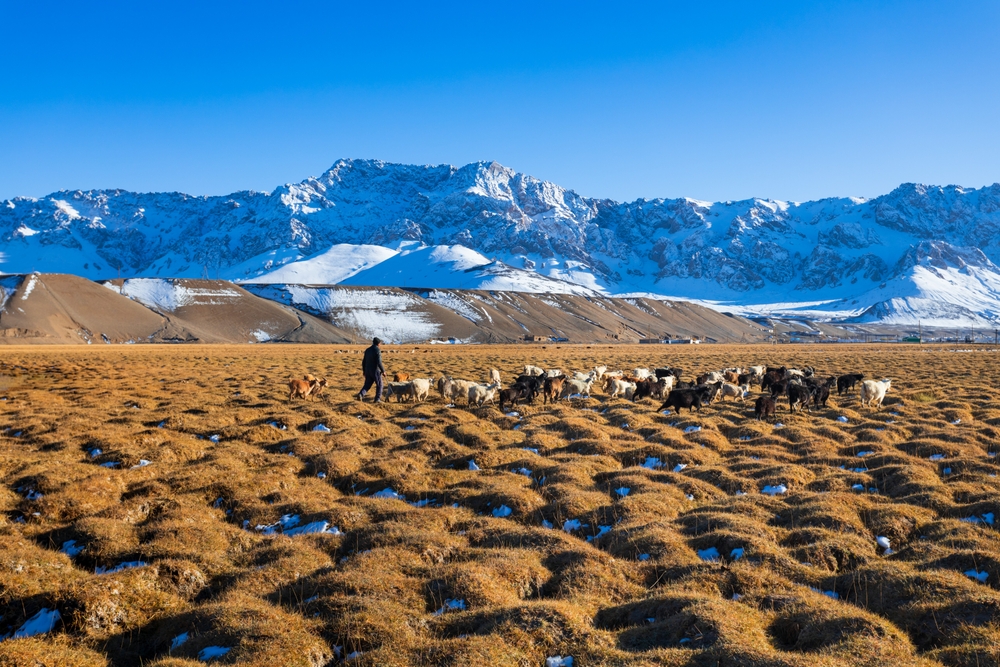
Dushanbe (AsiaNews) - This year, the mountain pastures of Tajikistan have been drenched by rain, which has produced a lush growth of grass to the delight of the čabany, the local shepherds who are pleased with the condition of the meadows but concerned about the ownership of the pastures.
This entire paradise belongs to private individuals, who exploit these guardians of the ancient traditions of the Tajik people without scruples. The herders are forced to rent the pastures for exorbitant sums, which ultimately affects the quality of the final product.
Journalists from Asia Plus travelled to these areas to assess the conditions of the people and animals, taking the safest route through the Karatag Gorge to the confluence of the Sarmin and Karatag rivers, turning west before reaching the village of Hakimi.
The ascent here is long and consists of three passes: Sarmin, Kadžob and Kharogmazor, the latter being the highest at around 3,000–3,500 metres. After crossing the Kharogmazor, one enters the Yakhob River valley, where the flocks graze.
The Gissar sheep breed is the largest in the world and produces meat and fat of the highest quality. The animals can undertake long journeys, ranging from 400 to 500 km, and can reach a weight of 200 kg. Their head shepherd, Boboyor, divides his flock into two groups: one consisting solely of ewes, the other of rams and goats.
The flock is also used for training breeding rams. The čabany’s camp is situated on the mountain summit, where they have set up camp to oversee the entire pasture. The shepherds say that the wind-sheltered cleft is cosy but dangerous; for example, bears do not climb all the way to the top.
The shepherd’s main helper is the dog; it is a common sheepdog, though not a purebred, which faithfully guards the flock. It fears no wolves and has twice fought a snow leopard, but was defeated and remained wounded for several days.
The mating season takes place in October, so that lambing occurs in March and not before, to prevent the newborn lambs from freezing to death. In the morning, theArkor (the head shepherd) Boboyor tells his subordinates where to lead the flock; only he knows the boundaries of the pasture assigned to him. Sometimes the apprentices stray onto other people’s land and arguments arise, so it is important to obey the boss.
It is impossible to imagine life with the flock without the donkeys. “My dogs aren’t very good, but the donkeys are very clever,” jokes Boboyor. The flock employs five donkeys to carry goods, firewood, water and food.
They require no special care and can travel along routes inaccessible to other animals. After loading the donkeys, the herders send them on their way; they find their way there on their own and deliver the load safely, with each donkey carrying up to 100 kilos.
One of the natural enemies of the pastures is the small glacier, and it is up to the shepherds to check its consistency to see if it is possible to cross it. The glaciers continue to melt, and once-enchanting meadows have turned into swamps due to flooding, which can swallow people, and trapped animals are unable to escape.
The head čaban Boboyor insists, however, that he and his assistants thoroughly enjoy the hard life of a shepherd: “It is the most manly and courageous profession; every day we traverse dozens of kilometres in the high mountains, striving to keep the flock safe and sound.”
Today, in Pašmikukhna, there are over 20 flocks from Šakhrinav and Regar. Each consists of a thousand or more small livestock; three or four shepherds manage this work, despite the dangers that lurk at every turn, yet they manage to thrive in this difficult life.
The čabany have an unwritten code: they always offer help to tourists, mountaineers, geologists and pilgrims in difficulty, all those who venture into the remote mountains for various reasons. Above all, the shepherds of Tajikistan live in harmony with nature, because it is their first home.

.png)
11/08/2017 20:05










