








Teesta Basin: Dhaka seeks Beijing’s support
The water management project for the Himalayan river is back at the centre of discussions between Bangladesh, China and India. The Bangladeshi government, currently led by Tarique Rahman, is seeking support from Beijing, reigniting tensions with New Delhi over water resources and Chinese influence in the region. At stake are 1.5 million tonnes of rice a year that Dhaka loses due to poor irrigation.
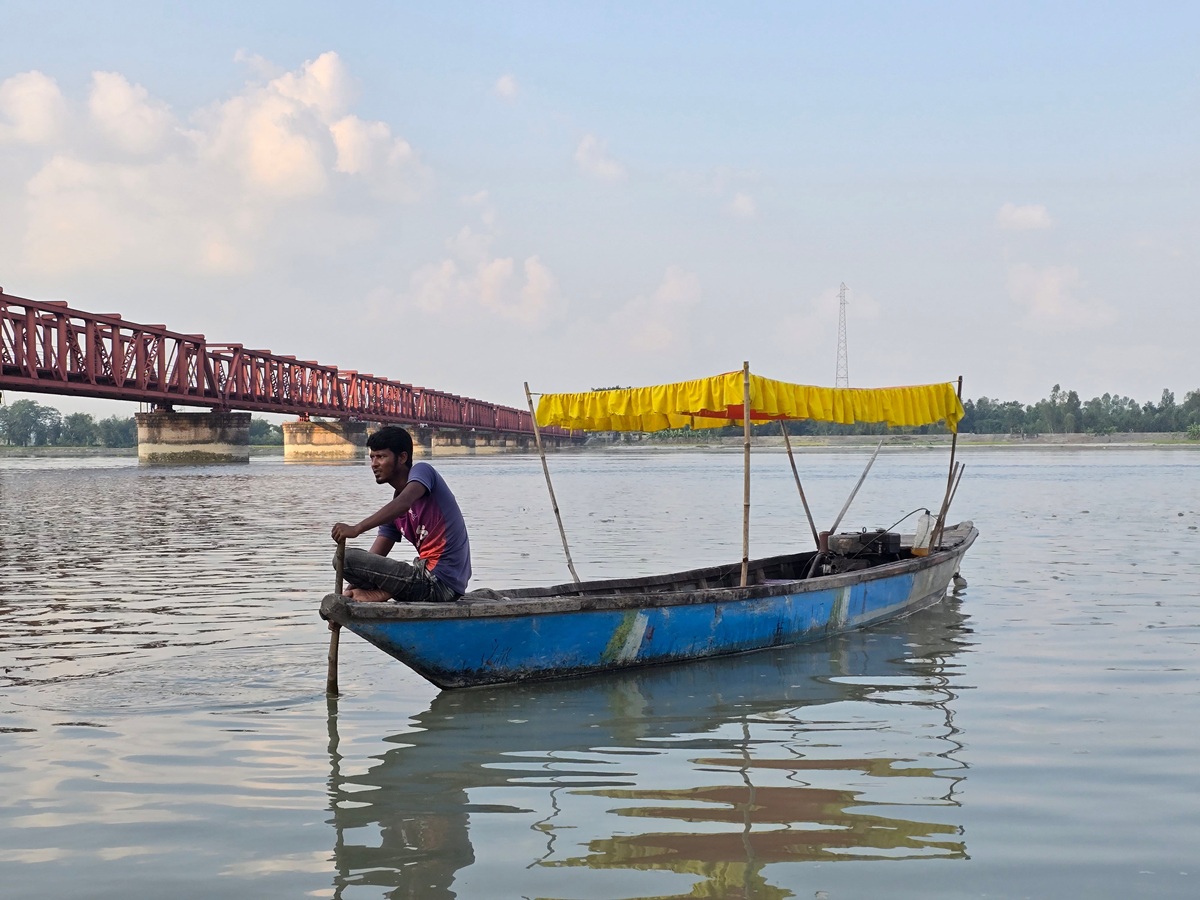
Milan (AsiaNews) - A few months after the new government, elected last February, took office, the agenda of Bangladesh’s Prime Minister, Tarique Rahman, is becoming clear. He has formally approached China to request support and assistance with the Teesta River project. A move that risks complicating relations with New Delhi, which has always been committed to countering Chinese influence in the region.
Last week, the foreign ministers of China and Bangladesh met in Beijing to discuss new prospects for cooperation and infrastructure projects, including the Teesta River Comprehensive Management and Restoration Project, aimed at restoring and managing the Teesta river basin.
This river rises in the eastern Himalayas, in Sikkim, flows through West Bengal and finally enters Bangladesh, where it is an essential source of irrigation and a means of livelihood for millions of people.
The Teesta River is crucial for Bangladesh’s agricultural sector, which, according to the International Food Policy Research Institute (IFPRI), is currently facing severe difficulties. Studies indicate that the country loses around 1.5 million tonnes of rice annually due to water scarcity, with the risk that these losses will increase further in the future.
On the Indian side, in the state of West Bengal, the Teesta is equally vital for irrigation and energy production. There are several hydroelectric projects located in the basin that depend on the river’s flow.
The dispute over the Teesta River dates back to the time of India’s independence from the British Empire in 1947, when the basins were divided between India and Pakistan. Following Bangladesh’s independence in 1971, the issue resurfaced and, despite numerous negotiations, there is still no definitive treaty on the allocation of water between the two countries.
In 2011, an agreement was nearly reached that would have allocated 39% of the water to India and 36% to Bangladesh. However, the deal was blocked by the then Chief Minister of West Bengal, Mamata Banerjee, who was concerned about the potential repercussions on the state’s agriculture.
The sharing of water resources between India and Bangladesh remains a key issue in bilateral relations. In 1996, the two countries signed the India-Bangladesh Ganges Water Treaty, which for 30 years has regulated the sharing of the Ganges River during the dry season. The treaty is now due to expire and, at present, no official announcements have yet been made regarding its renewal.
In April, Rahman travelled to India on a visit closely monitored by the Chinese government, which has for years been following the development of the Teesta project with interest, particularly due to the river’s proximity to the Siliguri Corridor, the narrow strip of territory linking mainland India with the north-eastern states.
In these early months of his term, China and Pakistan are closely watching the moves of the new Bangladeshi government, seeking to understand whether Rahman will maintain the same political line as the previous interim administration led by Muhammad Yunus. Following the fall of Sheikh Hasina,
the Yunus government had gradually moved closer to China and Pakistan, straining relations with India. Following in Yunus’s footsteps, Rahman has also brought the Teesta project back to the forefront of the political agenda, reopening negotiations with neighbouring countries. As early as 2024, New Delhi had offered technical assistance for the conservation of the river, demonstrating its desire to strengthen cooperation with Dhaka in the management of transboundary rivers.
Bangladesh’s rapprochement with China is a cause for concern in India, particularly at a time when Beijing is expanding and consolidating its economic and diplomatic influence in the country. According to Bangladeshi sources, China is in fact Bangladesh’s fourth-largest creditor, after Japan, the World Bank and the Asian Development Bank, with loans from 1975 to the present totalling .5 billion.
At the conclusion of the bilateral meeting, Chinese Minister Wang Yi stated that China is ready to promote cooperation with Bangladesh across various sectors, including the economy, infrastructure and cultural exchanges, whilst also encouraging Chinese companies to invest in the country.
In his statement, Wang also made an implicit reference to India, stating that the development of relations with Bangladesh and other South Asian countries must not be influenced by “third parties”. In response, the Bangladeshi minister reiterated Dhaka’s support for and adherence to the ‘One China’ principle, opposing any form of independence for Taiwan and reaffirming the recognition of Chinese sovereignty over Hong Kong and Macao.

.png)










