








The Dayak mourn Fr Natalino Belingheri, a missionary who became one of their own
An Italian priest of the Oblates of Mary Immaculate, who died aged 83 in North Kalimantan, he dedicated almost 50 years to the local people, even taking the name Wan Abung. He used to say: “My mission is to cherish the history and the places of the people I serve, gathering the seeds of the Word already present and sowing further seeds of truth to contribute to human growth.”
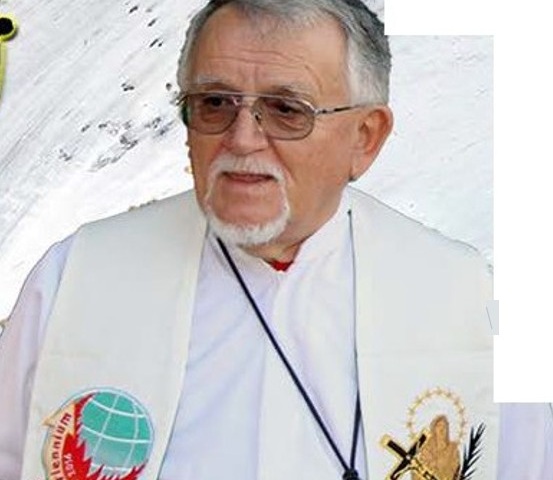
Jakarta (AsiaNews) – The Catholic community in Indonesia has recently bid farewell to another great missionary. Thousands of Dayak people in North Kalimantan were moved to tears by the news of the death of Fr Wan Ibung Natalino Belingheri, an Italian missionary of the Oblates of Mary Immaculate, who passed away in Tarakan on 10 April. The Dayak people mourn a figure who had become deeply intertwined with their lives, culture and journey of faith over the decades.
“Fr. Natalino was the last surviving member of the first group of seven Italian OMI missionaries to arrive here. Fr. Dino Tessari remains, having arrived later in the 1980s,” comments Fr. Andri Atmok, former provincial for Indonesia and current parish priest of Tarakan.
For the Dayak community, Fr Natalino – as he was affectionately known – was a “father” who did not remain aloof, but lived alongside the people. He had embraced a simple life from the very beginning, immersing himself in local customs and loving the community with all his heart. He had even adopted the Dayak name “Wan Abung” as part of his new official Indonesian identity. He was also one of the pioneers who laid the foundations for the establishment in 2001 of the Diocese of Tanjung Selor, today the face of the Catholic Church in North Kalimantan.
“For me,” he used to say, “the mission is fulfilled by being with the people, coming into contact with their customs, their ways of thinking about life and the world. Mission is the proclamation of the good news, beginning with the missionary’s effort to become inculturated, to value the history and places of the people he serves, gathering the seeds of the Word already present and offering other seeds of truth to contribute to the human and religious growth of the people in accordance with the Gospel. “I notice this precisely by being in contact with my people: I enjoy chatting with the village elders, drawing on their wisdom and then discovering that this is a prerequisite for welcoming that of the Gospel, which takes nothing away from the original richness, but helps people grow in the truth.”
From Laos to the interior of Kalimantan
Fr. Natalino’s missionary journey began far from Indonesia. Born in Italy on 5 August 1943, he showed a strong missionary spirit from a young age, which eventually led him to join the Missionary Oblates of Mary Immaculate. Ordained a priest on 29 March 1969, he was sent to Laos that same year, where he remained for six years (1969–1975) in a difficult context, before being forced by political circumstances to leave the country.
Shortly afterwards, together with six fellow Italian OMI priests — Giuseppe Rebussi, Pietro Maria Bonometti, Mario Bertolli, Antonio Bocchi, Angelo Albini and Pancratio di Grazia — he was assigned to Indonesia. They arrived on 27 April 1977 in what was then the northern region of the Archdiocese of Samarinda, in the Province of East Kalimantan, which at that time had very limited pastoral infrastructure. Through the dedication of these missionaries, a region that initially had only one parish in Tarakan gradually developed into a vibrant and growing ecclesial community.
Fr Natalino spent almost 50 years of his life in North Kalimantan. He served in many areas, including Tering, Mara Satu, Malinau and Sapi Island: these were not merely mission stations but his home. He spoke fluent Indonesian and the local Dayak Punan languages. He could even perform the Sapek Tunggal dance, a remarkable sign of cultural affinity rarely seen among foreign missionaries.
One of his most enduring legacies is the establishment of the Apo Deno Boarding School on Sapi Island.
Through this initiative, he not only nurtured the faith but also shaped the future of young people. Many of his former students went on to lead successful lives, tangible fruits of his dedication.
Completing his pilgrimage in the mission field
Even after retiring from active ministry, Fr. Natalino chose to remain in Tarakan. Although no longer fully engaged in pastoral duties, he continued to visit remote areas — places he had once served and deeply loved.
On 29 March, he celebrated the 58th anniversary of his ordination to the priesthood, in a simple ceremony at a hospital, as his health had begun to decline. Shortly afterwards, on 10 April 2026, he peacefully returned to the Lord: his funeral was held at the parish of St Mary Immaculate in Tarakan, presided over by the Bishop of Tanjung Selor, Monsignor Paulinus Yan Olla.
Faithful from various regions – Mara Satu, Malinau and Sapi Island – came to pay their respects. Traditional dances, Dayak Punan laments and cultural rituals accompanied his farewell – an outpouring of deep love.
He came as a stranger, but returned to God as a member of the great Dayak family. And in the land of North Kalimantan, his name will live on – in prayer, in memory and in a faith that continues to flourish.

.png)
11/11/2022 14:07
13/09/2018 16:34
05/03/2018 17:57










