








The Kaveri River divides southern India: Karnataka and Tamil Nadu are at loggerheads over water
Despite the Indian National Congress party’s gains in southern India following the latest local elections, the dispute over the Mekedatu dam project remains unresolved. Karnataka and Tamil Nadu are at loggerheads over the management of the Kaveri’s waters, a dispute that has lasted for over a century and flares up particularly during periods of drought.
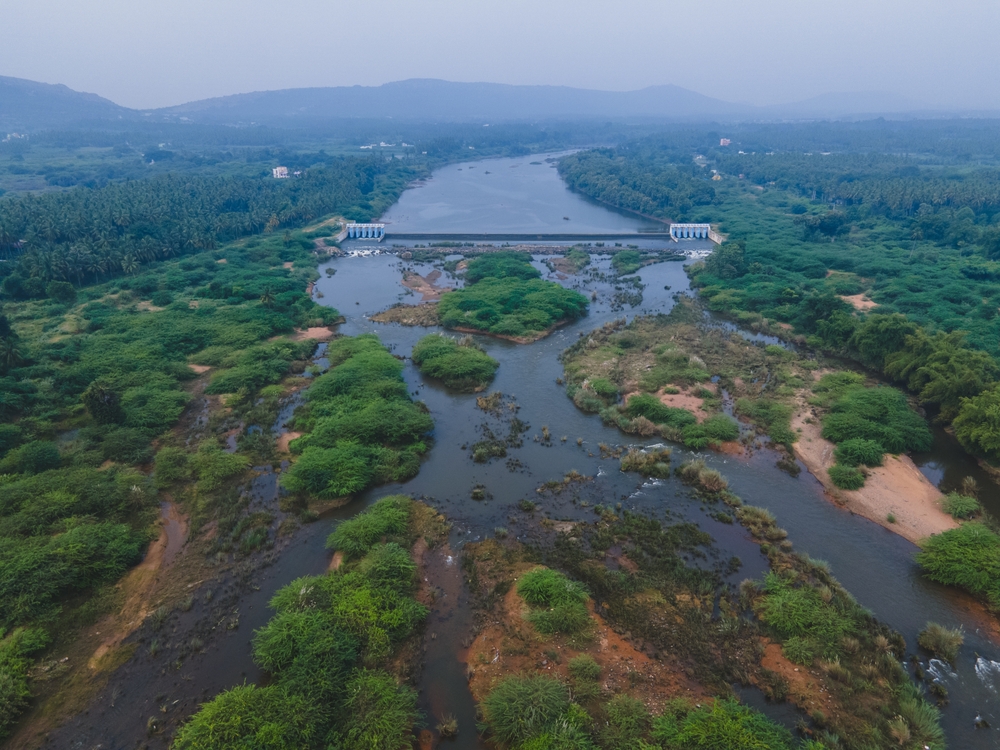
New Delhi (AsiaNews) - In the latest local elections, the main opposition party to the Bharatiya Janata Party (BJP), the Indian National Congress, consolidated its presence in southern India, gaining ground in Tamil Nadu (where it is part of the governing coalition), Kerala and Karnataka.
Despite this apparent political convergence, however, deep differences remain over one of the region’s most contentious issues: the Mekedatu Reservoir Project, the plan promoted by Karnataka to build a new reservoir on the Kaveri River.
Although water allocation is governed by the 2018 Supreme Court ruling and monitored by the Cauvery Water Management Authority, the project continues to fuel tensions between Karnataka and Tamil Nadu. The governments of the two states maintain opposing positions, reigniting a dispute rooted in over a century and a half of history.
The origins of the conflict date back to the 1892 and 1924 agreements between the Presidency of Madras and the Kingdom of Mysore, which stipulated that any intervention affecting the course of the Kaveri must be approved by both parties. With the administrative reorganisation following independence, Mysore became the present-day Karnataka, whilst the Presidency of Madras gave rise to Tamil Nadu.
Modern tensions emerged in 1974, when Karnataka began carrying out water collection and diversion works without the consent of the neighbouring state. Tamil Nadu contested these initiatives, arguing that they would reduce downstream water flow and compromise agriculture in its rural areas.
To address the dispute, in 1990 the central government established the Cauvery Water Disputes Tribunal, a body provided for by the 1956 Act on inter-state disputes relating to river waters. After nearly two decades of negotiations and technical assessments, the tribunal issued a formula in 2007 for the distribution of water resources among Karnataka, Tamil Nadu, Kerala and the Union Territory of Puducherry. The Supreme Court subsequently upheld the verdict in 2018, introducing certain amendments.
Although the agreement remains in force, the issue regularly returns to the centre of political debate, particularly during periods of drought, when the Kaveri’s water level drops significantly and disputes over water distribution flare up again.
It is against this backdrop that the Mekedatu Reservoir Project arises. Karnataka is proposing the construction of a large reservoir along the Kaveri, arguing that the project is necessary to ensure the water supply for Bengaluru, one of India’s fastest-growing cities, and to generate approximately 400 megawatts of hydroelectric power.
The name ‘Mekedatu’, which in Kannada means ‘goat’s leap’, derives from a distinctive geographical feature of the river, which in that stretch passes through a narrow rocky gorge, narrowing from around 150 to just 10 metres in width.
Karnataka continues to strongly support the project, considering it strategic for its water security and declaring itself ready to begin construction. Tamil Nadu, on the other hand, is firmly opposed and demands that any decision also involve the other stakeholders, in particular Kerala and Puducherry.
Tamil Nadu’s new chief minister, the famous Tamil actor C. Joseph Vijay, has stated that there is no need to build a new dam, arguing that the Kaveri basin already suffers from chronic water scarcity and that the available resources have been allocated in accordance with the decisions of the tribunal and the Supreme Court.
In Karnataka, by contrast, the project enjoys broad political and social support, particularly among farmers living along the Kaveri river. Among its main supporters is the Vokkaliga community, an influential farming group that forms a significant part of the electoral base of the current state chief minister, D.K. Shivakumar.

.png)
07/02/2019 17:28










