








The challenging frontiers of contemporary Russian art
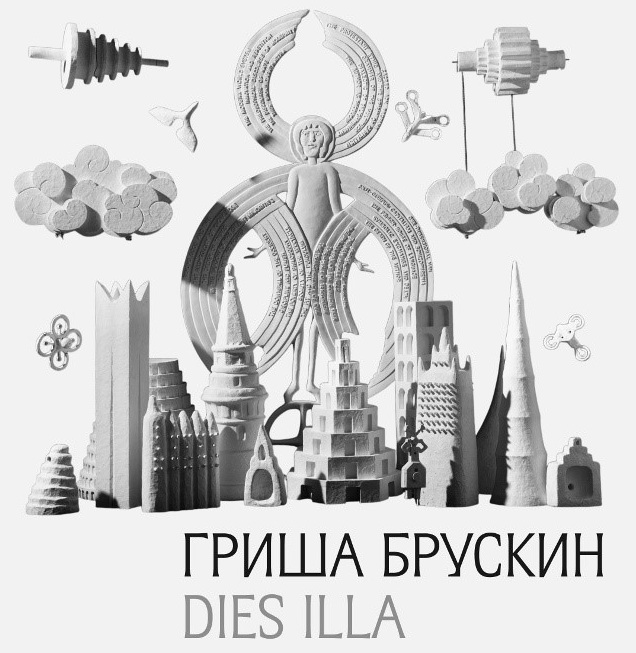
Whilst the Russian pavilion at the Venice Biennale is causing controversy, there are also works in Russia striving to move beyond propaganda in their reflection on current affairs. This is illustrated by the story behind the exhibition *Dies Illa*, opened by Griša Bruskin at the *Zilart* Museum of Contemporary Art in Moscow.
Moscow (AsiaNews) – The decision to admit a pavilion for contemporary Russian art at the Venice Biennale is causing much debate, pitting those who refuse to make concessions to the country waging war in Ukraine against those – such as director Pietrangelo Buttafuoco – who believe that culture and art, which stand above and beyond all conflicts, should not be censored. The problem is that, since the start of the war, Russian art has been subjected to systematic and suffocating censorship, with ‘blacklists’ of painters and writers under constant scrutiny by the police.
The BBC’s Russian service attempts to describe the current context, starting from the fifth floor of the Zilart Museum of Contemporary Art in Moscow, where the renowned artist Grisha Bruskin has opened the exhibition Dies Illa, which concludes the ‘Change of Decor’ project on which Bruskin had worked for ten years, exhibiting many works in various museums. The journalists present, along with art critic Igor Grebelnikov, complained that the museum management had forbidden them from filming the exhibition, at the artist’s own request.
Bruskin was rather surprised, stating that he had not asked for anything of the sort: “it’s fine not to take selfies in front of every artwork”, but forbidding the media from sharing the exhibited content was certainly not his intention, although he adds that “popularity is not my primary concern”, as he told the Blueprint agency. The exhibition Dies Illa is a highly complex collection of installations that address power and ideologies, war and flying drones—including the Iranian Shaheds—and the images are highly impactful, which explains the caution in sharing them on social media.
Bruskin’s installation-performance is a dramatic space constructed by him and the architect Igor Čirkin, in which the viewer becomes part of the action, immersing themselves physically and mentally. Consequently, as in a theatre, visitors were asked to refrain from taking photos or filming videos upon entry, so that they could “focus on their presence within the work and their interaction with it”, as a representative of Zilart told the BBC.
The exhibition does indeed feature objects resembling drones and aeroplanes. According to some eyewitnesses, visitors are asked not to approach the sculptures of girls wearing hijabs and explosive belts with their mobile phones. There is also a work entitled ‘Crowd and Power’. The caption describes it as ‘small printed figures marching in the shadow of a mechanical double-headed eagle’. On the Zilart website, photographs of part of the installation can also be found, though with a notice prohibiting photography within the exhibition.
Thus, not only among the works of Russian dissidents abroad, but also at home, there are those who seek to resist propaganda and censorship, and to offer images and food for thought on current affairs and the fundamental aspects of society, life and death, and on many issues where it is not easy to draw clear lines of separation between those who espouse unacceptable views and those who are guided by the desire to express values that are not ‘traditional and codified’, but rather inner and surprising.

.png)










