








The difficult life of Russian war veterans
According to an estimate released in December and immediately withdrawn, 250,000 people have returned from the war in Ukraine and are now looking for work. For them, the TV channel Rossija-1 airs the program Budem Žit, “We Will Live Again.” There is a risk of a repeat of the situation in the 1980s, when the “Afghans” were a long-standing unresolved problem in Moscow.
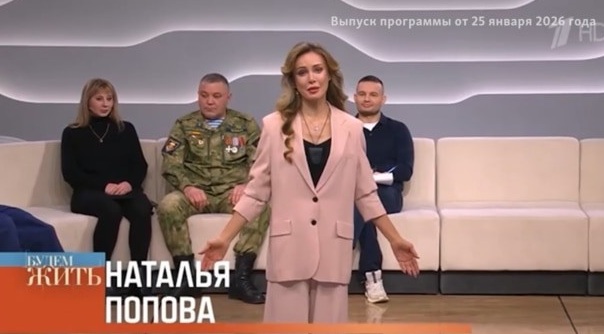
Moscow (AsiaNews) - Life after Svo, the special military operation in Ukraine, is a difficult problem to solve for the Russian authorities, who, in addition to medals and titles of “national heroes,” must also find answers to disability as a result of war wounds, post-traumatic stress, unemployment, and many other forms of hardship. In addition to propaganda, many Russian television programs are launching appeals to find answers.
The main channel, Rossiya-1, airs the program Budem Žit, “We Will Live Again,” which seeks to give meaning to the slogan Svoikh nie brosaem, “We don't abandon our own.” The program features former paratrooper Aleksandr Simonenko, a veteran of both the war in Ukraine and the civil war in Chechnya at the beginning of the century, who explains how it is impossible for him to find work because of the trauma he has suffered, which makes him unsuitable for any job. Doctors refuse to sign his disability certificate, despite the fact that his left arm no longer works and his civil status remains in limbo, but even his appearance on screen fails to convince the commission to issue him with the certificate.
Former marine Anton Filimonov joins presenter Natalia Popova, wife of Putin's ‘great mediator’ Kirill Dmitriev and close friend of Vladimir Putin's daughter Katerina Tikhonova, on these programmes. Appealing to these high-level connections, Simonenko's problem is solved by bypassing the commission's resistance and assigning him the role of caretaker of the Moscow ice rink, 20,000 rubles per month (€200), the typical “Soviet job” to formally avoid unemployment.
Tatiana Rybakova, an economic journalist at Most who follows developments in the Russian labor market, notes that finding any form of employment for this category of people can only be a state initiative, with special projects in large construction sites or industrial agglomerations, recalling that “since last year, there has been a reduction in jobs and working hours to save on expenses.” Factories are switching to a four-day working week, entrepreneurs are unable to cope with the “stagnant” economic crisis and enormous fiscal pressures, and consumers themselves are increasingly reducing their demand in an attempt to make ends meet.
To help veterans, the Russian state has imposed a law requiring large corporations such as Rostekh and Rosatom to reserve jobs, and if any company hires a Svo participant, it receives a state subsidy of at least three minimum wages to offset the costs. The housing issue is also being resolved by granting free land or offering compensation of up to one million rubles (€10,000), as is normally the case in Crimea and the Moscow province.
At the end of December 2025, the director of the presidential administration for social affairs, Sergei Novikov, stated that 250,000 people had returned from the war front and needed to find work, but this news was then deleted from all media outlets. According to Russian law, soldiers who complete their mission cannot be left without accommodation, and today the situation of the 1980s at the end of the Soviet era seems to be repeating itself, when veterans of the war in Afghanistan were left in limbo and attempts were made to mask the crisis by claiming that it was a “small group” that remained on the margins of society, also considering that it was not considered an “official war.” The ‘Afghans’ were a long-standing unresolved problem, people with serious physical and psychological trauma, and today Russian society once again finds itself with the ‘Ukrainian’ strays, an indirect retaliation for a war that was unjust not only towards the people who were attacked, but also towards its own combatants and citizens.

.png)
11/08/2017 20:05










