








The rise of ‘modest fashion’ among Muslim women
According to the State of the Global Islamic Economy report, Muslim consumer spending on clothing is expected to reach 3 billion by 2028. This growth is driven not only by the demographic expansion of Muslim populations but also by the emergence of a new generation of young, educated female consumers who are attuned to contemporary fashion trends.
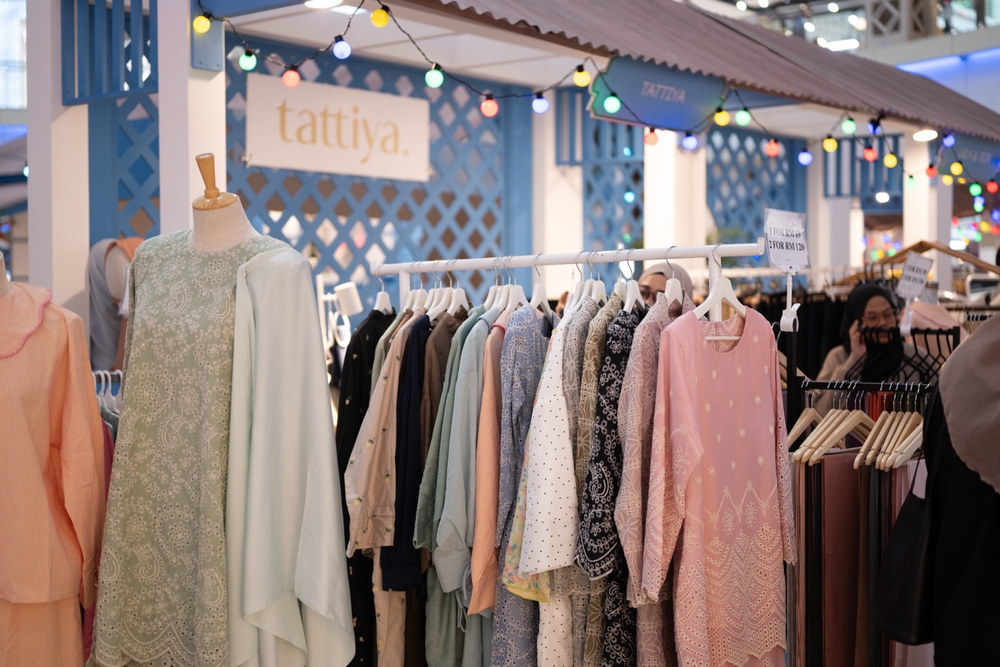
Milan (AsiaNews) - They call it ‘modest fashion’. A term which, particularly in Europe, is often associated with women’s clothing inspired by Islamic principles, but which today describes a much broader phenomenon: a creative universe that combines elegance, modesty, cultural identity and new forms of consumption.
The most recent recognition came from Paris, the fashion capital of the world, where the first edition of the Paris Modest Fashion Week took place last April (from the 16th to the 18th), hosted in the historic halls of the Hôtel Le Marois, just a stone’s throw from the Champs-Élysées.
For three days, influencers, journalists, buyers and industry professionals attended the shows of around thirty brands from over twenty countries. On the catwalk appeared tailored suits in embroidered satin, long dresses with flowing lines, structured silhouettes and contemporary reinterpretations of traditional Muslim clothing.
Among the most talked-about looks was one presented by the French brand Soutoura: a denim dress accompanied by a crocheted balaclava decorated with crystals, a stylised evocation of the niqab, the full-face veil banned in France since 2010.
The choice of Paris is no coincidence. In a country that has for years debated the relationship between public space, secularism and religious symbols, hosting an event dedicated to modest fashion takes on a significance that goes beyond mere commercial promotion.
The organisers of Think Fashion, the company that has been running the international Modest Fashion Week circuit for over a decade, speak openly of a sign of the sector’s maturity: modest fashion is no longer a peripheral niche, but an increasingly visible component of the global industry.
The figures seem to confirm this. According to the State of the Global Islamic Economy report compiled by DinarStandard, Muslim consumer spending on clothing is expected to reach 3 billion by 2028.
This growth is driven by the demographic expansion of Muslim populations, the spread of social media and the emergence of a new generation of young, educated female consumers who are attuned to the language of contemporary fashion.
Global brands and influencers
Over the last decade, major international brands have been observing this market with growing interest. Between 2014 and 2018, brands such as DKNY, Tommy Hilfiger, Michael Kors, Mango and H&M launched collections dedicated to Ramadan or to consumers in the Persian Gulf.
Initially, these were initiatives limited to specific geographical areas; subsequently, many of the aesthetic features associated with modest fashion entered the vocabulary of mainstream fashion. Long hems, high necklines, layering and loose silhouettes have conquered international catwalks, helping to redefine the standards of contemporary elegance.
Muslim influencers have played a decisive role, building global digital communities long before the luxury sector realised the economic potential of this segment. Figures such as Dina Torkia, Ascia Al Faraj and Maria Alia have transformed Instagram and YouTube into platforms for representation and cultural dialogue, paving the way for a more structured presence of Muslim women within the fashion industry.
Behind the success of modest fashion (which for now targets the upper-middle class) lies, however, a story rooted in the social transformation currently taking place in many parts of the Middle East.
For decades, the abaya was perceived primarily as a functional garment, characterised by simple lines and the traditional colour black. Originally designed as a cloak to ensure modesty and protection in public spaces, over time it has become one of the most recognisable symbols of female identity on the Arabian Peninsula.
Over the last twenty years, particularly in the major cities of Saudi Arabia and the UAE, new generations of designers have begun to reinterpret it as a genuine design object. Embroidery, innovative cuts, fine fabrics and references to international fashion have gradually transformed this garment into a creative canvas on which to express personality, cultural identity and aesthetic sensibility.
A prime example of this transformation is the Saudi designer Israa Allaf, founder of the brand The Untitled Project. Born out of a desire to offer Saudi women garments that reflect their individuality, the brand reinterprets traditional clothing through contemporary prints, sophisticated colour palettes and experimental silhouettes. Allaf defines her work as a ‘fusion culture’, a culture of cross-pollination that reflects the complexity of contemporary Saudi society, suspended between deep-rooted traditions and global openness.
Cultural questions
The sector’s growth also raises cultural questions. Many industry professionals highlight the risk that modest fashion might be transformed into a mere aesthetic trend, detached from the communities that originally developed it. The debate centres primarily on Europe, where the veil and other religious symbols continue to be the subject of political and social controversy. For many Muslim women, in fact, modest fashion is not merely a style choice, but an expression of identity that intertwines faith, culture and personal autonomy.
Until a few years ago, it was natural to imagine that the heart of international modest fashion beat in Dubai, Abu Dhabi, Riyadh, Jeddah, Istanbul or Jakarta. It was in these cities that the sector’s major events, commercial platforms and professional networks developed, contributing to the growth of the global market. Fashion weeks dedicated to the sector, permanent showrooms, the Gulf’s large shopping centres and specialised trade fairs served as the prime meeting point for designers, investors, influencers and buyers from Asia, Africa and Europe.
Today, the geopolitical landscape of the Middle East and the Eastern Mediterranean has changed profoundly. The wars and tensions sweeping the region — from the Gaza conflict to the instability affecting the Red Sea and other strategic areas — have inevitably altered the dynamics of international trade and events. Whilst the Gulf remains the sector’s main economic driver, many cultural and business entities are seeking venues capable of guaranteeing maximum global visibility and broader international participation.
Against this backdrop, Paris offers something that few other cities can provide simultaneously: the symbolic prestige of the world’s fashion capital, a well-established infrastructure for international events, and the opportunity to present modest fashion to a global audience, beyond regional dynamics. The choice of France thus also takes on a cultural significance: bringing an aesthetic language born largely in the Middle East and South-East Asia to the heart of Europe and firmly establishing it within the international debate on contemporary fashion.
The first Paris Modest Fashion Week demonstrated how this world has now firmly entered the global fashion landscape. No longer a marginal or exclusively religious phenomenon, but a cultural and economic industry capable of generating creativity, employment and new forms of representation. Behind the garments that graced the golden halls of the Hôtel Le Marois, one can indeed glimpse something deeper: the attempt to reconcile tradition and modernity, belonging and innovation, in one of the most significant transformations of culture and social trends in the 21st century.

.png)
24/10/2019 17:56
11/08/2017 20:05










