








The “Tatar lobby” in Russia: between loyalty and autonomy
The Russian republic of Tatarstan in the Urals is historically a region with strong autonomist tendencies, boasting its own highly active lobby group in Moscow. Although it must now contend with Putin’s centralism and has had to make some concessions on the language issue, it has nevertheless retained significant economic advantages which it has no intention of relinquishing.
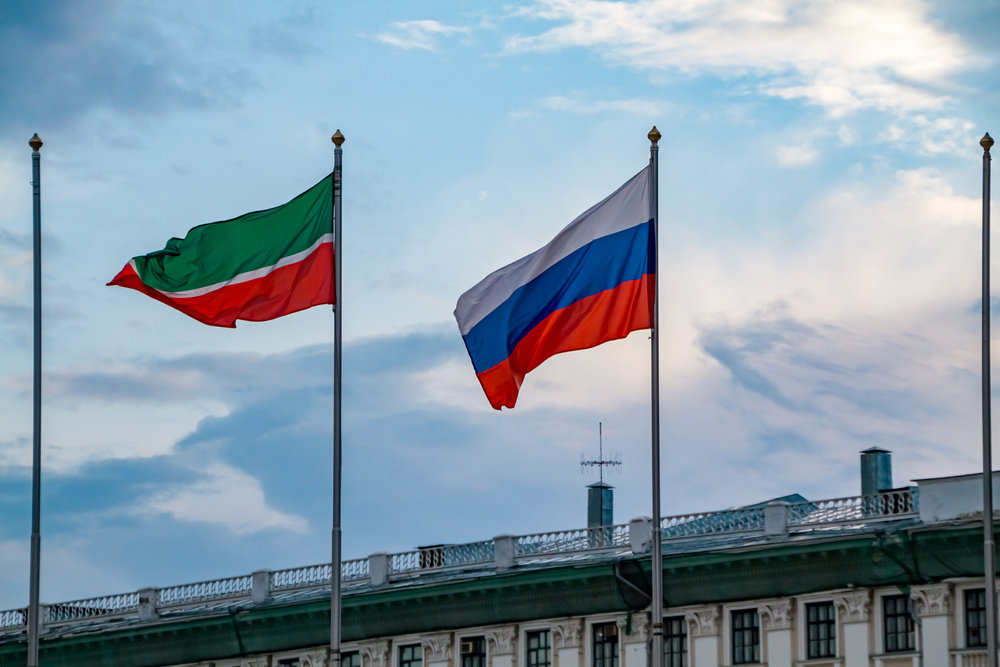
Moscow (AsiaNews) - The Russian Republic of Tatarstan in the Urals has always been a region with strong autonomist tendencies, as was the case in the 1990s following the collapse of the USSR, when the government in Kazan even established its own Ministry of Foreign Affairs.
It was then forced to submit to Putin’s centralism, and in recent years has had to guard against separatist pressures emerging among all the ‘minority peoples’ of the Federation, met with severe repression from Moscow.
The current Tatar elite are seeking to strengthen their federal prerogatives, whilst trying to avoid any conflict between the Kremlin in Kazan and that in Moscow, even sidelining the issue of the national language, one of the most deeply felt concerns among the people.
To protect their interests, a very active ‘Tatar lobby’ operates in Moscow, to which the Russian political scientist Aleksey Mukhin refers in Idel.Realii, stating that ‘the pressure the Tatars seek to exert around the figure of Vladimir Putin often provokes rather irritated reactions within the Kremlin’. Yet their initiatives largely succeed in defending the republican interests of the Tatars.
The Tatar political scientist Ruslan Ajsin also believes that the ruling class in Kazan enjoys many connections in Russia, drawing on the potential of highly skilled officials. In many sectors of Russian politics and society, highly influential figures from Tatarstan are indeed evident, such as Deputy Prime Minister Marat Khusnullin, who from 2001 to 2010 served as Minister of Construction and Architecture – a field in which Tatars do a great deal of business – and several others.
When, at the start of his rise to the top, Khusnullin became Deputy Mayor of Moscow, “a huge number of Tatars spread throughout the capital’s administrative bodies”, recalls Ajsin, stating that “there is good reason to believe that the President of Kazan, Rustam Minnikhanov, is able to place his people just about everywhere”.
The “expansionist” activity of the Tatars in Moscow and other key locations is part of the original vocation of this people, heirs to the Mongol khans who ruled Russia for two centuries, subsequently becoming part of the ruling caste of the tsars.
The Moscow leadership appreciates the loyalty and efficiency of the Tatars, whose region is one of the richest in the entire federation thanks to its energy resources, and which accounts for a very significant share of military production – something that is particularly necessary today. It is not the only influential ‘regional clan’ in Russia; one might recall, for example, Ramzan Kadyrov’s Chechens, who, however, remain confined to the Caucasus region.
For years, Tatarstan remained the only republic to retain the title of ‘president’ for a long time, a title abolished by law in 2018, and it was only in December 2022 that the Kazan parliament accepted the legislation, designating the president with the title of glava, “head” as in the rest of the Federation, but adding the term glava-rais, which suggests the status of a modern “Khan”. Just as the teaching of the Tatar language was preserved for a long time in all schools, here too they eventually yielded to Moscow’s impositions, whereby only the Russian language must prevail.
The language issue is being sacrificed on the altar of economic benefits championed by the lobby, and the Tatars have no intention of giving these up, even going so far as to enter into international agreements with China and other Asian partners, which Moscow is forced to turn a blind eye to.
However, should the economy of the whole of Russia slide further into crisis – the warning signs of which have been evident for some time against the backdrop of sanctions and massive military spending – it cannot be ruled out that Russians might once again begin to view the Tatars as competitors, as was the case in the 1990s. And if the Tatars were to reawaken their autonomist instincts, this would provoke similar centrifugal forces across the country, with the risk of a very serious disintegration of the entire Russian Federation.

.png)










